How a Tomato-Soy Juice Quietly Fought Inflammation in Just One Month
A nutrient-rich tomato-soy juice slashed key inflammation markers in adults with obesity after just four weeks, a new clinical study reveals.

A Juice That Does More Than Quench Thirst
What if a daily glass of juice could meaningfully reduce inflammation in your body? That is precisely what a new clinical study suggests — and the results are turning heads in the nutrition science community.
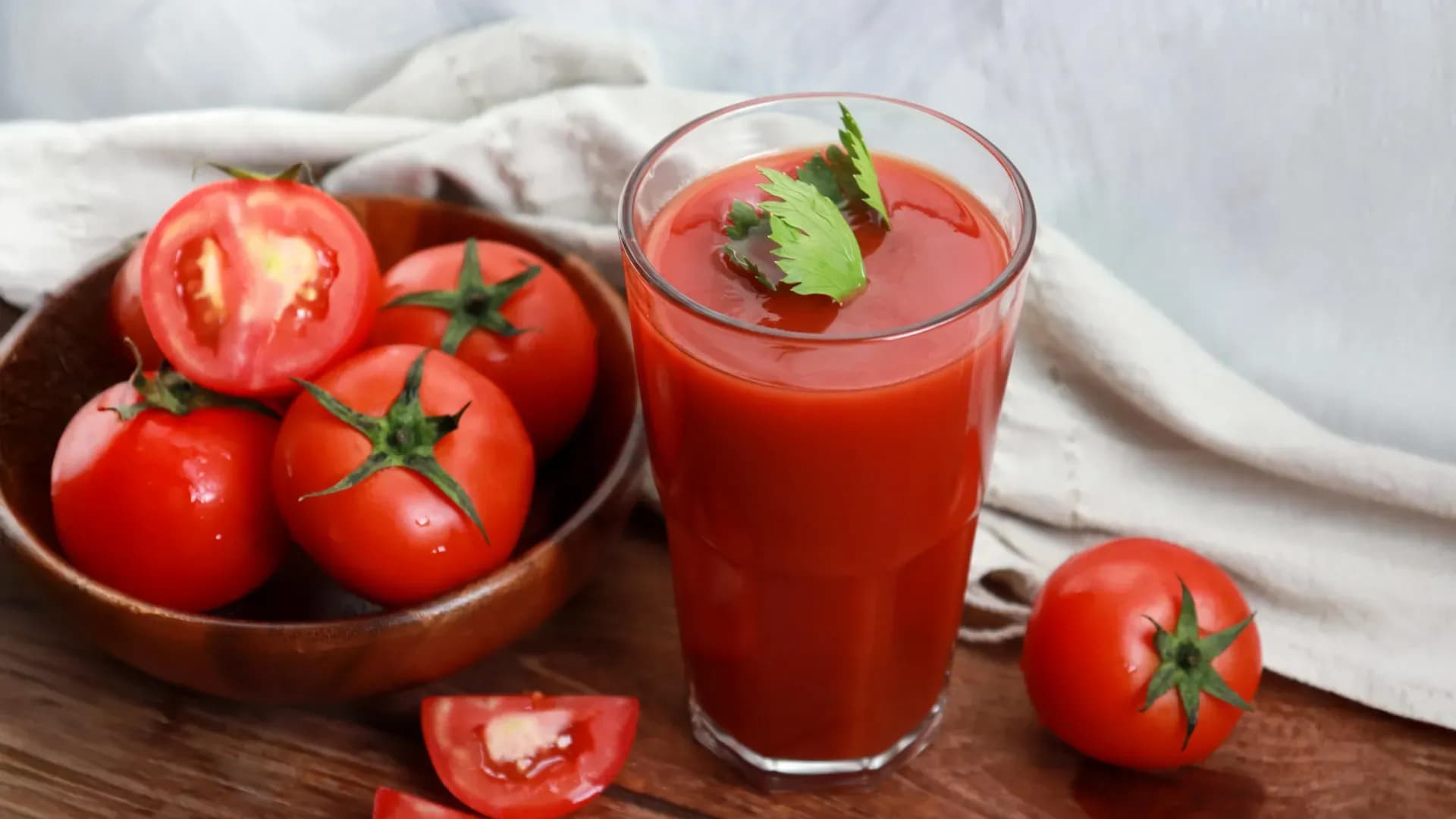
Researchers have found that a specially crafted tomato-soy juice, loaded with naturally occurring plant compounds, significantly lowered multiple markers of chronic inflammation in healthy adults living with obesity after just four weeks of daily consumption. A standard tomato juice used as a comparison drink failed to produce the same results.
The findings, published in the journal Molecular Nutrition & Food Research, point to the growing potential of food-based strategies for managing inflammation — a biological process closely tied to a wide range of long-term health conditions.
What Makes This Juice Different
The juice at the center of this research is no ordinary grocery store blend. It was originally developed by scientists at The Ohio State University following earlier evidence suggesting that diets high in tomatoes or soy were associated with a reduced risk of prostate cancer.
The formulation uses tomatoes that were selectively bred to contain elevated concentrations of lycopene — the carotenoid pigment responsible for the characteristic red color of tomatoes and related fruits. The juice is further enriched with an extract of soy isoflavones, a class of flavonoid compounds known to interact with estrogen pathways in the body.
Both lycopene and soy isoflavones are naturally occurring phytochemicals. Previous Ohio State research had already linked higher intake of the juice to lower prostate-specific antigen levels in certain men diagnosed with prostate cancer, adding credibility to the notion that these compounds influence human biology in meaningful ways.
Inside the Clinical Trial
The study enrolled 12 healthy adults with obesity. Each participant consumed two 6-ounce cans of the tomato-soy juice per day over a four-week period. After a washout interval, they switched to a low-carotenoid control tomato juice for another four weeks.
The research team deliberately chose a tomato-based control rather than plain water to isolate the specific effects of lycopene and soy isoflavones.
"The hypothesis is that it's the lycopene from the tomatoes and the isoflavones from the soy that's inducing the effect, so we didn't want to have a control that's just water," said Jessica Cooperstone, associate professor of horticulture and crop science at Ohio State and the study's lead author.
Blood samples were collected before and after each phase, with researchers analyzing levels of cytokines — immune system proteins that regulate inflammatory responses throughout the body.
Key Inflammatory Markers That Dropped
Only the tomato-soy juice produced statistically significant reductions in inflammatory proteins. Specifically, three cytokines declined notably:
- Interleukin-5 (IL-5)
- Interleukin-12p70 (IL-12p70)
- Granulocyte-macrophage colony-stimulating factor (GM-CSF)
Researchers also observed a reduction in tumor necrosis factor alpha (TNF-α), though that particular change did not meet the threshold for statistical significance.
The control tomato juice did not trigger any of these same reductions, underscoring the importance of the specific compounds found in the enhanced formulation.
Changes Beyond the Bloodstream
The research team went further by analyzing urine samples from participants at the start and end of each phase, looking for shifts in metabolites — the molecular byproducts generated as the body processes nutrients and carries out essential functions.
Interestingly, some metabolic changes appeared after consumption of both juices, suggesting that tomatoes themselves may influence human biology even in the absence of high lycopene concentrations.
However, metabolite patterns linked specifically to soy isoflavone processing were uniquely prominent in participants who drank the tomato-soy juice — offering further evidence that the beverage was producing measurable biological effects beyond simple nutrition.
"This is probably a function of the fact that there's more to our intervention agents than just these two compounds," Cooperstone noted. "Ultimately, we want to have a better understanding of how the foods that we eat are relating to our health."
A Bigger Question: Can Food Fight Disease?
Cooperstone and her team are motivated by a fundamental question that sits at the intersection of nutrition and medicine.
"The idea is, can we use food-based interventions to modulate inflammation?" she said. "And can we test this in a rigorous way so that we can really see this is affecting inflammation, versus just saying something is anti-inflammatory?"
Those questions are now driving the next phase of research. Building on this study's findings — along with supporting data from animal models — Cooperstone's team has secured funding from the National Institute of Diabetes and Digestive and Kidney Diseases to launch a pilot clinical trial examining whether the tomato-soy juice can reduce inflammation in people suffering from pancreatitis.
Why Pancreatitis?
Pancreatitis is a condition marked by painful inflammation of the pancreas, and current treatment options remain largely palliative — focused on managing pain and gastrointestinal symptoms rather than addressing the underlying inflammation.
"Our hypothesis is that the tomato-soy juice may serve as an intervention to decrease inflammation and hopefully increase patients' quality of life," Cooperstone said.
Animal studies have already suggested the juice can reduce both inflammation severity and disease progression in chronic pancreatitis, making the leap to human trials a logical and promising next step.
Looking Ahead
While the current trial was small in scale, its rigorous design and clear results provide a compelling foundation for larger investigations. The research was supported by the U.S. Department of Agriculture, the National Institutes of Health, the Lisa and Dan Wampler Endowed Fellowship for Foods and Health Research, and Ohio State's Foods for Health Initiative.
For scientists like Cooperstone, the work represents a broader mission: proving — through careful, controlled human trials — that what we eat has the power to shape our health in ways that go far beyond basic nutrition.
As chronic inflammation continues to be recognized as a common thread linking obesity, heart disease, cancer, and other major conditions, the idea that a daily glass of juice could play a role in managing it feels less like wishful thinking and more like an emerging scientific reality.