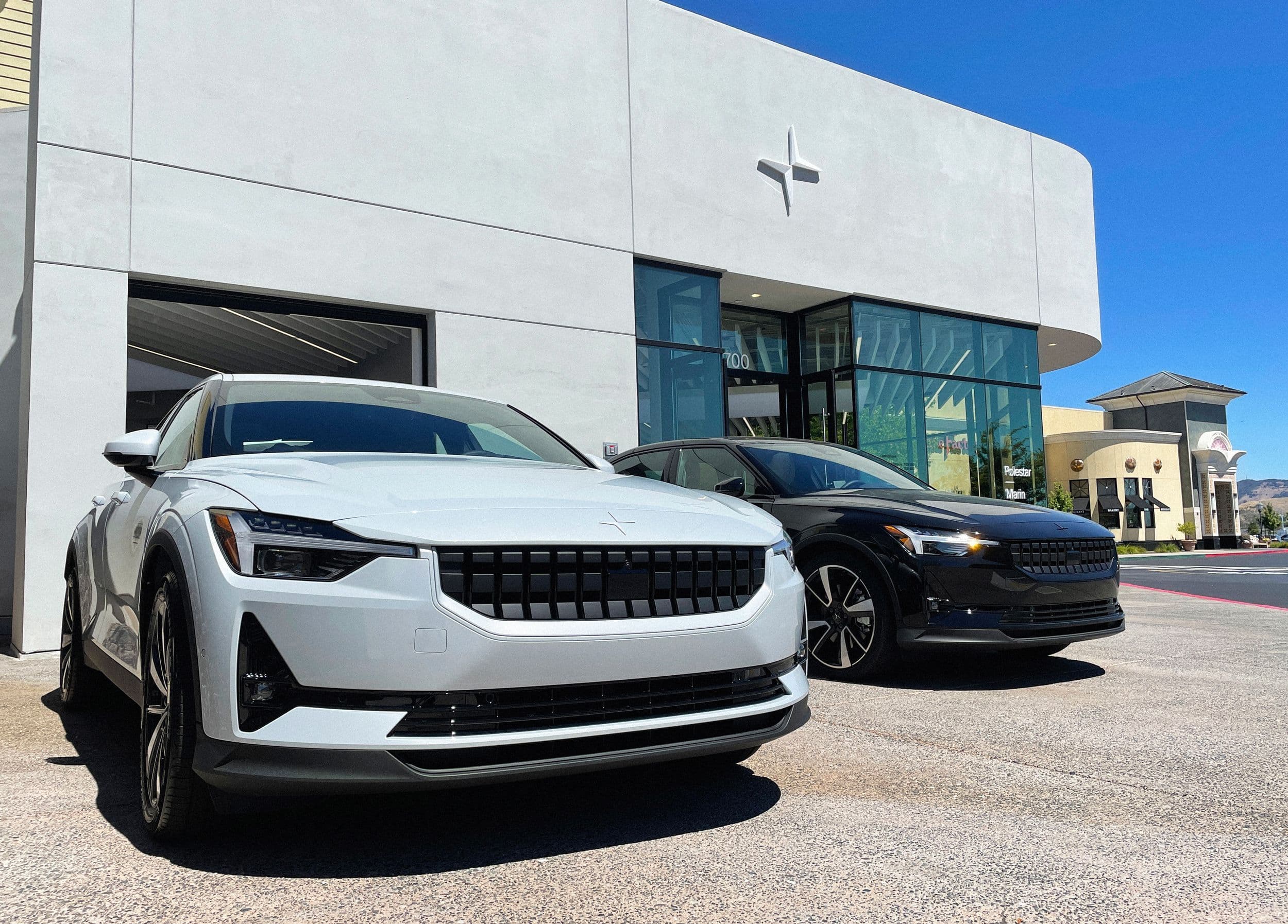
How a Federal Security Rule Is Forcing Polestar Out of the American Market
A federal ban on Chinese-connected vehicle technology is pushing Polestar out of US dealerships — and the fallout for dealers and customers is just beginning.

A Thriving EV Dealership Faces Its Biggest Obstacle Yet
Since its doors opened in Short Hills, northern New Jersey, in 2021, Polestar Short Hills has weathered a remarkable series of market swings. The dealership rode the wave of pandemic-era demand that briefly drove used electric vehicle prices above those of new models. It benefited from a federal EV tax credit worth up to $7,500 that attracted a fresh wave of buyers, then absorbed the slowdown that followed when that credit was scaled back and a state-level incentive was eliminated. More recently, it saw renewed interest from drivers distancing themselves from Tesla amid controversy over CEO Elon Musk's ties to the Trump administration.
Now, dealership owner Matthew Haiken — who also operates three additional locations under the Prestige Collection Auto Group banner — is confronting a far more consequential threat. In late June, Polestar announced that the US Commerce Department had denied the company's application for an authorization that would have allowed it to continue selling vehicles in the United States under a federal rule restricting the sale of cars containing Chinese-made connected-vehicle technology. Because Polestar is majority-owned by China's Geely Holding and its founder Li Shufu, the brand will cease selling new vehicles in the US market beginning with the 2027 model year.
Dealers Left Blindsided by the Decision
"It's so unfortunate," Haiken said. "It's hard for my customers who have been reaching out; it's hard for my staff." He noted that he and the owners of the other 31 Polestar dealerships across the country have collectively invested millions of dollars into building their operations, describing the Commerce Department's denial as "a shock to me and all the dealers."
The decision has drawn sharp comparisons to the treatment of Volvo, another automaker majority-owned by Geely. In March, Volvo received a Commerce Department authorization permitting it to continue US sales despite sharing similar Chinese ownership. Volvo stated at the time that it had held "constructive discussions" with the department regarding its governance practices, technology infrastructure, and data security protocols. When asked to address this apparent inconsistency, a Polestar spokesperson declined to comment on how the legislation applies to other manufacturers.
Haiken was candid about where he places the blame. "I am very frustrated in Polestar, globally," he said. "I think they really dropped the ball, and I blame them. I don't blame the government."
The National Security Case Behind the Ban
The federal rule at the center of this situation was formally adopted by the Commerce Department during the final days of the Biden administration in January 2025. Government officials argued that prohibiting automotive hardware and software sourced from China and Russia was essential to protect national security. Officials pointed to internet-connected components — including in-vehicle cameras, microphones, and GPS systems — as potential tools that foreign adversaries could exploit to gather sensitive data on American citizens and infrastructure.
"It doesn't take much imagination to understand how a foreign adversary with access to this information could pose a serious risk to both our national security and the privacy of US citizens," said then-Commerce Secretary Gina Raimondo when the rule was announced. The Commerce Department did not respond to requests for additional comment on Polestar's specific case.
What Happens to Existing Stock and Customers
Polestar issued a statement confirming that its US dealerships will continue selling existing inventory of the Polestar 3 and Polestar 4 while supplies last. The company also pledged that its US service network would remain operational to support current owners. Framing the development as a strategic realignment, Polestar noted that 94 percent of its first-quarter 2026 sales occurred outside the United States, suggesting a deliberate pivot toward European markets.
Haiken pushed back on that framing, calling the statistic misleading. He noted that the Polestar 4 coupe went on sale in Europe as early as January 2024, but did not become available to American buyers until December 2025 — making its lower US sales volume a matter of availability rather than market preference.
Service and Support: An Uncertain Road Ahead
While some Polestar dealerships route service work through affiliated Volvo centers, Haiken said his stand-alone Polestar service facility will continue operating independently. "We have the volume to justify it," he explained. "We have to be around to perform that work." He acknowledged, however, that not every dealership may make the same call, and that some vehicles will likely be redirected to whichever service center is nearest.
A Polestar spokesperson stated that the company "greatly values our retail partners and is working closely with them to manage this transition."
A Different Fate Than Fisker — For Now
The situation does carry one significant reassurance for current Polestar owners. Unlike Fisker, the electric vehicle startup that collapsed into bankruptcy in 2024 and left its customers without access to parts or service, Polestar remains an active, solvent company with operations in multiple countries. Under US consumer protection and automotive regulations, it remains legally obligated to support the vehicles already on American roads.
As for Haiken's personal view on the underlying policy debate, his position is nuanced. "I'm all about national security," he said. "I'm also for tech and innovation and having the absolute best product win." For now, that balance — between security policy and market opportunity — has cost him and his fellow dealers a significant piece of their business future.
