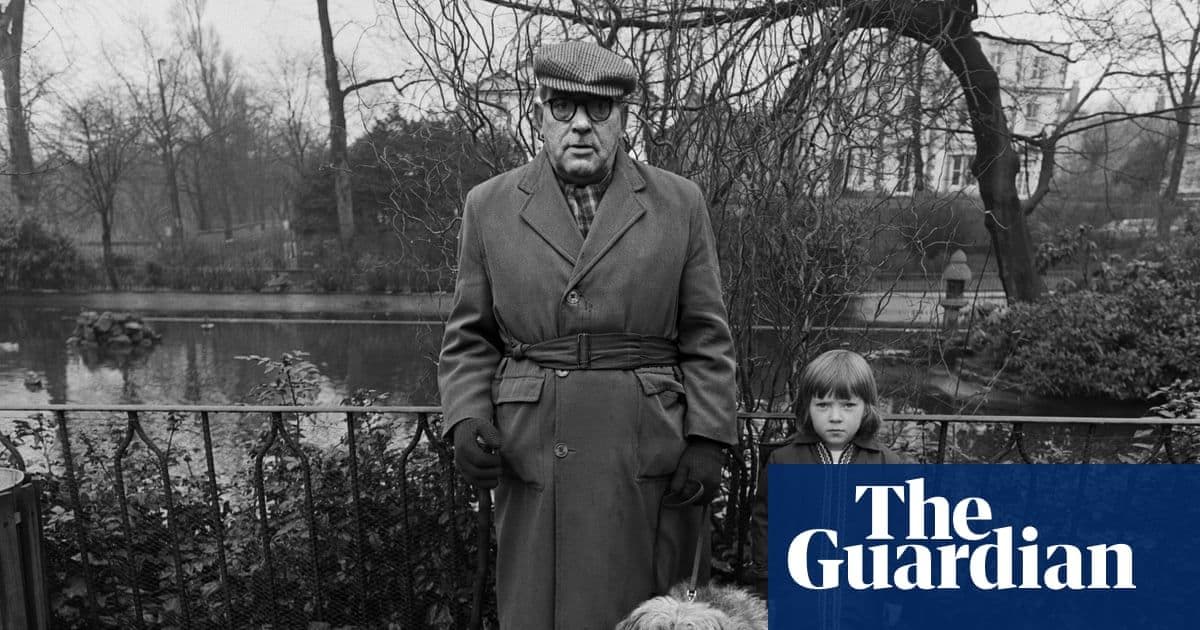
How a Dog Named Becky Made History in John Dean's Most Memorable Photograph
Photographer John Dean reflects on the iconic 1976 snapshot taken in Nottingham that captured a man, his granddaughter, and a scenestealing dog named Becky.

A Young American Photographer Finds His Eye in Nottingham
Fifty years ago, a 20-year-old John Dean stepped off a plane and into a city he knew almost nothing about. Armed with a camera and a curiosity that would go on to define his career, the Baltimore-raised photographer spent a transformative spring semester in Nottingham — and came home with images that still resonate today.
The trip came about through an unlikely academic connection. Dean's tutor at the Maryland Institute College of Art had a friend teaching at Nottingham Trent University, and together they established a small exchange programme. There were no formal classes to attend. It was just Dean, his camera, and an entire English city waiting to be explored.
Life in a Victorian Terrace
Dean settled into the third floor of a Victorian house, living with a young family who welcomed him as one of their own. He shared dinners with them, celebrated the first birthday of their baby boy, and even helped make marmalade — carefully extracting pectin from the pips. It was, by any measure, full immersion.
"I was really embedded with this family," he recalls, using a word that feels entirely apt for the depth of connection he formed during those months.
A City in Transition
When he wasn't at home, Dean was out walking — through the streets, past construction sites, and most frequently through Nottingham's oldest public park, the Arboretum. The city in 1976 was in the midst of significant change. Victorian architecture was being demolished wholesale to make room for modern council housing, and the industries that had long sustained the region — lace, bicycles, manufacturing — were beginning to decline.
For Dean, the scene carried a familiar weight. Back home in Baltimore, the steel industry that had powered the city for generations was also faltering. Bethlehem Steel hadn't yet shuttered, but the warning signs were unmistakable. "Both are working-class towns," he reflects. "It wasn't that different from Baltimore."
What struck him most was the way local children had claimed the demolition sites as their own — scrambling through broken windows and exploring abandoned buildings with a freedom that was as thrilling as it was dangerous.
The Shot That Defined a Career
It was in the Arboretum that Dean first encountered Joe — a regular walker he would come to know well over the course of his stay. The photograph that would later be named his best was taken the day they may have first met. Joe is accompanied by his young granddaughter and his dog, Becky.
"The dog really makes this picture," Dean says plainly. And he's right. While Joe and his granddaughter anchor the frame with quiet dignity, it's Becky who injects an unmistakable sense of life and personality into the scene. Dean captured other images of Joe that day, but none carried the same magnetic pull.
The little girl's name was never learned — she wasn't always with her grandfather — but Joe became a familiar and welcome presence. The two men bonded over a shared love of music, chatting easily across the cultural divide that might have separated them.
Seeing England Through Fresh Eyes
Before arriving, Dean's mental image of England had been shaped largely by pop culture — most memorably by Roger Miller's cheerful 1965 song England Swings, with its bobbies on bicycles and rosy-cheeked children. The reality he found was both more complex and more compelling.
"To me, this picture now seems very English," he says of the Arboretum photograph. There is something in its mood — measured, understated, tinged with both warmth and quiet melancholy — that feels distinctly of its place and time.
Being a stranger in the city turned out to be an unexpected advantage. Alone and unhurried, Dean found that people were naturally drawn to him, and he to them. He learned how to approach strangers, build rapport quickly, and earn the trust required to ask for a photograph. It was a skill that would serve him throughout his entire career.
Serendipity as a Professional Tool
That same openness to chance encounters led to remarkable moments far beyond Nottingham. In Istanbul, a casual conversation with a rug dealer whose cousin happened to be the imam at the Blue Mosque earned Dean rare access to the minaret — a story he still tells with undisguised delight.
"Serendipity has played a huge role in my career," he says. It shows.
John Dean: A Photographer's Journey
Born in New York City in 1955, Dean went on to build a distinguished career behind the lens. One of his proudest professional moments came in the 1980s, when he received his first major assignment from the Walters Art Museum — travelling to Istanbul to photograph the magnificent Hagia Sophia.
His advice to aspiring photographers is characteristically thoughtful: "Don't take your vision for granted. There is something unique in your point of view. Work on what satisfies your creativity, and share it."
Decades on, a dog named Becky, a park in Nottingham, and a chance encounter between a young American and an Englishman who both loved music remain proof that the best photographs are rarely planned.