How a Birmingham Suburb Secretly Inspired Thomas the Tank Engine
Few people know that one of Britain's most beloved children's franchises was born in a Kings Norton bedroom during a measles quarantine in 1942.

The Surprising West Midlands Origins of Thomas the Tank Engine
When most people think of Thomas the Tank Engine, they picture the cheerful blue locomotive steaming through the fictional island of Sodor. What very few people realize, however, is that the seeds of this iconic children's franchise were planted in a quiet Birmingham suburb during the darkest years of World War II.
A Sick Child and a Father's Imagination
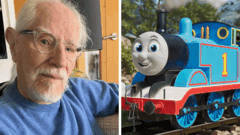
In the summer of 1942, a young boy named Christopher Awdry fell ill with measles at his home in Kings Norton — just 200 yards from the local railway station. His doctor ordered three weeks of strict bed rest and complete quarantine, leaving his father, Reverend Wilbert Awdry, searching for ways to keep his bored and restless son entertained.
The solution Wilbert came up with was simple but inspired. He began sketching pictures of locomotive engines sitting inside an engine shed and weaving imaginative stories around them. As Christopher, now 85, recalls, the process was entirely organic.
"Father made up stories, but to begin with he'd draw a picture — it was of an engine shed and a line of locomotives in it," Christopher explained. "I started asking questions about the engines, and from those answers, he realised he could make up a story."
Meet Edward, Gordon, Henry — and Eventually Thomas
The very first engine to emerge from Wilbert's imagination was Edward, a locomotive desperate to pull a train but initially kept waiting. The story of Edward finally being given his chance became the foundation on which everything else was built.
More characters quickly followed. A grand and boastful engine called Gordon — reportedly named after one of Christopher's childhood friends — appeared next. In an early tale, Gordon found himself stranded on a steep incline and needed Edward's help to push him to the top. Christopher believes this scene was almost certainly inspired by the famous Lickey Incline, the steep railway gradient running from Bromsgrove up to Lickey, located between Birmingham and Worcester.
"It would have been something an engine man would have experienced, or known of, from the nearby Lickey Hill," Christopher noted.
A third engine, Henry, was introduced as a locomotive with a deep aversion to rain — a character reportedly influenced by the real story of an American engine that malfunctioned and was abandoned inside a tunnel.
That left a fourth engine in Wilbert's original drawing, one that never made it into any of those early bedside stories. Instead, this unnamed engine was crafted into a small model from spare parts and given to Christopher as a Christmas gift. The model was painted blue and carried the number one on its side. Christopher named it Thomas — though even he admits he has no idea where that name came from.
"Don't ask me where I got the name Thomas from, but that's how it happened," he said with a laugh.
From Bedtime Stories to Published Books
For several years, Wilbert's locomotive tales remained nothing more than a private family tradition. It was his wife who ultimately pushed him to commit the stories to paper, after she had struggled to find age-appropriate storybooks for her children in Birmingham.
Through a chain of family connections, Wilbert was introduced to a publisher in Leicestershire who expressed genuine interest in the stories. There was, however, one condition: Wilbert needed to write a fourth story that offered a more optimistic resolution for the unfortunate Henry. He obliged, and the first books in the series went to print in 1945, coinciding roughly with VE Day and the end of the war in Europe.
The response from readers was extraordinary. Within just three weeks of publication, Wilbert's publisher was in touch requesting a second print run. The books sold relentlessly, and Wilbert was encouraged to keep writing — always testing new stories on Christopher first.
It was in this second wave of books, titled Thomas the Tank Engine, that Christopher's little blue model finally took centre stage, and the rest, as Christopher himself puts it, "was history."
Thomas the Tank Engine's Legacy in the Midlands
Decades after that measles-induced spark of creativity in Kings Norton, the Thomas the Tank Engine franchise continues to draw visitors to the West Midlands region. Since 2008, Thomas Land at Drayton Manor theme park near Tamworth, Staffordshire, has welcomed millions of fans — both young children encountering the stories for the first time and nostalgic parents who grew up with the books themselves.
"One grew up with them," one parent told reporters, "so because we get so excited about it, our son does too."
It is a remarkable legacy for a series that began with nothing more than a father's hand-drawn sketch and a determination to keep his feverish son smiling through three long weeks in quarantine.