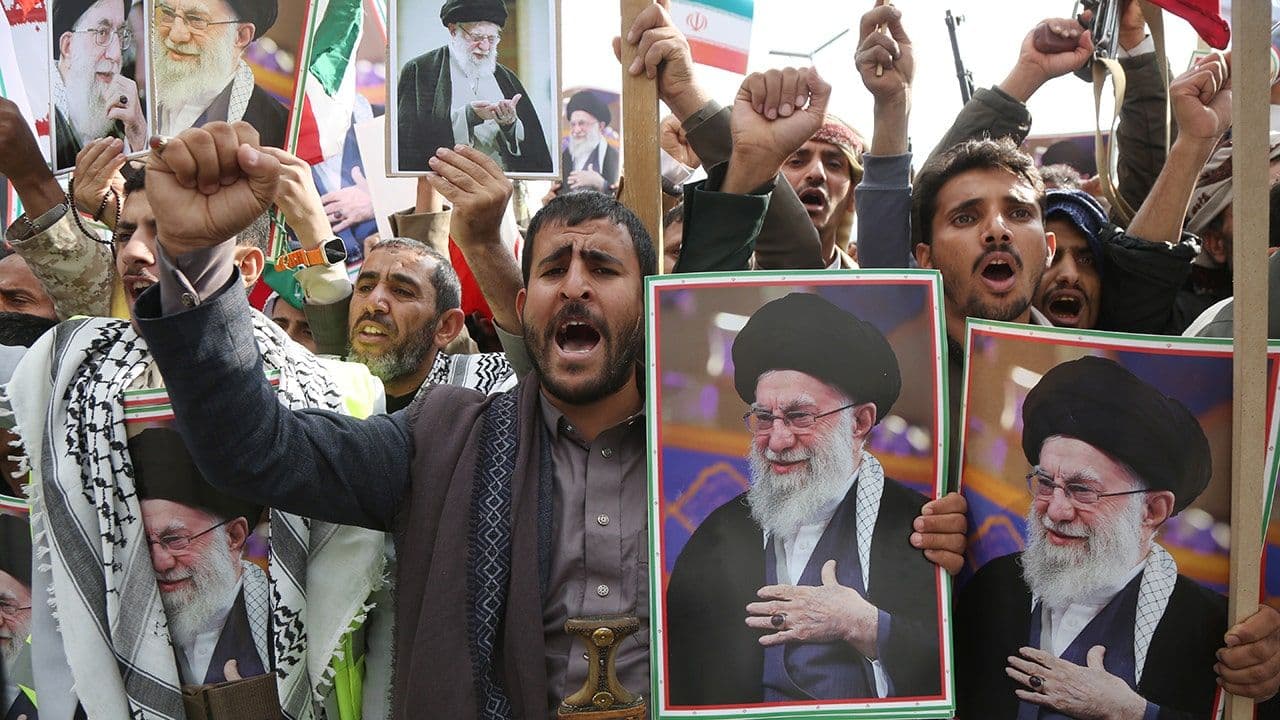
Houthi Movement Stays on Sidelines — But Threatens to Strike at Any Moment
Iran's Houthi allies have held back from direct conflict, but their leader is signaling readiness to unleash military force if circumstances demand it.

Houthis Hold Their Fire — For Now
The Iran-backed Houthi movement, officially designated a terrorist organization by the United States, has not yet directly joined the escalating conflict alongside Tehran. However, the group's rhetoric has grown increasingly aggressive in recent days, with its leader Abdul Malik al-Houthi issuing a pointed warning to both the U.S. and Israel.
"Regarding military escalation and action, our fingers are on the trigger, ready to respond at any moment should developments warrant it," al-Houthi declared Thursday, signaling that the group could enter the fight with little notice.
The Last Line of Iran's Resistance Network
Analysts tracking the region say the Houthis' restraint is deliberate and strategic. Nadwa Al-Dawsari, a Yemen expert and associate fellow at the Middle East Institute, explained to Fox News Digital that the Houthis are being preserved as the final pillar of Iran's so-called "Axis of Resistance."
"The reason why the Houthis have not intervened is they are the last line of resistance for the axis — especially after other axis members were degraded," Al-Dawsari said.
The Houthi movement's official slogan leaves little ambiguity about its ideology: "Allah is Greater. Death to America. Death to Israel. Curse on the Jews. Victory to Islam."
Al-Dawsari, who has written extensively on Yemen and Houthi affairs, believes intervention is a matter of when, not if. "The longer the war continues, the more likely the Houthis will intervene," she said. She also noted that the group has long sought a pretext to strike Saudi Arabia, and any Saudi involvement in the broader conflict could provide exactly that opening.
Iran's Axis of Resistance: A Regional Terror Network
Iran constructed its Axis of Resistance well before Hamas launched its devastating invasion of Israel on October 7, 2023. The coalition brings together a range of Shiite and Sunni militant proxies, including:
- Hezbollah — based in Lebanon
- Hamas and Palestinian Islamic Jihad — operating in the Gaza Strip
- The Houthi movement — entrenched in Yemen
- Shiite militias — active in Iraq
- The former Baathist regime in Syria — now effectively dismantled
With several of these forces weakened or eliminated, the Houthis have become increasingly vital to Iran's long-term strategic vision.
Biden's Reset and Trump's Reversal
The Houthis' current strength is partly the product of a significant U.S. policy shift under the Biden administration. In February 2021, just weeks into his presidency, Biden called for an end to the Yemen conflict and withdrew American support from the Saudi-led coalition fighting the Houthis. His administration also removed the group from the U.S. foreign terrorist organization list — a decision that drew sharp criticism from national security experts.
President Donald Trump moved decisively in the opposite direction upon returning to office. He reinstated the Houthi terrorist designation and authorized military strikes against the group's infrastructure inside Yemen.
In May 2025, however, Trump announced a halt to U.S. airstrikes, stating that the Houthis "don't want to fight." "They just don't want to, and we will honor that. We will stop the bombings," Trump said. Following that announcement, the Houthis did cease attacks on American vessels — a development Al-Dawsari attributed to the group's respect for Trump's willingness to follow through on threats. "They know Trump does not joke. They know they will suffer consequences," she said.
Why the IRGC Cannot Afford to Lose the Houthis
Beyond the immediate battlefield, Iran's Islamic Revolutionary Guard Corps (IRGC) has a long-term strategic interest in keeping the Houthi movement intact. Al-Dawsari argues that the IRGC views Yemen as an irreplaceable asset — one that could serve as a fallback base if the Iranian regime itself were to collapse.
"If the Iranian regime collapses and a new regime emerges, I think the IRGC will regroup in Yemen or Somalia. Yemen is the key ally," she explained.
Internal discussions between the IRGC and Houthi leadership have reportedly focused on the group's long-term strategic value. "The IRGC can't afford to lose the Houthis," Al-Dawsari emphasized. "They need to preserve the Houthis for tomorrow — for the IRGC to continue even after the regime."
The Houthis have also extended their footprint beyond Yemen's borders, establishing a presence in the Horn of Africa — further cementing their role as a cornerstone of Iranian influence across the region.
A Strategy of Prolonged Regional Pressure
According to Al-Dawsari, Iran's current approach is not to force a decisive confrontation but rather to stretch the conflict across as wide a geography as possible. "Iran's tactic now is to prolong the war and widen it across the region — to put more pressure on the U.S.," she said.
The Houthis previously launched sustained attacks on commercial shipping in the Red Sea and fired on Israeli territory in solidarity with Hamas in Gaza. Whether they choose to escalate again will likely depend on how the broader regional conflict unfolds — and whether Tehran decides its last proxy standing is ready to be deployed.
