Has Anyone Truly 'Made It' in Hollywood? Six Drama Actresses Get Brutally Honest
Claire Danes, Kerry Washington, Rhea Seehorn and peers reveal the relentless climb never really ends — no matter how far you've come.

The Endless Hollywood Ladder: Six Drama Actresses Speak Their Truth
What happens when you gather six of television's most celebrated dramatic actresses in one room and ask them whether they've ever truly arrived in Hollywood? You get a resounding, unanimous "no" — and a refreshingly candid conversation that cuts through the glamour.
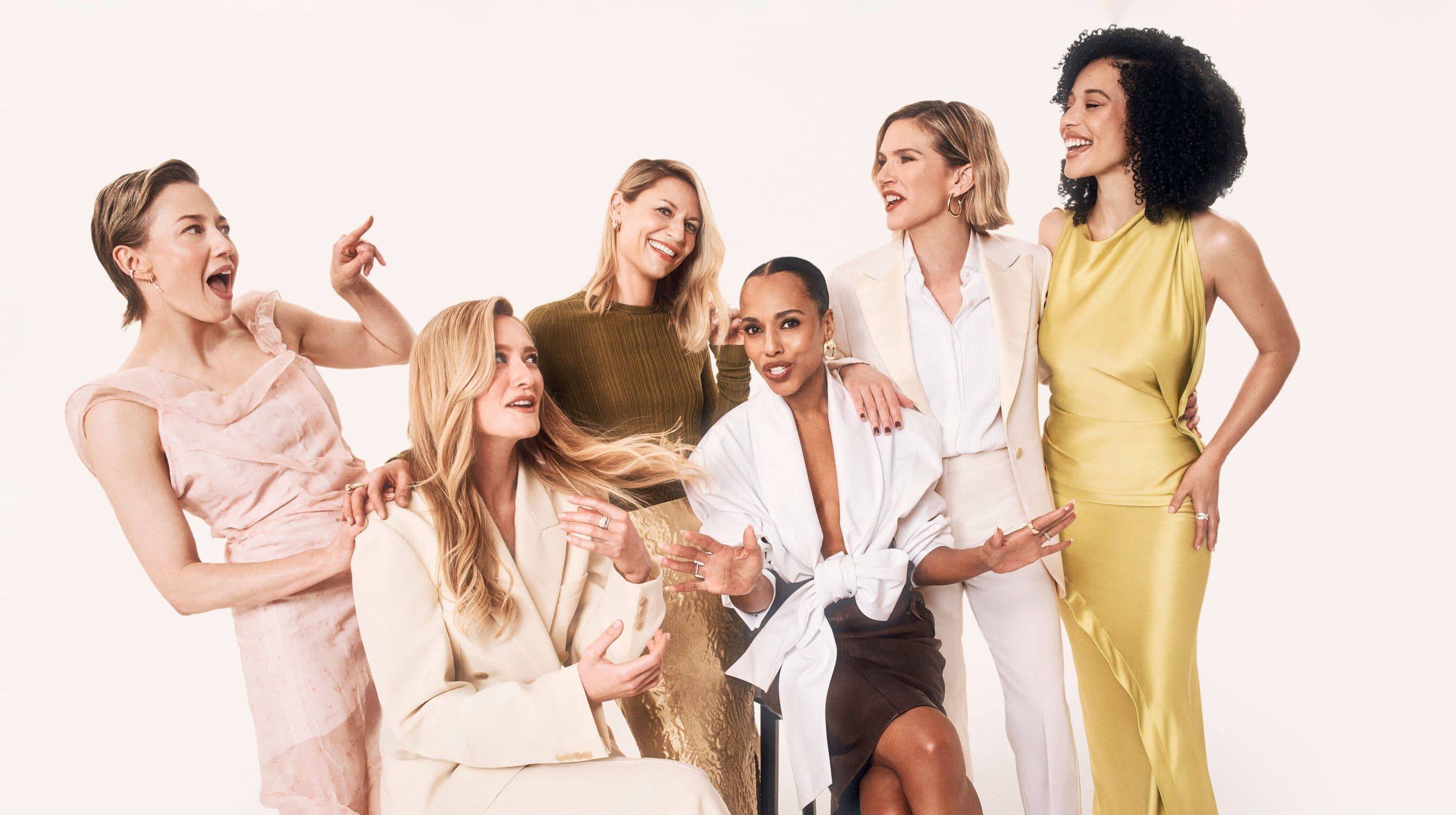
At THR's annual Drama Actresses Emmy Roundtable, held on a late April afternoon at The Georgian Hotel, Claire Danes (The Beast in Me), Carrie Coon (The Gilded Age), Kerry Washington (Imperfect Women), Rhea Seehorn (Pluribus), Chase Infiniti (The Testaments), and Sarah Pidgeon (Love Story) sat down to discuss the realities of working in an industry that always seems to demand more. The conversation ranged from grueling audition processes to red carpet anxiety — and even the odd comfort of humming to get through a public appearance.
"The Vast Majority of Us Are Just Working"
It was Pidgeon who first posed the question that hung over the entire discussion: does anyone in that room ever genuinely feel like they've made it? The honest answer from everyone present was a firm no. Danes perhaps said it best: "The vast majority of us are just working." The unspoken consensus was that anyone claiming otherwise might simply be out of touch with reality.
The theme of constantly chasing the next level resonated with all six women, each of whom has achieved significant recognition in their field — yet still experiences the uncertainty and hunger that defines an actor's life at every stage.
The Auditions That Tested Their Limits
Claire Danes and the Romeo + Juliet Wait
The conversation turned to the most grueling audition experiences each actress had endured, prompted by Chase Infiniti's remarkable six-month audition journey for One Battle After Another. Danes recalled repeatedly auditioning for Romeo + Juliet — the film that would ultimately make her a household name alongside Leonardo DiCaprio. The waiting period was so stressful that she developed painful mouth sores. "I couldn't talk because I was so stressed from the anticipation," she admitted.
Rhea Seehorn's Better Call Saul Mix-Up
Seehorn's story about landing her iconic role in Better Call Saul was both emotional and unexpectedly hilarious. After a lengthy wait with no word back, she had mentally resigned herself to not getting the part. When her agent finally called with the good news while Seehorn was walking through Venice with her partner Graham, the excitement quickly gave way to confusion.
Her agent instructed her to keep the news private and warned that a different name would be used in the announcement — meaning the character's name, not hers. Seehorn, however, misunderstood entirely. "What's my name?" she asked. "Beth," her agent replied. It took a full 48 hours before Seehorn realized she did not, in fact, need to legally change her own name. Graham's protest — "You're not changing your name" — was met with a panicked, "You don't understand show business, shut up!"
Kerry Washington and the Weight of Scandal
Washington shared that her audition process for Scandal was particularly lengthy and emotionally charged. Given her standing in the industry, she was first offered a meeting with creator Shonda Rhimes before being asked to formally audition. But the process still involved four or five rounds before a screen test.
Part of what made the stakes so high was historical significance: when Scandal premiered, it had been nearly 40 years since a Black woman had led a network drama. The interest was enormous, and Rhimes insisted that every actress who wanted a shot would get one. Washington reflected warmly on that decision, acknowledging that when a role feels destined for you, it's easy to forget that other talented women feel exactly the same way.
The Loss of Casting Director Culture
Carrie Coon brought up a topic that clearly struck a chord with the group — the shift away from the traditional casting director relationship toward what she described as a "tape farm" model. She recalled her Chicago theater days, when actresses called back for the same role would go out to lunch together, creating genuine community and mutual support. That camaraderie, she noted, has largely disappeared from film and television.
Coon credited casting directors with being essential to her career trajectory. Her pivotal casting in Gone Girl came from a self-taped audition she submitted from Chicago, fully expecting it to go unwatched. It didn't. Danes echoed the sentiment, recalling her early days rollerblading between auditions in a city where the same small pool of young actresses would repeatedly cross paths — almost like a built-in support network.
Anxiety as a Character Trait — and a Cultural Mirror
A critic recently described Danes as a cultural avatar for anxiety, pointing to the throughline connecting My So-Called Life, Homeland, Fleishman Is in Trouble, and The Beast in Me. Rather than bristle at the label, Danes embraced it thoughtfully, suggesting that anxiety reflects something true about the current cultural moment. "We're living in a kind of acutely anxious time," she said, adding that compelling drama often places an ordinary person in an extraordinary situation — and anxiety is a natural human response to that.
Seehorn added a sharp observation about the way female performers are described compared to their male counterparts. When both a man and a woman deliver brilliant performances, critics tend to praise the man's craft with technical language while reducing the woman's work to personality descriptors — "quirky," "effervescent," or simply "cute." The table quickly agreed that this double standard, while perhaps slightly diminishing, remains stubbornly persistent.
Red Carpet Personas and the Art of Getting Through It
Washington opened up about a coping strategy she developed earlier in her career after losing a coveted role to an actress who, by Washington's own assessment, had mastered personal marketing in a way she hadn't. The experience prompted Washington to examine whether she was, in some sense, hiding from public life.
The result was the creation of what she called "Red Carpet Kerry" — a version of herself that could confidently lean into fashion, hair, makeup, and the performative demands of celebrity visibility, without feeling completely exposed. "Still me," she clarified, "but a version of myself that wasn't entirely vulnerable and naked."
Seehorn related immediately, describing herself as always thrilled to be invited but terrified once she actually arrives. Danes, meanwhile, revealed her own personal technique for surviving public appearances: she hums. She then noted, with clear amusement, that Robert De Niro had once teased her about the habit — apparently recognizing it as his own method, too. "I was going to say disassociate," Danes added, "but humming is a nicer way of putting it."
The Takeaway: Success Is a Moving Target
What emerges from this conversation is not a story of complaint but one of remarkable honesty. These are women at the top of their craft — Emmy nominees, series leads, celebrated performers — and yet each one continues to feel the quiet pressure of an industry that rarely says "enough." The myth of "making it" persists, but for those actually living it, the ladder simply keeps extending upward. As Danes put it, most of them are just working — and perhaps that, in itself, is the closest thing to success the industry ever really offers.