Gut Bacteria Can Inject Proteins Into Human Cells — And It's Changing Everything We Know About Immunity
Scientists discovered that common gut bacteria use tiny injection systems to deliver proteins into human cells, directly shaping immune responses and potentially driving diseases like Crohn's.

Gut Bacteria Are More Than Silent Passengers
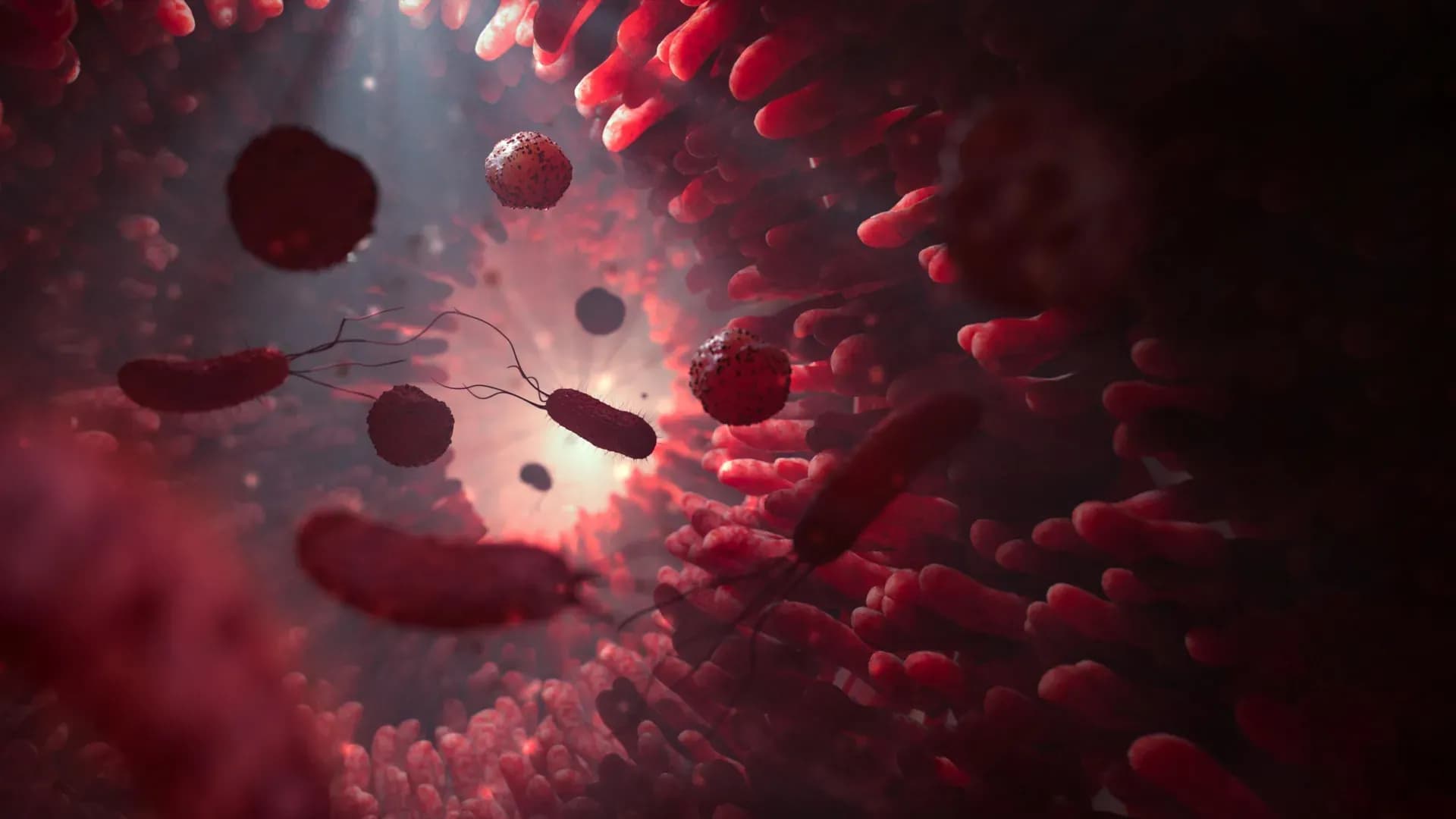
For decades, researchers have treated the trillions of bacteria living in our digestive system largely as bystanders — organisms that influence health in broad, indirect ways. A groundbreaking new study is dismantling that assumption entirely. Scientists have discovered that certain gut bacteria possess microscopic injection systems capable of delivering their own proteins directly into human cells, actively manipulating how the immune system functions.
The research, spearheaded by Helmholtz Munich in collaboration with Ludwig Maximilians University, Aix Marseille University, Inserm, and several other international institutions, exposes an entirely new layer of communication between the human body and its microbial residents — one that could reshape our understanding of inflammatory and autoimmune conditions.
A Tiny Biological Syringe Hidden in Common Bacteria
At the heart of this discovery is a molecular structure known as a type III secretion system — essentially a nanoscale syringe embedded within certain bacterial cells. Until now, scientists believed these delivery mechanisms were exclusive to dangerous, disease-causing pathogens like Salmonella.
The new research overturns that assumption entirely. The team found that many ordinary, non-harmful gut bacteria carry these same injection systems and can use them to insert proteins directly into human cells.
"This fundamentally changes our view of commensal bacteria," said Prof. Pascal Falter-Braun, Director of the Institute for Network Biology at Helmholtz Munich and corresponding author of the study. "It shows that these non-pathogenic bacteria are not just passive residents but can actively manipulate human cells by injecting their proteins into us."
Why This Discovery Matters
The implications are significant. If even harmless bacteria have the ability to communicate with human cells at this molecular level, it suggests the microbiome exerts far greater biological influence than previously appreciated — and through mechanisms that are direct, measurable, and potentially targetable.
Mapping Over a Thousand Bacterial-Human Protein Interactions
To understand what these injected proteins actually do once inside human cells, the research team constructed a detailed interaction map covering more than 1,000 connections between bacterial effector proteins and human proteins. The resulting network revealed a clear pattern: bacterial proteins consistently target pathways linked to immune regulation and metabolic function.
Subsequent laboratory experiments confirmed that these proteins can interfere with critical immune signaling pathways, including NF-κB signaling and cytokine responses. Cytokines are chemical messengers that help coordinate the body's immune activity, preventing it from spiraling into the kind of excessive reaction associated with autoimmune disease.
"Our goal was to better characterize some of the underlying processes of how gut bacteria affect human biology," explained Veronika Young, co-first author of the study alongside Bushra Dohai. "By systematically mapping direct protein-protein interactions between bacterial and human cells, we can now suggest molecular mechanisms behind these associations."
A Possible Molecular Link to Crohn's Disease
One of the study's most striking findings involves Crohn's disease, a chronic inflammatory condition of the gastrointestinal tract. The researchers discovered that the genes encoding these bacterial effector proteins appear at significantly higher frequencies in the gut microbiomes of individuals diagnosed with Crohn's disease.
This correlation points toward a compelling hypothesis: the direct transfer of proteins from bacteria to human cells may be a contributing factor in sustained intestinal inflammation. It also provides a molecular explanation for earlier observational studies that noticed microbiome imbalances in patients with inflammatory bowel conditions.
Notably, blocking Tumor Necrosis Factor (TNF) — a cytokine that these bacterial proteins appear to influence — is already a standard clinical treatment for Crohn's disease, lending further biological credibility to the team's findings.
Moving Beyond Correlation Toward Cause and Effect
Perhaps the most consequential contribution of this research is its ability to move the microbiome field beyond correlational data. For years, scientists have known that gut bacteria are associated with immune, metabolic, and inflammatory disorders. What has remained elusive is precisely how those associations arise.
This study begins to fill that gap — identifying a concrete, mechanistic pathway through which gut bacteria can influence human biology at the cellular level.
What Comes Next
The research team has flagged several important questions for future investigation, including the evolutionary origins of these injection systems. Did they first develop to facilitate peaceful coexistence between bacteria and their human hosts, or were they later co-opted by harmful pathogens?
Future studies will examine how specific bacterial proteins behave across different human tissues and disease environments. That knowledge could pave the way for more precise, targeted therapies for inflammatory and autoimmune diseases — treatments that work with the microbiome rather than against it.
A New Era in Microbiome Science
This discovery marks a pivotal moment in how scientists conceptualize the relationship between gut bacteria and human health. Rather than viewing the microbiome as a passive ecosystem, researchers must now account for its capacity to actively intervene in cellular processes — with real consequences for disease and wellness.
As our understanding of these bacterial injection systems deepens, so too does the potential for a new generation of microbiome-based medical treatments.