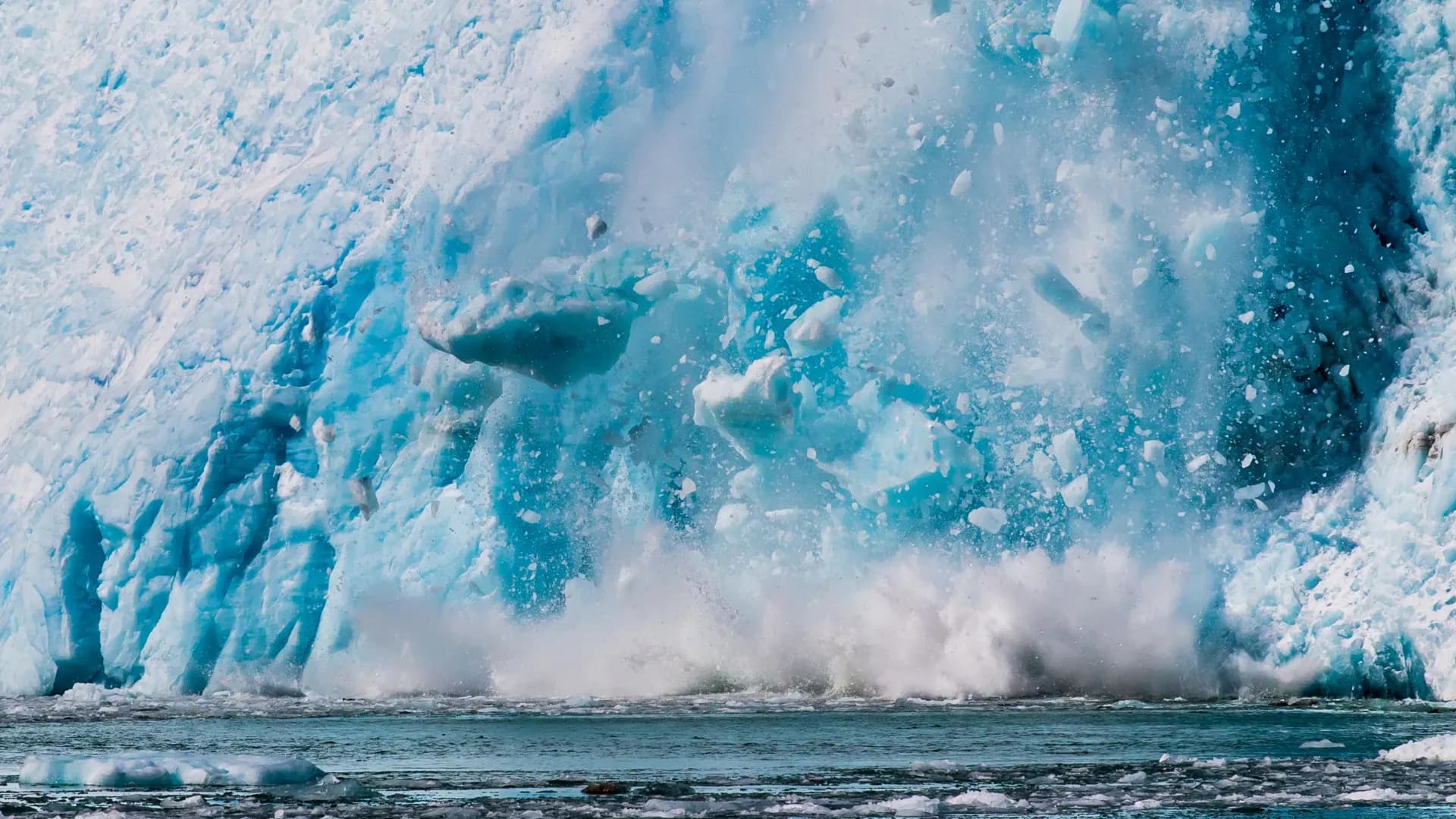
Greenland's Ice Sheet Is Melting Six Times Faster — And Scientists Are Sounding the Alarm
Extreme ice melt events in Greenland have surged sixfold since 1990, with record-breaking episodes becoming more frequent and intense.
Greenland's Ice Is Disappearing at an Unprecedented Rate
Something alarming is happening atop the world's largest island. Greenland's massive ice sheet is melting at a pace that has no historical parallel, and the situation is accelerating faster than scientists had previously anticipated. A major new study confirms that extreme melt events are not only happening more frequently — they are covering greater surface areas and releasing far more water than ever recorded.
The research, led by scientists at the University of Barcelona and published in the peer-reviewed journal Nature Communications, analyzed extreme melting episodes spanning from 1950 to 2023. What they discovered paints a deeply concerning picture of where things are headed.
A Sixfold Surge in Meltwater Since 1990
The numbers alone are staggering. Between 1950 and 2023, extreme melt events on Greenland produced an average of 12.7 gigatons of meltwater per decade. But since 1990, that figure has exploded to 82.4 gigatons per decade — a sixfold increase in meltwater output within just a few decades.
The geographic footprint of these events has also expanded dramatically. The surface area impacted by extreme melting has been growing at a rate of approximately 2.8 million square kilometers per decade since 1990. To put that in perspective, that is an area larger than Argentina being added to the melt zone every ten years.
Record-Breaking Events Are Now the Norm
Historically, extreme melt events were rare anomalies. Today, they are becoming regular occurrences. Of the ten most severe melting episodes ever recorded in Greenland, seven have taken place since the year 2000. Among the most notable were events in August 2012, July 2019, and July 2021 — each surpassing anything seen in prior climate records and lacking any comparable historical precedent.
Beyond frequency, the intensity of each individual event has grown sharply. When comparing current extreme melt episodes to similar atmospheric conditions recorded between 1950 and 1975, meltwater output has risen by 25%. When all extreme events are considered together, the increase climbs to as much as 63%. Researchers attribute this amplification primarily to a thermodynamic effect — in plain terms, rising air temperatures are supercharging the melting process well beyond what changes in wind and weather patterns alone could explain.
Northern Greenland Emerges as a Critical Hotspot
While the entire ice sheet is under stress, northern Greenland has emerged as one of the most severely affected regions. Historically considered more stable due to its distance from warmer southern latitudes, the north is now experiencing some of the most dramatic melting shifts on record.
Looking ahead, the projections are sobering. Under high greenhouse gas emission scenarios, scientists estimate that the most intense meltwater anomalies could be up to three times greater by the end of this century compared to current levels.
How Researchers Separated Natural Patterns from Human-Driven Change
One of the most valuable contributions of this study is its methodological innovation. Led by postdoctoral researcher and professor Josep Bonsoms from the University of Barcelona's Department of Geography — with collaboration from fellow professor Marc Oliva — the team developed a novel classification system to better understand what is driving these changes.
By combining an analysis of anticyclonic and cyclonic air mass circulation patterns with a regional climate model, researchers were able to distinguish between two key forces: dynamic influences, which relate to natural shifts in atmospheric circulation, and thermodynamic influences, which are directly linked to atmospheric warming driven by human activity. The findings make clear that it is the thermodynamic component — rising temperatures caused by greenhouse gas emissions — that is primarily responsible for the surge in melt intensity.
The study was conducted under the GRELARCTIC project, with Marc Oliva serving as principal investigator, and received support from the ICREA Academia program.
Why This Matters Far Beyond Greenland
The consequences of accelerating ice loss in Greenland extend well beyond the Arctic Circle. As the ice sheet sheds billions of tons of water, global sea levels rise — threatening coastal communities and low-lying nations around the world. There are also growing concerns about disruptions to ocean circulation systems, which regulate climate patterns across the Northern Hemisphere.
Lead author Josep Bonsoms emphasized the broader significance of these findings, noting that the rapid transformation of Greenland's ice sheet carries not only serious environmental consequences such as sea level rise and potential alterations in ocean circulation, but also positions the Arctic at the center of emerging strategic, economic, and territorial dynamics on the global stage.
As geopolitical interest in Greenland intensifies — driven by its vast natural resources, strategic location, and accelerating environmental transformation — understanding the forces reshaping its ice sheet has never been more urgent. Scientists and policymakers alike will need to act on these findings to anticipate future risks and develop informed, effective responses to one of the defining challenges of our time.