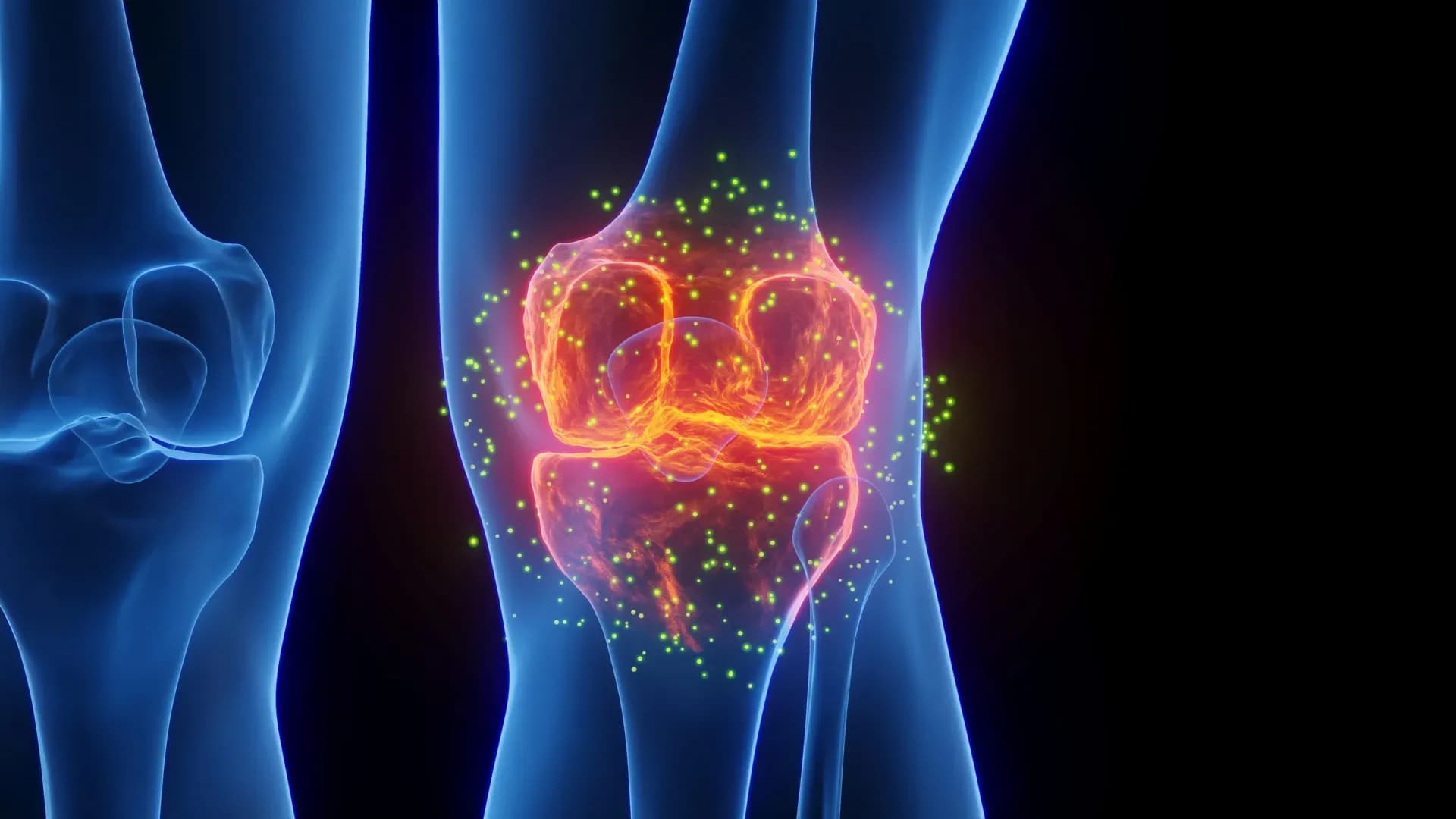
Goodbye Knee Replacement? This Minimally Invasive Procedure Is Changing Pain Management
A cutting-edge outpatient procedure called GAE is giving chronic knee pain sufferers lasting relief — no major surgery required.

A New Option Between Pain Pills and Surgery
For millions of people living with chronic knee pain, the treatment ladder has long looked frustratingly short — a few medications, some physical therapy, perhaps a steroid injection, and then the daunting prospect of a full knee replacement. Now, a minimally invasive procedure known as genicular artery embolization, or GAE, is quietly filling that critical gap, offering patients a path back to the activities they love without going under the knife.
For Cynthia Schraf-Fletcher, 74, the outcome was nothing short of remarkable. Nearly a year after having GAE performed on her right knee, she reports an improvement in pain levels that rivals the total knee replacement she previously had on her left knee.
"I couldn't be more pleased," she says. Today, everyday pleasures like gardening and riding a stationary bicycle are genuinely enjoyable again — something that seemed out of reach before the procedure.
How Genicular Artery Embolization Actually Works
GAE is an outpatient procedure designed to address the root cause of chronic knee discomfort by targeting the abnormal blood vessels that feed inflammation within the joint. By reducing blood flow to these problematic areas, the treatment helps diminish both swelling and pain.
The procedure typically lasts between one and two hours and is carried out under conscious sedation. A small incision is made near the leg crease, and using X-ray imaging combined with contrast dye, an interventional radiology team guides a tiny catheter through the femoral artery to the genicular arteries surrounding the knee. Once the catheter is properly positioned, microscopic beads are deployed to block blood flow to the inflamed vessels in the areas the patient has identified as painful.
Afterward, patients are monitored for a few hours before being discharged the same day, with doctors typically recommending light activity during the initial recovery period.
Who Is the Ideal Candidate?
According to Leigh Casadaban, MD, MS, a vascular interventional radiologist and assistant professor of radiology at the University of Colorado Anschutz School of Medicine, the procedure is most effective in patients with mild to moderate osteoarthritis. Those with more advanced joint degeneration can still undergo GAE, though the duration of relief may be shorter.
"For treating osteoarthritis in the knees, we often think of medications, physical therapy, maybe a steroid injection, and then on the far end of the spectrum is a total knee replacement. There really hasn't been anything for patients in between," Casadaban explains. "GAE is a promising minimally invasive procedure that may fill that spot for people who have failed conservative treatments but are not yet ready for major surgery."
The numbers are encouraging: approximately 70% of patients report dramatic results, cutting their pain scores in half or more. Some patients experience complete pain elimination following the procedure.
Research Points to Years of Lasting Relief
What makes GAE particularly compelling is the growing body of evidence suggesting its effects are not merely short-lived. The prevailing theory holds that by reducing inflammation inside the knee joint, the procedure may actually modify the disease process itself — not just mask the symptoms.
Four-year follow-up data from Japan indicates that a single outpatient session can sustain meaningful pain relief over that entire period. In the United States, two-year data now confirms that patients who respond well to the procedure maintain their improvements for at least that long.
"That really speaks to the theory that we're hopefully modifying something in the joint," Casadaban notes.
Ongoing Clinical Trials and Future Applications
Originally pioneered in Japan roughly a decade ago, GAE has steadily attracted global interest. Since 2021, the FDA has awarded breakthrough device status to multiple devices associated with the procedure, signaling its growing clinical significance.
Casadaban is currently leading two clinical trials at CU Anschutz. One is investigating changes in knee fluid among GAE patients, while the other is evaluating a temporary arterial treatment device called Nexsphere-F, which targets the small blood vessels in the knee believed to contribute to pain and inflammation.
Looking beyond the knee, researchers are beginning to explore whether GAE principles could be applied to other musculoskeletal conditions, including frozen shoulder, tennis elbow, and plantar fasciitis — potentially opening the door to a new era of minimally invasive joint care.
A Promising Shift in Orthopedic Pain Treatment
Osteoarthritis is a degenerative joint disease affecting tens of millions worldwide, and for too long, patients have been caught in a frustrating middle ground — too much pain to manage conservatively, yet hesitant to commit to major reconstructive surgery. GAE represents a meaningful advance in bridging that divide, offering real hope for those seeking effective, long-lasting relief with minimal downtime.