GLP-1 Weight-Loss Drugs May Quietly Crush Addiction Cravings Across All Substances
A landmark study of 600,000+ veterans finds GLP-1 drugs like Ozempic may dramatically reduce addiction risks and drug-related deaths.

GLP-1 Drugs Show Surprising Power Against Addiction
Best known for treating diabetes and driving dramatic weight loss, GLP-1 receptor agonist medications may be harboring a far more profound capability — fighting addiction itself. A sweeping new study involving more than 600,000 U.S. veterans has revealed that these widely used drugs are associated with significantly lower risks of developing substance use disorders and, for those already battling addiction, a sharp decline in overdoses, hospitalizations, and drug-related fatalities.
The research, conducted by scientists at Washington University School of Medicine in St. Louis and published in The BMJ, examined the health records of 606,434 veterans diagnosed with type 2 diabetes. Its findings have sent ripples through both the medical and addiction treatment communities.
What the Research Examined
Researchers split participants into two distinct groups. The first — nearly 525,000 individuals — had no existing substance use disorder at the study's outset. The second group comprised over 81,000 veterans who were already living with a diagnosed addiction.
Both groups were tracked for up to three years following the start of their treatment. Participants were taking either a GLP-1 receptor agonist — most frequently semaglutide, liraglutide, or dulaglutide — or an SGLT2 inhibitor, a separate class of diabetes medication used as a comparison baseline.
Key Findings: Prevention of New Addictions
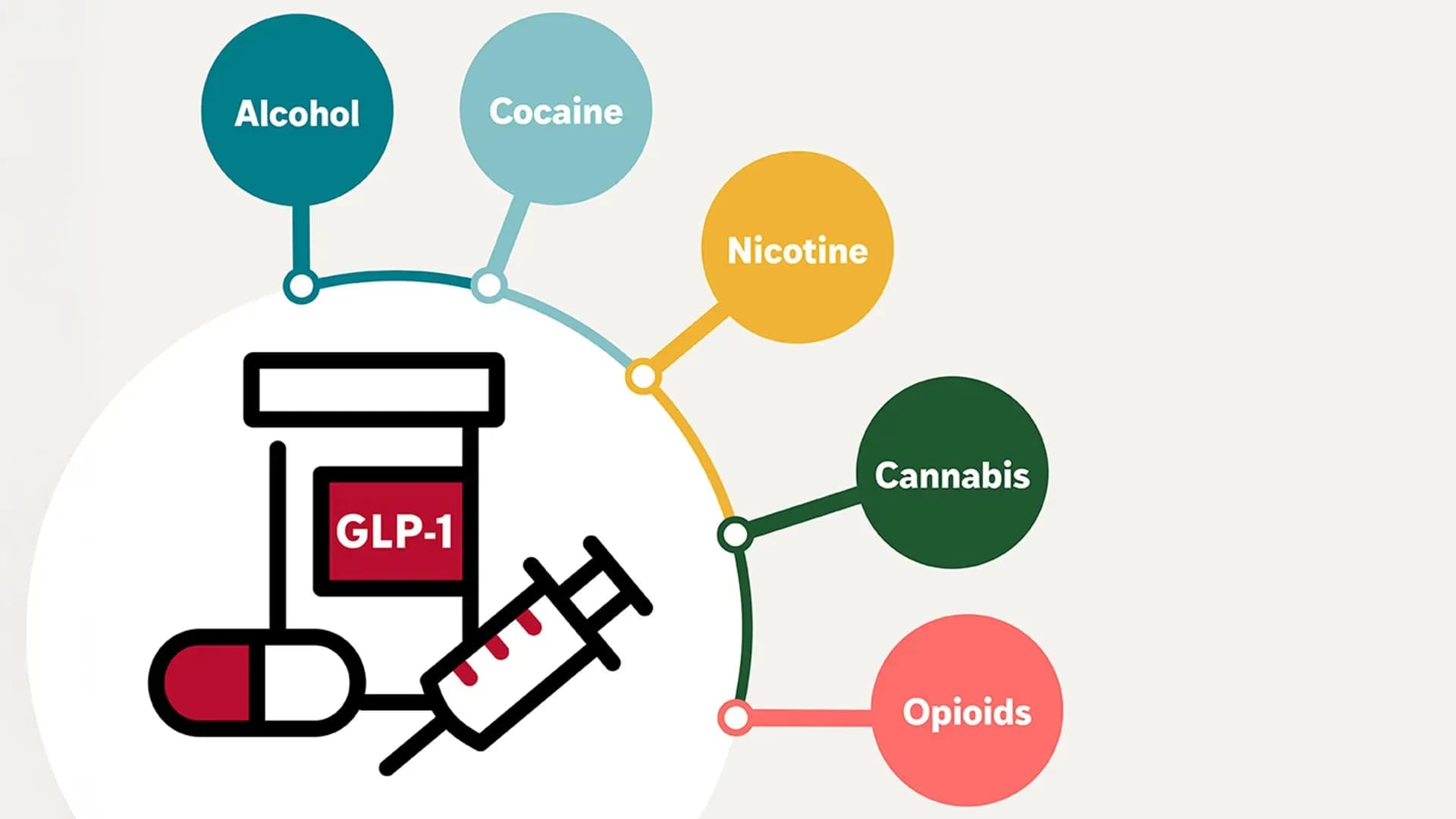
Among participants who had no substance use disorder at enrollment, those on GLP-1 medications were considerably less likely to develop one during the follow-up period. Compared to those using non-GLP-1 diabetes medications, GLP-1 users showed:
- 14% lower overall risk of developing any substance use disorder
- 18% lower risk for alcohol use disorder
- 14% lower risk for cannabis use disorder
- 20% lower risk for cocaine use disorder
- 20% lower risk for nicotine use disorder
- 25% lower risk for opioid use disorder
In practical terms, researchers estimated this translated to approximately seven fewer new substance use disorder diagnoses per 1,000 GLP-1 users.
Key Findings: Reduced Severity in Existing Addiction
For veterans already struggling with addiction, the results were equally compelling. After three years on GLP-1 medications, participants experienced:
- 30% fewer emergency department visits
- 25% fewer hospitalizations
- 40% fewer overdoses
- 50% fewer drug-related deaths
Overall, researchers calculated roughly 12 fewer serious addiction-related events per 1,000 users among this group — a reduction that could translate into tens of thousands of lives saved if applied at a population level.
Why GLP-1 Drugs May Target Craving Itself
What makes these findings particularly striking is that the effect was consistent across virtually every major addictive substance studied — not just one or two. That broad, uniform impact has led researchers to propose a compelling hypothesis: these drugs may not be targeting individual substances at all, but rather the underlying biological mechanism of craving itself.
GLP-1 receptors are known to exist in brain regions associated with reward processing and impulse control. Scientists believe the medications may modulate these pathways in ways that dampen the compulsive desire to use substances — regardless of what those substances are.
"In addiction medicine, a lot of treatments target just one thing — for example, a nicotine patch helps with smoking, but not alcohol," said senior author Dr. Ziyad Al-Aly, a clinical epidemiologist at WashU Medicine and Chief of Research and Development at the VA Saint Louis Health Care System. "The revelation about GLP-1 medication is that it really works against all major substances, and it works uniformly — not because it acts against alcohol or opioids or nicotine specifically, but because it is likely acting against the craving itself."
From 'Food Noise' to 'Drug Noise'
Many patients on GLP-1 medications for obesity have described a phenomenon called "food noise" — the constant, intrusive mental preoccupation with eating that perpetuates overeating behavior. Researchers now believe an analogous process may be at work with addiction.
"What our study suggests is something broader: GLP-1 drugs may also quiet what I call 'drug noise' — the relentless craving that drives addiction across substances," Dr. Al-Aly explained. "That cross-substance signal points to a shared biology underlying addiction, and it opens the door to a fundamentally different approach: not treating one addiction at a time, but targeting that common biologic signal."
This concept is especially significant for substances like methamphetamine, which currently have no FDA-approved medication treatments. If GLP-1 drugs can suppress craving at a neurological level regardless of substance type, they could fill a critical void in addiction medicine.
A Dual Benefit for High-Risk Patients
Millions of Americans are already prescribed GLP-1 medications for diabetes or obesity — a number that continues to climb each year. For patients managing those chronic conditions while simultaneously struggling with addiction, GLP-1 therapy could offer a powerful dual advantage: treating metabolic disease and addressing substance dependence with a single medication.
"GLP-1s may offer a dual benefit for patients with chronic conditions like diabetes or obesity who are also struggling with a substance use disorder: one medication can treat both conditions at once," Dr. Al-Aly noted.
What Comes Next
While the scale and rigor of this study are notable, the researchers are careful to acknowledge its observational nature — meaning causation cannot be definitively established from these findings alone. The study population was also predominantly male veterans, which may limit how broadly the results apply to other demographics.
Nevertheless, the authors argue that the evidence is strong enough to warrant dedicated clinical trials testing GLP-1 drugs specifically as addiction treatments. Such trials would be designed to measure outcomes including overdose rates and drug-related mortality with the precision that randomized controlled studies can provide.
If those trials confirm what this large observational study suggests, the public health implications could be transformative — reshaping how addiction is understood, treated, and prevented for millions of people worldwide.
This research was funded by the U.S. Department of Veterans Affairs. The funders had no role in study design, data analysis, or publication decisions. The findings do not represent the official views of the Department of Veterans Affairs or the U.S. government.