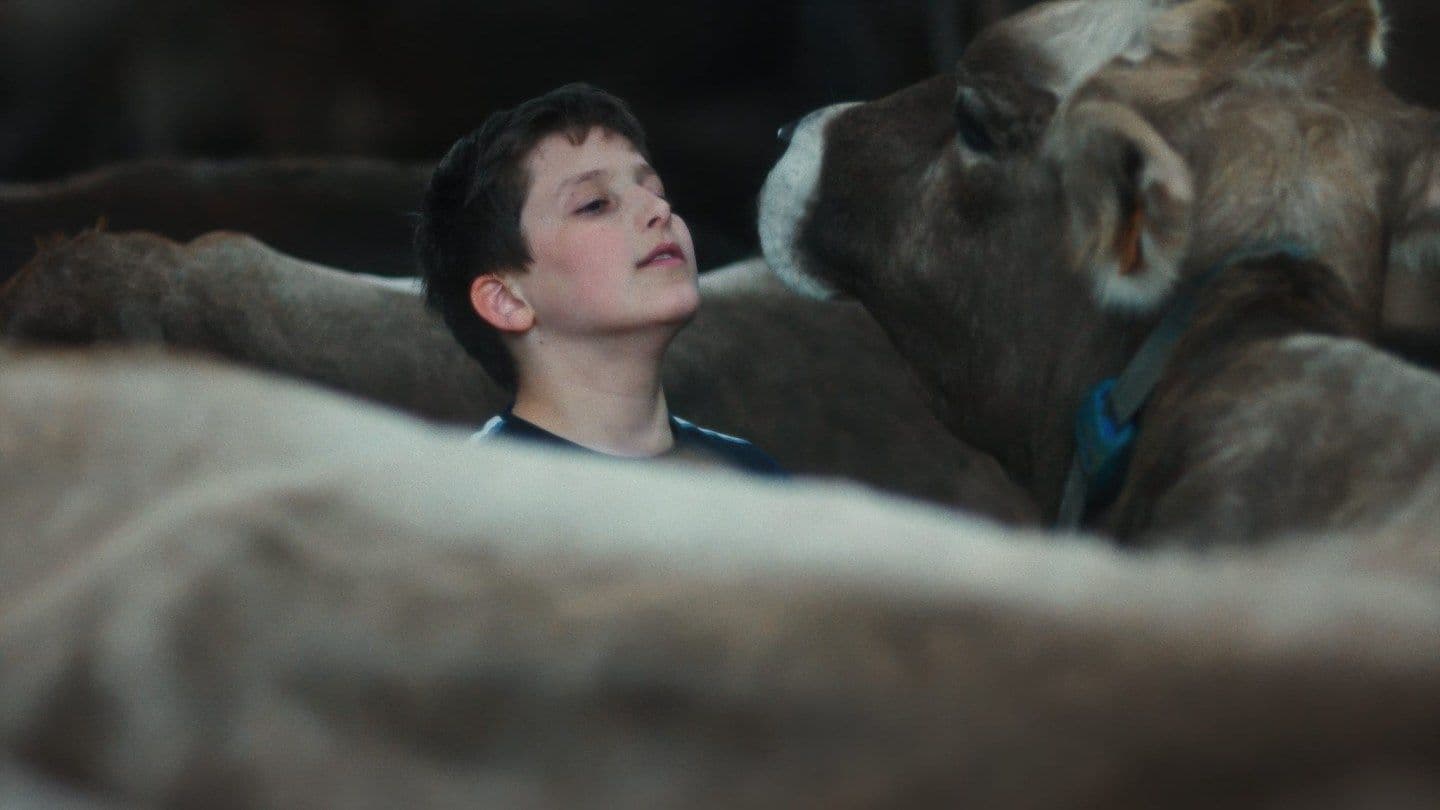
Gabin: A Decade-Long Documentary Journey Premiering at Cannes Directors' Fortnight
French filmmaker Maxence Voiseux spent ten years capturing one young man's struggle between rural family duty and personal freedom in his debut feature.

A Documentary Ten Years in the Making
French director Maxence Voiseux is not a filmmaker in a hurry. His debut feature, Gabin, is living proof of that — a documentary painstakingly crafted over an entire decade, following one young man from childhood to adulthood as he wrestles with the weight of family expectation and the pull of his own aspirations. The film makes its world premiere in the Directors' Fortnight section at the 2026 Cannes Film Festival on May 14.
The Story of Gabin Jourdel
At the center of the documentary is Gabin, the youngest son of the Jourdel family, who live in the rural Artois region of northern France — a landscape shaped by agricultural tradition and economic hardship. From the age of eight to eighteen, the camera quietly watches as Gabin navigates a deeply personal tension: honoring his father's vision of him inheriting the family butcher shop and helping rescue the farm from financial decline, while quietly nurturing dreams that reach far beyond his hometown.
As the production's press notes describe it, Artois is a place "where leaving feels like betrayal, and staying comes at a cost." It is this emotional geography that gives the film its beating heart.
Voiseux's Deep Connection to Artois
For Voiseux, this project is more than just a documentary — it is a deeply personal homecoming. He grew up viewing the Artois region as bleak and uninspiring, but over time came to see its people and landscapes through an entirely different lens.
"I turn my camera towards what remains of that heritage: men who have rarely been rewarded by life," Voiseux explains. "As a child, I saw it as bleak and austere. Only much later did I begin to see it as a genuine film set, its inhabitants as living, novelistic characters."
His relationship with the region dates back to 2014, when he created his graduation short film Of Men and Beasts, documenting a livestock market in Arras, Artois. It was there that he first encountered Gabin's grandfather. That connection led to meeting the grandfather's three sons, whom he later featured in his mid-length documentary The Heirs. Gabin represents the natural evolution of that long creative relationship.
One Hundred Days Behind the Lens
Voiseux estimates he spent approximately 100 to 115 days on set over the course of the decade-long shoot. Yet he is quick to emphasize that raw filming time tells only part of the story.
"The most important thing was the time I spent with Gabin," he says. "Some of those exchanges you can maybe feel in the movie, but you won't see them. I spent so much time between the shooting sessions preparing and talking to them."
Over the years, Voiseux became so embedded in the Jourdel family's daily life that Gabin would introduce him simply as his cousin to avoid lengthy explanations. But the filmmaker was always mindful of the dual role he occupied.
"They knew after a while that I was thinking about what they were sharing with me and how I could put it in the movie or not," he acknowledges. "And I would ask them for their thoughts."
When Life and Film Become Inseparable
By the time filming wrapped, Gabin had spent more of his young life being documented than not. The experience blurred the boundaries between cinematic process and lived reality in ways that were sometimes difficult to untangle.
"They used the film as a process, or as a molecule, to make their life a bit better and to make things happen," Voiseux reflects. "Sometimes I, or we, didn't even know if they were doing things for themselves, for the movie, for everyone, or all of those. So sometimes it's a huge mix of life and film."
The relationship between filmmaker and subject deepened significantly when Gabin visited Voiseux in Paris — a milestone that shifted their bond from a friendly kinship to something far more profound.
"That was when we really went from cousins to becoming brothers," the director shares.
A Private Screening Before Cannes
Before submitting the final cut to Cannes, Voiseux made a point of showing the completed film to Gabin first. He traveled to Canada specifically for the occasion, where the two rented a small cinema and watched the documentary together.
"It was so moving," Voiseux recalls. "And at the end of the movie, Gabin was crying."
More importantly, Gabin felt that the film captured him honestly and with care. "He told me immediately that the movie was precise and so close to his heart," the director says — a response that validated the years of trust built between them.
Now that the cameras are put away for good, their relationship has taken on a new, quieter quality. "Now, it is just him and me, without the camera, without the process of cinema," Voiseux notes. "We don't talk about cinema. We talk only about life."
A Universal Story Rooted in the Local
Voiseux is a firm believer that the most specific stories carry the broadest universal resonance. He hopes that viewers worldwide will find their own reflections in Gabin's journey — his fierce loyalty to family and place, and his equally fierce desire to define life on his own terms.
"Gabin is about a young man driven by his spirit of emancipation and strong fidelity to the Artois region," the director concludes. "And that is a pretty strong story."
Production Details
The film was written and directed by Maxence Voiseux, with cinematography by François Chambe and Martin Roux, and editing by Pascale Hannoyer and Natali Barrey. It was produced by Cécile Lestrade and Elise Hug of Alter Ego Production, co-produced by Ulla Lehmann of Ama Film and Palmyre Badinier of Rita Productions, with co-production support from SWR/ARTE and RTS Radio Télévision Suisse. Arizona Distribution handles French distribution, while Lightdox manages international sales.
