From VLC to Robotics: How the Man Behind 6 Billion Downloads Is Building the Future of Remote Control
The creator of VLC Media Player is now tackling a bigger challenge — building the infrastructure layer that will power millions of robots and drones worldwide.
The Mind Behind VLC Is Solving a Much Bigger Problem
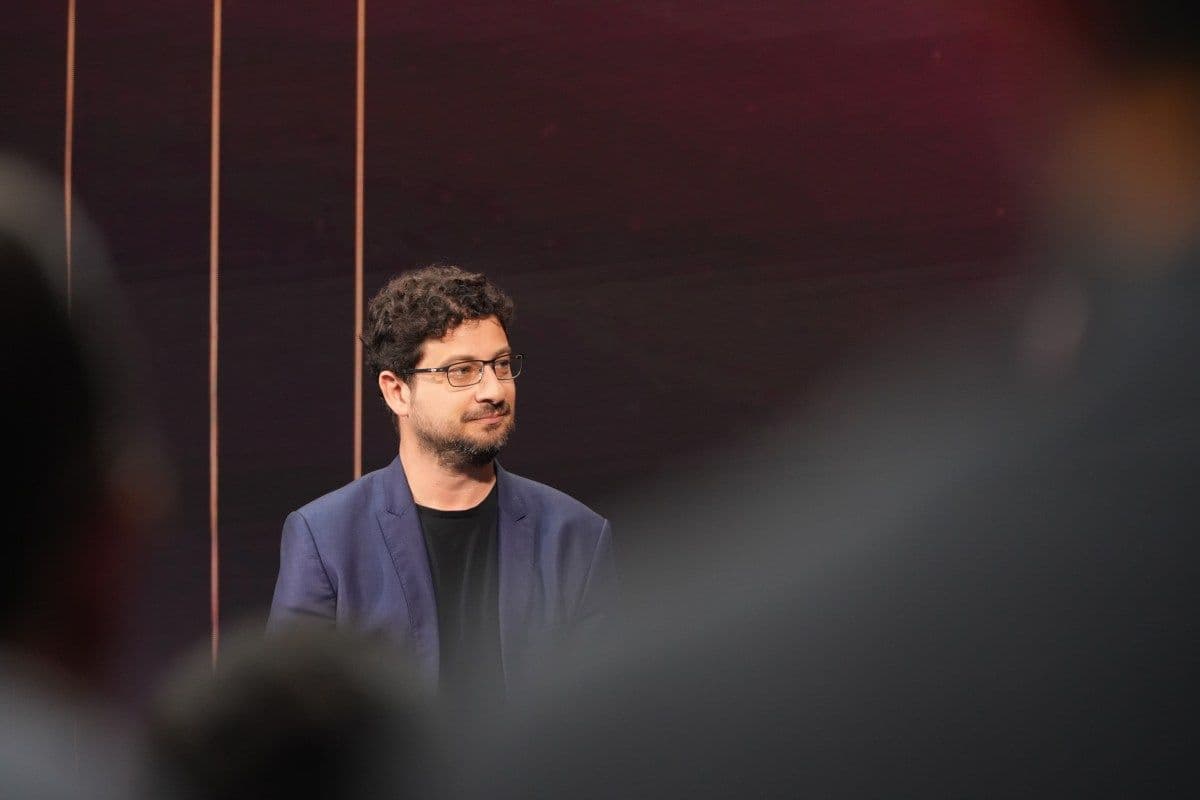
If you've ever watched a video on your computer, there's a good chance you've used VLC Media Player — the iconic free software bearing an orange traffic cone logo that has racked up over 6 billion downloads worldwide. Its lead developer, Jean-Baptiste Kempf, is now channeling that same engineering ambition into an entirely different arena: the infrastructure that will one day control millions of robots and drones.
Kempf isn't just speculating about a robotic future — he's actively building for it. His Paris-based startup, Kyber, is developing a foundational software layer designed to manage remote devices in real time, with minimal delay and maximum reliability.
What Is Kyber and Why Does It Matter?
At its core, Kyber is a software development kit (SDK) that synchronizes video feeds, audio streams, sensor data, and control commands across physical distances — all with as little latency as possible. The company's mission is straightforward: make it possible for an operator in one location to control hardware in a completely different place, as seamlessly as if they were standing right next to it.
This capability sits squarely at the intersection of robotics, drones, remote IT management, and the rapidly growing field of physical AI — artificial intelligence that interacts with and operates in the real world.
"Physical AI is only as good as the underlying systems running it," noted Lightspeed, the prominent American venture capital firm that led Kyber's recent $5 million funding round. Lightspeed has a strong track record in the AI space, having previously backed companies like Anthropic and Mistral AI.
Speed Is Everything — Even the Name Reflects It
Kyber's name is a deliberate nod to the lightsaber crystals from Star Wars — a fitting metaphor for a company obsessed with precision and speed. According to Kempf, that focus on speed isn't cosmetic.
"If you control things in the real world, every millisecond matters," he explained.
The platform's approach to eliminating lag draws heavily from video-streaming technology — a natural extension of Kempf's background. Kyber actually began as a side project he developed while serving as CTO at Shadow, a cloud gaming startup. That lineage makes the connection to VLC intuitive, but Kempf insists the solution requires more than just streaming expertise. Internet of Things (IoT) optimization — adapting software performance to the specific computing resources available on a given device, at enormous scale — is equally central to what Kyber delivers.
Built for Scale That Has Never Existed Before
Some companies have already developed proprietary remote-control systems for specific use cases, such as autonomous vehicle fleets. But Kempf points out a critical limitation in those approaches.
"The largest fleets today have maybe 2,000 or 3,000 vehicles. Imagine you need to manage millions of them — that's not the same thing," he said.
Scaling from thousands of devices to millions doesn't just require more computing power — it fundamentally changes how operators must monitor and verify that systems are functioning correctly. This challenge, often referred to as observability, becomes even more critical as AI agents begin managing entire fleets autonomously, rather than human operators overseeing individual machines.
Even at smaller scales, the benefits are tangible. Being able to push a software update to a remote device without physically accessing it, for example, saves significant time and resources.
Open Source Roots, Enterprise Ambitions
True to his open-source heritage, Kempf has made Kyber's core software freely available, while offering a fully productized, enterprise-grade version for commercial clients. This dual model mirrors the philosophy he championed with VLC — build something the entire world can use, then create a premium layer for those who need more.
Kyber also mirrors the deployment model of firms like Palantir by offering forward-deployed engineers (FDEs) — specialists who work directly alongside clients to customize and implement the platform. FDEs account for a significant portion of Kyber's current workforce of 25 full-time employees.
Headquartered in Paris, the startup also maintains offices in San Francisco and Singapore, positioning itself for a truly global client base. The company is already operating commercially across industries including defense, telecommunications, robotics, and AI.
Three Priority Markets Leading the Charge
To keep its efforts focused, Kyber has identified three primary segments driving its early growth:
1. Robotics
With hundreds of millions of robots projected to populate streets and workplaces in the coming years, the demand for reliable, low-latency remote control infrastructure is set to surge dramatically.
2. Drones
From commercial delivery drones to surveillance and industrial inspection units, the drone market requires the kind of real-time coordination that Kyber is purpose-built to provide.
3. Remote IT Access
This segment has generated particularly strong demand. While the comparison to legacy solutions like Citrix is an obvious one, Kempf envisions Kyber going well beyond simple remote desktop capabilities — targeting a much broader and more lucrative market.
Remote IT management may lack the glamour of robotics or drone technology, but Kempf appears energized by the opportunity. Kyber's own careers page captures the company's driving motivation perfectly:
"The companies that tried to solve it spent years and tens of millions building custom solutions they'll never share. We're building the version everyone else can use."
A Career Built on Democratizing Technology
Kempf's trajectory — from open-source video software to cloud gaming to robotic infrastructure — reveals a consistent thread: a commitment to building powerful tools that are accessible to everyone, not just well-funded tech giants. With Kyber, he's applying that philosophy to one of the most consequential technological shifts of our time.
As physical AI matures and autonomous machines become a fixture of daily life, the invisible infrastructure enabling their operation will matter enormously. Kyber is positioning itself to be exactly that — the silent engine powering a world in motion.