From Space to Sea: How Astronaut Nicole Stott Found a New Appreciation for Planet Earth
Retired NASA astronaut Nicole Stott says her journeys beyond Earth and beneath the ocean forever changed how she sees our planet.

A Journey That Changed Everything
For most people, the idea of gazing down at Earth from the window of a spacecraft remains a distant dream. For retired NASA astronaut Nicole Stott, it became a life-defining reality — one that reshaped her entire understanding of what it means to call this planet home.
Stott, who logged an impressive 104 days in space across two separate missions, says the experience left her with an overwhelming sense of responsibility toward Earth and everyone who inhabits it. "You're like, holy moly, we live on a planet in space," she recalled, describing the profound moment of looking out from orbit for the first time.
Record-Breaking Achievements Above and Below
Stott's accomplishments extend well beyond the average astronaut resume. During her time with NASA, she completed a full spacewalk and made history as the first person to speak Manx Gaelic in space. She also picked up a paintbrush in zero gravity, becoming the first person to create watercolor artwork while orbiting Earth.
But space wasn't her only frontier. As part of her astronaut training, Stott spent 18 days living as an aquanaut inside an undersea habitat — an experience that proved just as transformative as her time among the stars.
"Both environments really heighten your awareness," she explained. "They make you think more deeply about your relationship with this planet and with the people you share it with."
Crewmates, Not Passengers
One of the most powerful takeaways from Stott's extraordinary career is her belief that humanity must adopt a "crewmate" mentality when it comes to caring for the Earth. Drawing on her experience of working closely with others in extreme, isolated environments — both in orbit and deep underwater — she believes cooperation and shared responsibility are essential.
"We need to remind ourselves of how important it is to be crewmates on our planetary spaceship," she said. "To take care of it, to understand our relationship with it — to be crewmates, not passengers."
This philosophy has become central to how Stott engages with the public about space exploration and environmental awareness.
From the Oceans to the Stars: A Special Stamp Collection
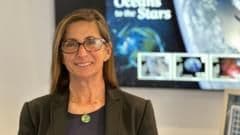
Stott recently partnered with the Isle of Man Post Office to contribute to a unique philatelic project titled From the Oceans to the Stars. The special stamp collection pairs striking imagery from both deep space and the ocean depths, and Stott provided a series of written essays to accompany the visual series.
She explained that the images were deliberately chosen for their "otherworldly feel," with the intention of sparking curiosity and connection in viewers. "I wanted to do that purposely because I think it helps us make connections to things we might not have raised our awareness to," she said.
The collection, she added, is "really meant to get us thinking about our place on this ocean planet in space, and how everything is interconnected — from the deepest part of the ocean to the farthest reaches of our universe."
You Don't Have to Leave Earth to Appreciate It
Despite her remarkable off-world experiences, Stott is quick to point out that you don't need a spacesuit to develop a deep appreciation for our planet. Stott — who is married to Manxman and satellite industry leader Chris Stott — spoke warmly about the natural beauty found right on the Isle of Man.
"Everywhere you look, in every direction, there's something awesome and wonderful to take in," she said. "If we open our hearts and our minds to that, it'll ground us again in this reality of living on a planet in space."
It's a message that is both simple and profound: wonder is all around us, if only we choose to look.