From Poisoned Rivers to Prize Winner: How One Woman Fought Back Against a Mining Giant
Theonila Roka Matbob grew up in a rainforest stripped bare by a copper and gold mine. Now, she's a Goldman Prize winner who forced Rio Tinto to answer for decades of devastation.

A Rainforest Stolen Before She Was Born
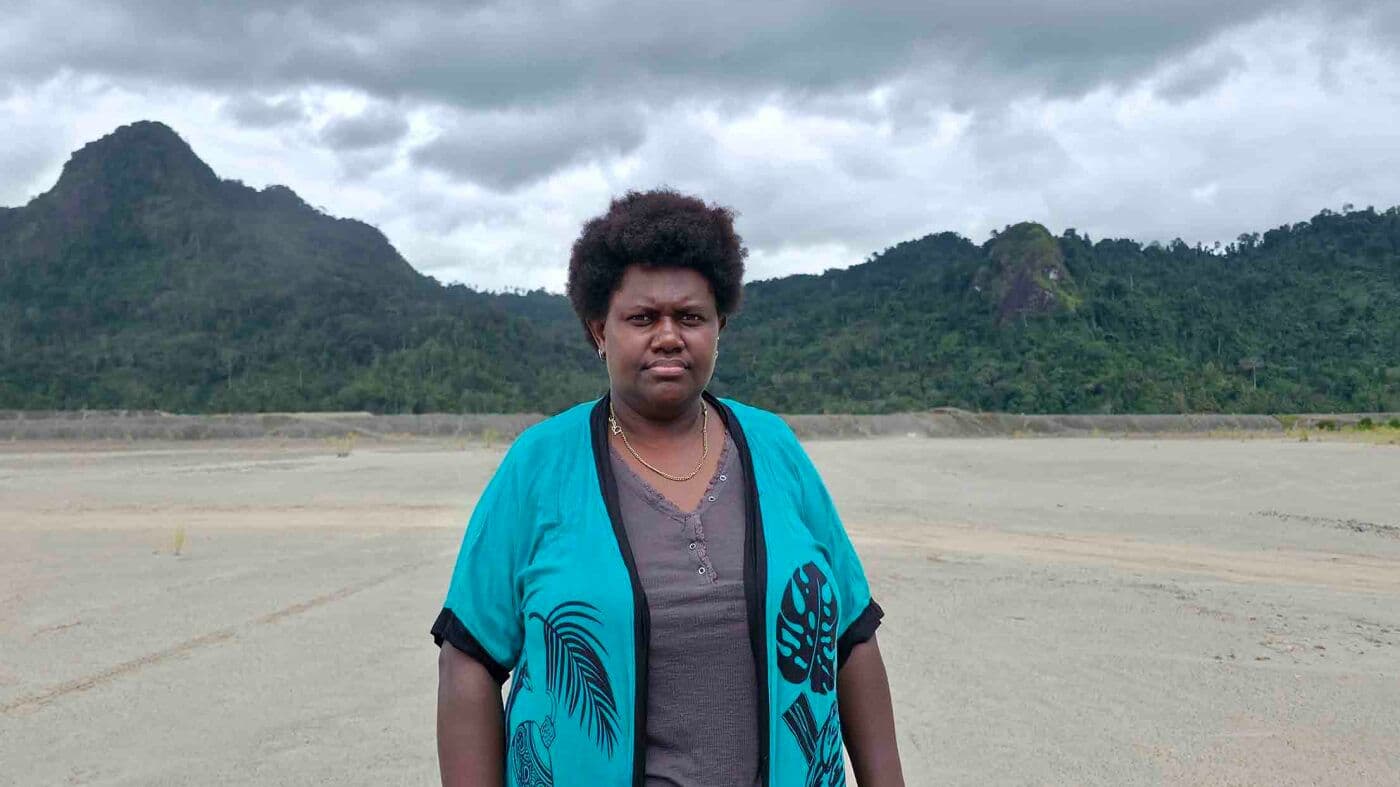
Theonila Roka Matbob should have grown up surrounded by towering trees and vibrant jungle. Her home sits near the heart of Bougainville, the largest island in Papua New Guinea's Autonomous Region — a place that, by nature's design, should have been a thriving tropical paradise.
Instead, the landscape of her childhood was stripped of life. Rocky terrain and barren sand replaced what should have been dense forest canopy. "You have to travel miles — into another region and territory entirely — just to find trees, just to find forest," says Roka Matbob, now 35.
The warnings she received growing up were constant and chilling. Elders told children never to approach the rivers, never to eat anything that had touched the ground. The water was poisonous. The soil was contaminated. But no one ever fully explained why — at least, not at first.
Roka Matbob started asking questions. What she eventually uncovered became the foundation of a life's mission.
The Panguna Mine and Its Devastating Legacy
At the center of the destruction stood the Panguna copper and gold mine, developed and operated by Bougainville Copper Ltd., a subsidiary of global mining giant Rio Tinto. Between 1972 and 1989, the mine extracted millions of tons of copper along with hundreds of tons of gold and silver from the land surrounding Roka Matbob's community.
The environmental toll was staggering — but it wasn't the only damage the mine left behind.
The exploitation of Bougainville's natural resources, combined with the import of outside labor and the export of profits away from local communities, ignited deep resentment. That tension eventually erupted into a violent, decade-long civil war. The military was deployed to suppress the uprising, and the conflict transformed into a full separatist insurgency. Thousands of lives were lost in the bloodshed.
When Roka Matbob was just days away from turning three years old, armed fighters took her father. He was later killed.
The mine eventually shut down amid the unrest — but its closure brought no relief. No remediation plan was put in place. No effort was made to address the environmental contamination left behind. The land remained broken, and the people living on it were left to navigate a world permanently altered by industrial greed.
"I was born into that broken environment," Roka Matbob says. "Growing up, life was in survival mode — permanently."
A Peace Agreement That Missed the Point
When a peace agreement was finally signed in 1998, Roka Matbob found it deeply inadequate. The deal failed to confront the ongoing environmental catastrophe or acknowledge how thousands of Bougainvilleans were being denied the right to a healthy, normal life on their own land.
Her family had been displaced during the conflict, living nomadically before eventually settling in a government-controlled camp. The scars — both physical and emotional — ran deep.
But rather than accept the situation, Roka Matbob chose to fight.
From High School Protests to Historic Legal Action
Her activism began during her high school years, when she organized and led local demonstrations. But her most consequential move came when she became the lead complainant in a landmark human rights case brought by the Human Rights Law Centre against Rio Tinto.
The campaign gained serious momentum in 2019, when Roka Matbob and her community invited the Human Rights Law Centre to visit Bougainville and truly listen to what residents had endured. A damning report titled After the Mine: Living with Rio Tinto's Deadly Legacy followed, documenting in stark detail the human cost of the company's operations.
Rio Tinto's response was telling: the company acknowledged it had never fully understood the on-the-ground impact of its mine. When a formal legal complaint was lodged, the mining company responded within 24 hours.
"It is a dream come true," Roka Matbob says of finally being able to speak directly to the company that upended her community. "I shed tears to say: finally, my grandmother didn't get to do this — but I'm going to do that now."
In 2021, Rio Tinto agreed to fund an independent environmental and social assessment. By 2024, the company had signed a memorandum of understanding committing to work with affected communities toward meaningful remediation.
Goldman Environmental Prize Recognition
In 2026, Theonila Roka Matbob was named a Goldman Environmental Prize winner — one of the world's most prestigious honors for grassroots environmental activism. She received the award representing the island nations category.
"Theonila is leading a historic effort to obtain justice for decades of environmental and social devastation caused by the Panguna mine," said Ilan Kayatsky of the Goldman Environmental Prize. "She understood that no one else would step forward to coordinate a campaign and demand accountability. Her efforts have brought together a coalition intent on improving the lives of Bougainvilleans, today and into the future."
For Roka Matbob, however, the recognition is not a finish line. When you live permanently in a contaminated environment, she explains, there is no room to stop and celebrate. The next question is always: How soon can this be fixed? How long will it take?
Rooted in Identity, Driven by Motherhood
What keeps Roka Matbob going is deeply personal. As a member of the Indigenous Nasioi people and the Basikang clan, she holds an inseparable bond with the land. In her culture and territory, leaving is not a simple option — moving would mean entering another tribal area, something that carries profound cultural and social consequences.
"This is where my children and grandchildren will live," she says. "We'll always be here. We need a lasting solution — and that motivates me."
Motherhood also plays a powerful role in her drive. She has two young children, aged eight and four, and she is acutely aware that many children in her community lack a parent willing or able to advocate on their behalf.
"No mother would want to pass on a broken, contaminated environment to her child," she says simply.
The Role of Women in the Fight for Justice
Roka Matbob has also served as one of a small number of women elected to Bougainville's House of Representatives, where she has continued pushing for environmental accountability and community rights.
Navigating a deeply patriarchal political culture has not been without its challenges. But she also sees her identity as a woman as a source of strength, not limitation. In her clan's tradition, women are considered the guardians and keepers of the land.
There is a proverb in her language that captures it perfectly: it takes a woman's tears to start a fight, and it takes a woman's tears to broker peace.
"This fight — demanding answers, demanding solutions — is really a woman's place in the community," she says.
As for the prize money that accompanies the Goldman award, Roka Matbob says the decision on how to use it will rest with her community. In that, too, she remains true to the principles that have guided her all along: that the land belongs to its people, and its future must be shaped by them.