From Mud to Mindfulness: How Wellness Is Transforming the UK Festival Scene
UK festivals are ditching their party-only reputation as demand for yoga, saunas, and run clubs soars. Here's why wellness has become a core festival experience.

From Mud to Mindfulness: How Wellness Is Transforming the UK Festival Scene
For many, the word "festival" conjures images of overflowing portable toilets, rain-soaked fields, and bleary-eyed mornings after one too many drinks. But something significant is shifting across the UK's live events landscape — and it smells a lot more like essential oils than stale beer.
As consumer interest in health and wellbeing reaches record levels, music festivals are rapidly evolving to meet a new kind of demand. From wood-fired saunas and Pilates sessions to guided sound baths and boutique spa experiences, wellness has firmly planted its flag at the heart of modern festival culture.
A Multi-Billion Pound Movement
The UK's wellness industry is valued at more than £160 billion and continues to expand heading into 2026. According to the Global Wellness Institute, the average British consumer was spending roughly a third more on wellness-related activities in 2024 compared to just five years earlier. That appetite for healthier living isn't staying at home — it's following people straight to the festival grounds.
Global market insights provider Innova attributes this shift to growing public awareness around the dangers of poor diet and sedentary lifestyles. Social media has played a pivotal role too, widening access to health information and fuelling trends driven by what the company describes as a collective "desire for emotional stability, weight loss and disease prevention."
Boardmasters Leads the Charge
Few festivals illustrate this transformation more clearly than Boardmasters, held annually in Newquay, Cornwall. Organisers report a dramatic surge in appetite for wellness programming, with attendees increasingly seeking to maintain their everyday health routines — morning runs, yoga sessions, therapeutic treatments — even while camping at a music event.
"Five or ten years ago, wellness was very much a niche add-on. Now it's a core part of why people come," festival organisers explained.
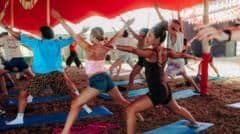
The Boardmasters wellness offering has grown considerably over the years and now includes run clubs, Pilates classes, sound baths, and creative workshops covering everything from jewellery-making to candle crafting. For 2026, the festival is launching a dedicated boutique spa, complete with treatment tents, facial therapies, and aromatherapy — designed to offer what organisers describe as "moments of serenity" amid the excitement.
"People want both the euphoria of a headline set and the calm of a cliffside yoga session the next morning," the team noted, summing up the dual appetite that is reshaping the festival experience.
A Festival-Goer's Perspective
Lizzy McNamara from Pembrokeshire, Wales, experienced this first-hand when she joined Boardmasters' run club last year. Operated by travel company Run Weekends, the club ran across three consecutive mornings at a relaxed, inclusive pace.
"It was welcoming and lovely with great vibes," McNamara said, adding that the experience gave her something genuinely positive to take away from a weekend of limited sleep and indulgent food. As someone who doesn't drink alcohol, she found the early morning runs a refreshing alternative to the groggy recovery periods many festival-goers know all too well.
Wellness Festivals in Their Own Right
The trend isn't confined to music festivals alone. Entrepreneurs Alex Hyde and Sam Carter-Smith identified growing demand for dedicated wellness events and co-founded OneRetreat Wellness in Birmingham — a full-day festival format featuring exercise classes, sauna sessions, and expert-led talks on health and personal development.
The pair noted that in-person experiences are increasingly preferred over digital alternatives. "People are on their phones all the time and online events are harder to sell — they want to see real faces in real life," Hyde explained.
The event was designed to make wellness retreats accessible and practical, removing the barriers that often make dedicated health getaways feel out of reach for everyday consumers.
Decades in the Making
While wellness at festivals may feel like a fresh phenomenon, its roots run surprisingly deep. The Mind Body Spirit Festival was established in London back in 1977, founded on the principle of exploring the interconnectedness of mental, physical, and spiritual health. Early highlights included a meditation sanctuary, a vegetarian restaurant, and psychic readings organised by the British Astrological and Psychic Society.
Fast forward to today and the event attracts more than 30,000 visitors annually across its London and Birmingham editions. Exhibitors offer everything from organic food and handmade goods to crystals and health supplements.
"People have become a lot more aware of their own wellness in the last five years as they submerge themselves in health and wellbeing markets," organisers said. They also noted that attendees who arrive feeling anxious or low in mood frequently leave feeling "inspired and motivated" — having found, in their words, "the answer they came for."
The Bigger Picture
What this growing movement reveals is a fundamental shift in how people think about leisure time. Festivals are no longer purely about escapism through music and revelry — they are becoming spaces for genuine restoration, community, and intentional living. As wellness continues its upward trajectory, event organisers across the UK are taking note, and the festival experience may never look quite the same again.