From Fear to Film: How Amy Wang Turned Racial Identity Into Body Horror Gold
Director Amy Wang's debut film Slanted explores what it means to wish away your own identity — and why that question still haunts millions.

'Wouldn't Life Be Easier If I Were White?' — The Raw Question Behind Amy Wang's Debut Film
In March 2021, a gunman opened fire at several Atlanta spas, killing six Asian women. For Amy Wang — an Asian Australian filmmaker who had relocated to the United States six years earlier — the tragedy struck a nerve that went far deeper than grief. "It was the first time I felt genuinely unsafe here," she recalls. The attack dredged up long-buried memories: the quiet weight of never fitting in, the grinding exhaustion of navigating racism both subtle and overt, and a question that had haunted her adolescence. "There were many times when I'd wake up as a teenager and think to myself: 'Wouldn't life be easier if I were white?'"
Rather than bury that question again, Wang decided to build a film around it.
What Is Slanted — and Why Is It Turning Heads?
Wang's debut feature Slanted took home the narrative feature grand jury prize at SXSW 2025, and it's not hard to see why. The film fuses dark satire, coming-of-age drama, and body horror into something that feels both deeply personal and disturbingly universal. Its bluntness is intentional — Wang uses genre as a scalpel, cutting through polite conversation about race, identity, immigration, and belonging without ever veering into heavy-handed territory.
"Honestly, I didn't think the film would be controversial, because it's so truthful to me," Wang says, speaking via Zoom from a New York hotel room overlooking Central Park during a press tour. "The core of how I felt as a teenager — that's what this is."
The Story: A Surgical Shortcut to Whiteness
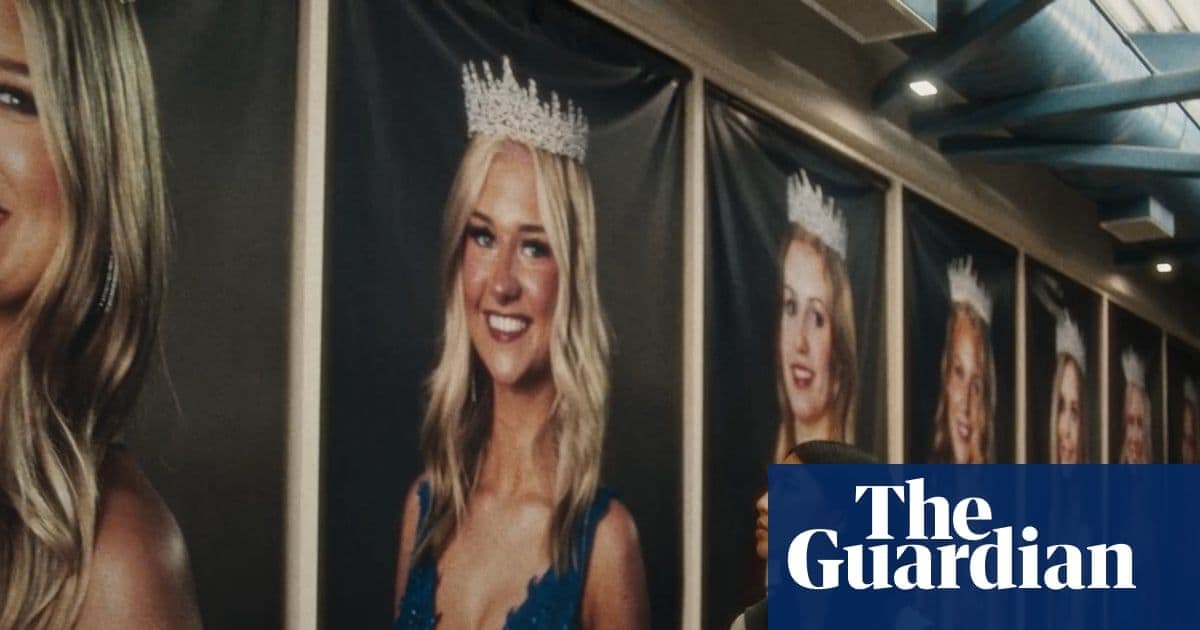
At the center of Slanted is Joan, portrayed by Shirley Chen (known for Didi), a high school student who has mapped out her school's social hierarchy with painful precision — and knows exactly where she sits within it: on the outside looking in. She watches the popular girls with a mixture of longing and resentment, fixating on their effortless confidence and proximity to the all-American ideal.
When a mysterious company called Ethnos contacts Joan with the promise of racial transformation through surgery, she takes the bait. Post-procedure, Joan becomes Jo — played by McKenna Grace of Scream 7 — and suddenly the world opens its doors. But the ease of her new life comes with a mounting psychological cost.
"The core concept was satirical, but I couldn't imagine it as a dramatic satire," Wang explains. "I wanted the movie to feel like Mean Girls at the beginning and then kind of feel like a nightmare. How do I evoke that? Well, through body horror." She adds with sharp comic timing: "The concept was years before The Substance came out, I'd like to say."
While both films use bodily transformation as metaphor, Slanted operates differently — less viscerally graphic, more focused on the quiet, compounding damage inflicted on family bonds and personal identity.
Personal Memory Fuels the Film's Most Powerful Moments
Wang draws heavily from her own history. She emigrated to Australia at age seven, speaking no English, and spent her formative years navigating the disorienting gap between cultures. Those experiences feed directly into the film's most emotionally resonant scenes — particularly those involving Jo/Joan and her immigrant parents, played by Fang Du and Vivian Wu.
What begins as cross-cultural comedy gradually darkens into something more painful: the portrait of parents who gave up everything to build a life in a new country, only to watch their daughter try to erase herself from within it.
"I had a wealth of experiences to draw from," Wang says. "Particularly in those family scenes."
Why High School? The Strategic Choice of Setting
Setting Slanted in a high school wasn't just instinctive — it was calculated. The heightened emotional reality of adolescence gives the film's more absurdist elements a kind of grounded plausibility. Teenagers live in a world where social hierarchies feel life-or-death, where belonging is currency, and where identity is still dangerously malleable.
"When you're in high school, everything feels so heightened and dramatic," Wang says. "I wanted to take the all-American girl trope — so well-known, so coveted — and flip it on its head."
McKenna Grace, though not Asian American, found her own authentic entry point into the character. According to Wang, Grace connected with the themes of bullying and the desperate need to belong. She even committed to learning Mandarin, sending Wang videos of her Duolingo practice sessions during production.
A Single Improvised Line That Says Everything
One of the film's most lingering moments comes not from the script but from an improvised line delivered by Maitreyi Ramakrishnan (Never Have I Ever), who plays Joan's friend. Mid-scene, she asks quietly: "Do you think I'm ugly too?"
It's a small moment with enormous weight — a reminder that two people of color can inhabit the same world and still experience entirely different realities.
Wang also recounts a response from KCRW podcast host Sam Sanders, who told her that watching Slanted forced him to confront whether he would have accepted the surgery as a teenager. His answer was no — but he would have undergone surgery to become straight.
"To me, that's the whole film," Wang says. "It's about confronting what you're uncomfortable with and putting it on the surface — it could be your body, your face, something internal. I don't believe anyone has existed in this world without once thinking: 'I wish I looked different.'"
Wang's Place in Hollywood — and What Comes Next
Wang has been carving out her space in the industry since graduating from the American Film Institute in 2017. She has produced Netflix's The Brothers Sun and is currently writing Crazy Rich Asians 2, which she describes as more joyful and aspirational in tone.
Slanted exists as the necessary counterpoint to that kind of celebratory representation narrative — not the triumph of visibility, but an honest accounting of what it costs when visibility is absent.
America is her home for now, and Wang speaks with hard-won pride about both her Asian and Australian identities. The "who cares" confidence she carries today, she notes, only comes with time and self-acceptance. "It really is a lifelong journey — finding the specific version of yourself that fits, that you can be proud of. I'm embracing that."
For Wang, Slanted is more than a debut feature. It's an act of reclamation. "I hope to keep making movies that confront and explore the why," she says, "and in doing so, help somebody else feel seen and feel less judged."
Slanted is currently showing in US cinemas. UK and Australian release dates are yet to be announced.

