Four Years After Dobbs: What's Really Happening With Abortion Access in America
Four years after Roe v. Wade was overturned, the abortion landscape looks nothing like many predicted. Here's what the data and stories reveal.

Four Years After Dobbs: The Abortion Reality Nobody Expected
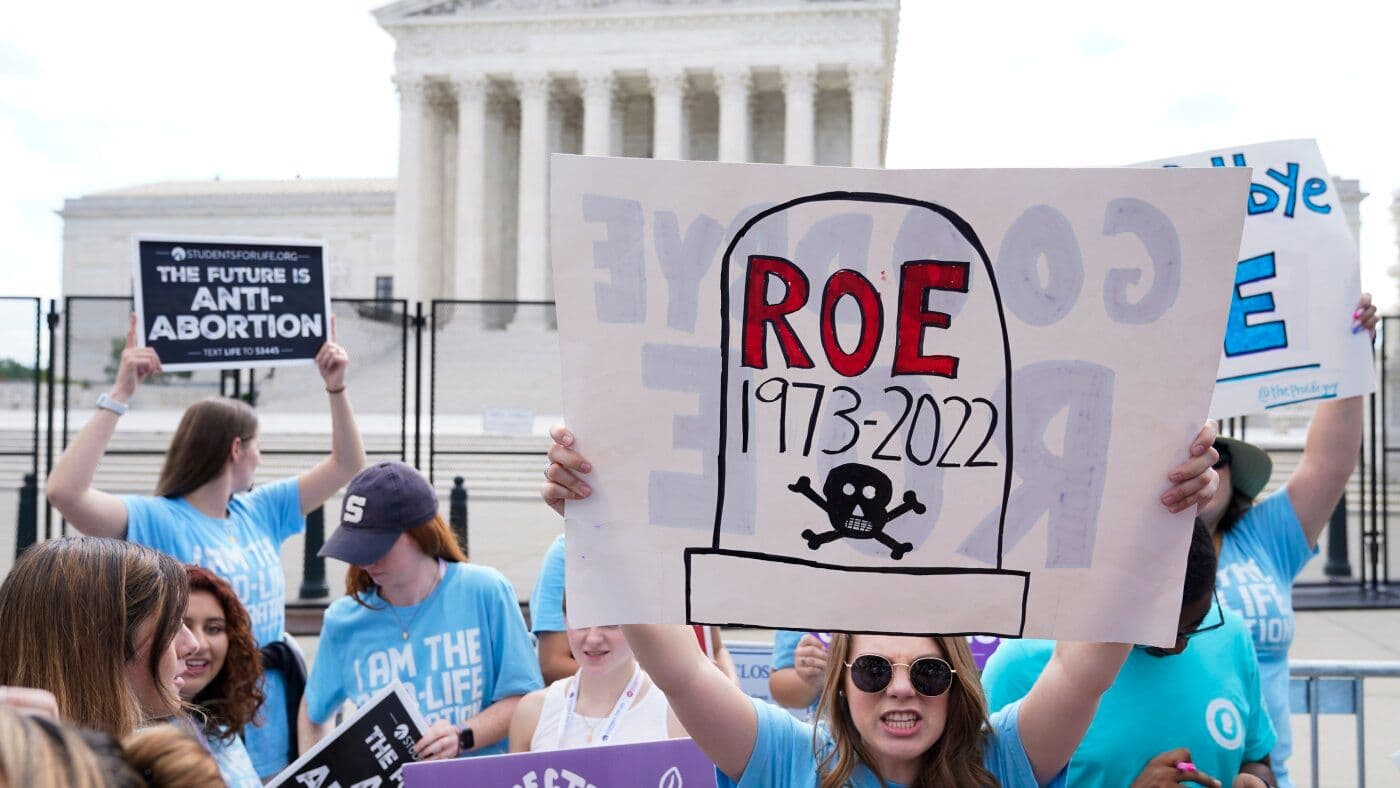
Four years have passed since the Supreme Court issued its landmark ruling in Dobbs v. Jackson Women's Health Organization, effectively dismantling the constitutional right to abortion that American women had held for nearly five decades. Justice Samuel Alito declared in his majority opinion that Roe v. Wade had been "egregiously wrong from the start" and suggested the ruling would help settle the national debate on abortion.
It hasn't. If anything, the landscape that has emerged since June 24, 2022, is more complex, more contested, and more surprising than almost anyone anticipated. Here are four critical things to understand about where abortion access in America stands today.
1. The Total Number of Abortions Has Actually Gone Up
Conventional wisdom suggested that once more than a dozen states enacted abortion bans, the overall number of abortions performed nationwide would drop sharply. The data tells a different story entirely.
Every year since Dobbs, the national abortion count has climbed. The reasons are multilayered. States that support abortion rights have systematically dismantled long-standing barriers — eliminating mandatory waiting periods, removing parental consent requirements, and expanding access points. These reforms have made it easier not only for their own residents but also for people traveling from states with bans.
Perhaps the most unexpected development has been the rise of so-called "shield laws." Abortion-supportive states have enacted legal protections allowing healthcare providers to prescribe abortion medication via telemedicine — phone or video — to patients living in states where abortion is banned, without those patients ever crossing a state line. Pills are then mailed directly to patients or made available through local pharmacies.
The result? Even in states with active abortion bans, the number of abortions has increased in recent years, driven largely by telemedicine access. Justice Alito himself took notice, writing in a recent dissent that such practices represent "a scheme to undermine" the Dobbs decision.
2. The Political and Legal Battle Is Far From Over
President Trump finds himself pulled in opposing directions on abortion. His Supreme Court appointees were central to overturning Roe — a defining victory for the conservative movement — yet his administration has adopted a notably muted tone on the issue during this midterm cycle, likely because the independent voters who helped elect him in 2024 broadly support abortion rights.
Meanwhile, anti-abortion legislators and activists are pressing for far more aggressive action. One of the most significant legal weapons being considered is the Comstock Act, a 19th-century law that prohibits using the U.S. mail to distribute "obscene" materials — including anything designed to facilitate an abortion. If enforced, legal experts warn the Comstock Act could function as an effective national abortion ban without requiring any new legislation from Congress. Justice Clarence Thomas argued in a recent dissent that the law is currently in force, and that pharmaceutical companies distributing FDA-approved abortion medications are engaged in a "criminal enterprise."
At the state level, the push for restrictions continues to intensify. Texas enacted legislation permitting private citizens to sue out-of-state abortion pill prescribers for up to $100,000. Louisiana classified mifepristone and misoprostol — the two drugs used in medication abortion — as controlled substances. Louisiana has also filed a lawsuit against the FDA aimed at reversing the regulatory change that enabled telemedicine access to mifepristone, a case that may well reach the Supreme Court. A ruling against the FDA could eliminate telemedicine abortion access across the entire country.
On the other side, abortion rights advocates are also pushing boundaries. Researchers at UC San Francisco have explored the possibility of making abortion medication available over-the-counter, requiring no prescription or doctor's visit. A Planned Parenthood affiliate has begun providing abortion pills to patients who are not yet pregnant, allowing them to keep the medication at home as a precautionary measure. Providers have also developed contingency strategies to continue mailing misoprostol alone if access to mifepristone becomes further restricted.
3. Privacy Around Abortion Has Both Improved and Deteriorated
There is a profound irony embedded in the post-Dobbs era. Under Roe v. Wade, the right to abortion was rooted in a constitutional right to privacy — yet in practice, accessing abortion often meant visiting a physical clinic, potentially facing protesters and public exposure. Now that the constitutional protection is gone, the act of obtaining an abortion can, in many cases, be far more private than it ever was before.
Patients can complete an online intake form, consult with a clinician via video, and receive abortion pills at their home address — never setting foot in a clinic, never encountering a protester. At the same time, there has been a remarkable cultural shift toward openness. Rather than concealing their experiences, many people are actively choosing to share them. Campaigns like #ShoutYourAbortion reflect a broader rejection of the stigma that historically surrounded the procedure.
Some women have shared deeply painful stories about being denied medically necessary abortion care and miscarriage management. Samantha Casiano carried a pregnancy for months knowing the baby had no chance of survival, then testified in court and appeared in a documentary documenting the human cost of Texas' abortion ban. Kate Cox went public while actively seeking a court order to obtain an abortion in Texas due to a dangerous pregnancy complication — and when the Texas Supreme Court denied her request, she left the state to receive care.
These individual stories have generated a snowball effect, empowering others to come forward with their own experiences and shifting public opinion in measurable ways.
However, the digital nature of abortion access introduces serious new privacy vulnerabilities. Shortly after the Dobbs ruling, Nebraska law enforcement used private Facebook messages as evidence to bring felony charges against a mother who obtained abortion pills for her teenage daughter. Millions of Americans also use period-tracking apps that collect sensitive reproductive health data — data that privacy advocates warn could potentially be accessed by law enforcement in states where abortion is criminalized.
4. Medication Abortion Has Become a Defining Force
Brick-and-mortar reproductive health clinics have faced significant pressure since Dobbs. Some have closed outright, and Congressional Republicans moved in 2025 to withhold millions of dollars in funding from Planned Parenthood and similar organizations. Efforts to preserve in-person abortion care include training primary care physicians to provide the service and expanding into urgent care settings.
But the dominant trend shaping abortion access in America today is unmistakably the growth of medication abortion. Pills have become widely available, logistically accessible, and, according to advocates, nearly impossible to fully suppress.
"Abortion pills are everywhere, they're safe, they're effective, and they're pretty much unstoppable," said Elisa Wells of Plan C, an organization focused on medication abortion access. "The genie is out of the bottle."
The legal, political, and medical battles over abortion in America are nowhere near resolution. What is clear is that the post-Dobbs reality has defied easy predictions — and will likely continue to do so.