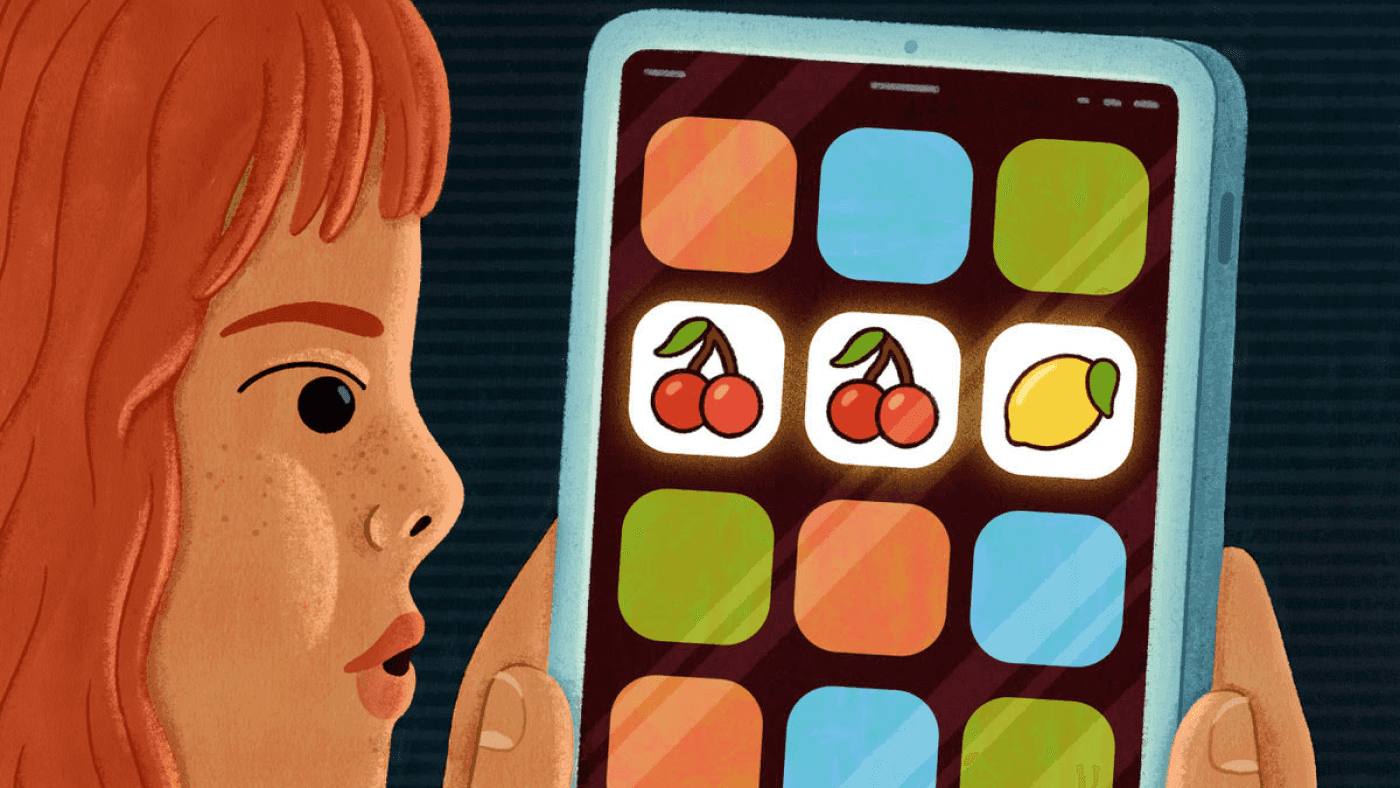
Four Hidden Design Tricks That Keep Kids (and Adults) Hooked on Screens for Hours
Scientists have identified four powerful app features rooted in gambling psychology that trap children and adults in endless scroll loops.

Why Screens Feel Impossible to Put Down
Two major court rulings have recently found social media giants Meta and Google liable for endangering children through their platforms. While both companies are appealing those decisions and rejecting claims that their products are addictive, researchers have spent well over a decade pinpointing the exact design mechanisms built into apps and games that make them so extraordinarily hard to walk away from.
Cultural anthropologist Natasha Dow Schüll of New York University has been at the forefront of this research. She describes these mechanisms as a kind of digital superglue. "They keep us spending more time on these apps and spending more money," she explains. "They drain us of our energy and ourselves."
Understanding how these features work gives parents a practical framework for judging just how risky a particular app or device might be for their children.
The Surprising Gambling Connection
During a high-profile California trial, prosecutors accused Meta and Google of engineering their platforms to function like "digital casinos." According to Schüll's research, that comparison is far more accurate than it might seem.
Starting in the 1980s and continuing through the 1990s, the casino industry deliberately engineered what many addiction scientists now regard as the most habit-forming form of gambling ever created: the video slot machine. Essentially a massive interactive screen paired with an ergonomically designed chair, these machines became the go-to choice for people struggling with gambling disorders.
Schüll documented players who remained at these machines for 24 to 48 consecutive hours. Some individuals even wore adult diapers to avoid having to leave their seats for restroom breaks — a startling testament to just how powerful these devices could be.
Determined to understand this magnetic pull, Schüll spent 15 years dissecting video slot machine design from the inside out. She interviewed marketers, mathematicians, software engineers, and industry executives, as well as everyday users. What she uncovered were four core design features that, when layered together, push people into a trancelike mental state researchers call the "machine zone" or "dark flow" — a dissociative condition in which awareness of time and place essentially disappears.
By the early 2010s, Schüll noticed something striking: those same four features had migrated into smartphones and tablets, appearing across social media platforms, mobile games, and video-streaming services.
"These are not normal products for kids like a pair of shoes or a toy," she warns. "They create a relationship with kids."
The Four Features That Create Digital Superglue
1. Solitude: Using Screens Alone
One of the most underestimated risk factors is simply using an app in isolation. When a person interacts with a screen alone — particularly in a private space like a bedroom — the social cues that would normally signal it's time to stop are completely absent.
"When the relationship is just between you and the machine, it removes social cues needed for stopping," Schüll explains. Without those cues, it becomes much harder to notice when continued use stops being enjoyable or beneficial.
Research has consistently shown that children who regularly use screens alone in their bedrooms are at a significantly higher risk of developing what psychologists term "problematic usage" — a pattern in which a child continues engaging with an app even when it is visibly harming their sleep, social relationships, or overall well-being.
2. Bottomlessness: Content That Never Ends
Traditional media has natural stopping points — the end of a chapter, the close of an episode, the final page of a magazine. Apps deliberately eliminate those boundaries.
Infinite scroll, autoplay, and algorithmically generated content feeds ensure there is always something new waiting just beneath your fingertips. "There's no natural stopping point," Schüll says. "So you never feel finished or satisfied."
That persistent sense of incompleteness drives users to keep going, always chasing a feeling of resolution that the design of the app ensures will never arrive.
3. Speed: Faster Feedback, Deeper Hooks
Schüll's review of gambling industry research revealed a direct link between the pace of play on video slot machines and the total time spent gambling — the faster the machine, the longer people played.
The same dynamic plays out on social media and streaming platforms. The faster a user can scroll, watch, and immediately consume the next piece of content, the more difficult it becomes to disengage.
"The speed of the feedback can cause this sense that you merge with the screen. You don't know where you begin and the machine ends," Schüll says. Technological advances such as high-speed internet and the invention of infinite scroll have dramatically accelerated this effect over the past decade.
4. Teasing: The Algorithm Withholds What You Want
This final feature may be the most psychologically potent of all, according to Jonathan D. Morrow, a neuroscientist and psychiatrist at the University of Michigan.
Here is how it works: AI-powered recommendation systems analyze your behavior to determine precisely what kind of content you are hoping to find — often before you consciously know yourself. But rather than delivering that content immediately, the algorithm deliberately holds it back.
"Apps don't give it to you. They give you something close to that, and then a few clicks later, the algorithm gives you something even closer," Morrow explains. The perfect post, video, or piece of content is perpetually just out of reach.
"They give just enough to keep you engaged, keep you looking at the app and interacting with it as long as possible," he adds. This calculated teasing generates a persistent sense that the ultimate payoff is always right around the corner — keeping users searching indefinitely.
A Recipe for Overuse
When an app combines all four elements — solitude, bottomlessness, speed, and teasing — it creates a near-universal formula for excessive use. Schüll uses these four criteria as a teaching tool with her university students, encouraging them to evaluate any app or website against this framework to assess its potential for harm.
But the consequences are especially severe for children. "It's a cruel setup, especially when kids are concerned," Schüll says. "Kids are obviously more vulnerable."
Both Schüll and Morrow agree on the path forward: children require not only guidance in managing their own screen habits, but genuine structural protection from app designs that were built, from the ground up, to override self-control.

