Former World Leaders Run a Fake Pandemic Drill in Nairobi — Here's What They Discovered
A group of ex-presidents and global statesmen gathered in Kenya to simulate a pandemic response. Their findings reveal serious gaps in global health preparedness.

Former World Leaders Rehearse the Next Global Health Crisis in Nairobi
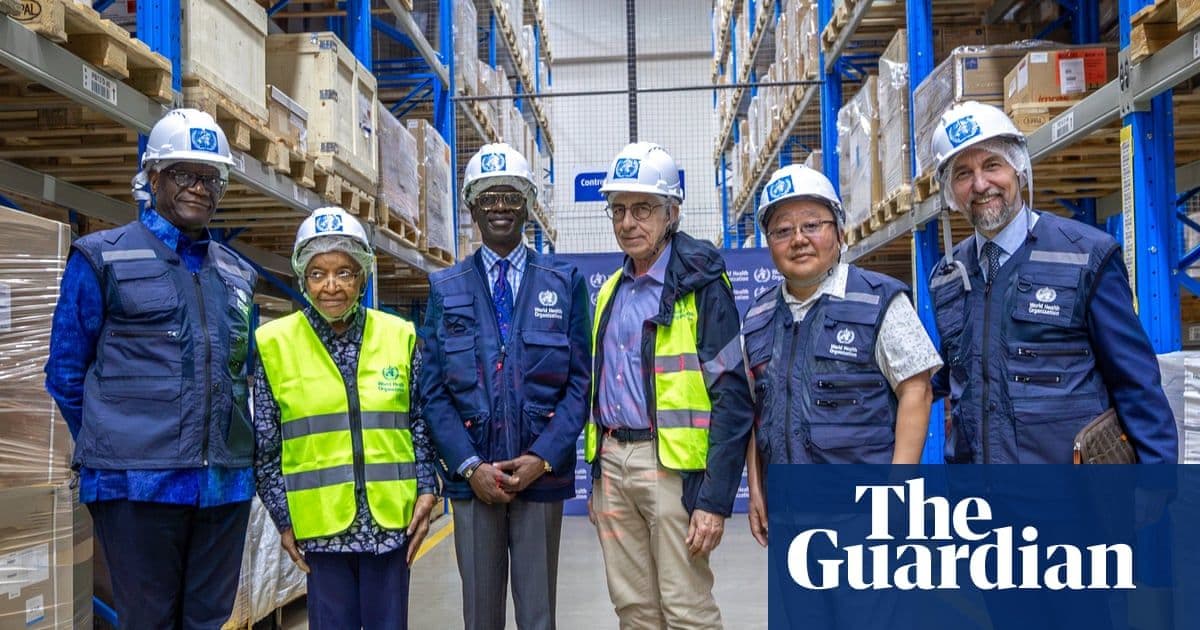
Imagine sitting in a boardroom in Nairobi, watching a fictional bird flu outbreak unfold in Chad — and being asked, as a former head of state, exactly what you would do about it. That was the reality last Thursday for a distinguished gathering of retired world leaders, Nobel laureates, and diplomats who assembled at a World Health Organization facility just outside the Kenyan capital.
The exercise was organized under the banner of the Elders, a group founded in 2007 by the late Nelson Mandela. The organization brings together a curated selection of former presidents, prime ministers, and senior global figures with the shared mission of applying their combined experience to the world's most pressing problems.
A Simulated Outbreak With Very Real Lessons
The scenario was deliberately challenging. Health workers in eastern Chad had detected several unexplained deaths linked to respiratory failure. Early testing pointed to a novel strain of avian influenza, though confirmation required sending samples abroad. Under international health regulations, Chad's government was obligated to notify the WHO within 24 hours — but officials were reluctant, worried about economic backlash and international stigma.
The question put to the assembled leaders was pointed: if you were Chad's president, how would you ensure your health minister followed the rules, and what guarantees would you demand from the global community in return?
World Leaders Weigh In
Ernesto Zedillo, who served as Mexico's president throughout the 1990s, was among the first to respond. He argued that governments need stronger incentives to act transparently. Drawing on the example of South Africa, which faced punishing travel restrictions in 2021 simply for being the first to identify a new Covid-19 variant, Zedillo challenged the international community to offer real assurances rather than punishment for honesty.
Zeid bin Ra'ad bin Zeid al-Hussein, a former United Nations High Commissioner for Human Rights from Jordan, took a systems-thinking approach. He suggested that health policy architects should look to sectors where verification mechanisms are already robust and use those models as a blueprint for strengthening global disease reporting.
Ellen Johnson Sirleaf, Liberia's former president and Africa's first elected female head of state, offered what may have been the most grounded perspective. She argued that non-compliance with international reporting standards is rarely a matter of bad intent — it is more often a consequence of fragile healthcare infrastructure. Countries that cannot reliably detect or classify an outbreak are also ill-equipped to report it.
"Most times, it is not a lack of political will as much as it is a failure of the systemic capability," Sirleaf said.
Climate, Conflict, and Compounding Crises
Over the course of roughly an hour, the Elders worked through a series of layered scenarios that illustrated how geopolitical tensions, climate-related disasters, and active conflicts can amplify the damage caused by disease outbreaks. The group drew freely on their own experiences managing crises during their years in power.
A second scenario pushed the simulation further. Chad had finally notified the WHO — but only after a two-week delay, by which point the outbreak had already crossed into northern Cameroon. Severe flooding had simultaneously severed transport routes, making it nearly impossible to ship pathogen samples to an international laboratory for analysis. The question for the Elders became: how do global health institutions prepare for health emergencies and climate disasters that are no longer occurring separately, but simultaneously?
Sirleaf was direct in her assessment. "The international integrated system or integrated response is not there yet," she said.
AI Tools and Real-World Emergencies
Before the simulation began, WHO staff walked the Elders through a briefing on how the organization currently supports African nations in detecting and responding to health emergencies. That presentation included an introduction to a new artificial intelligence-powered system designed to enhance real-time decision-making during health crises — a tool that reflects the growing role of technology in epidemic preparedness.
The timing of the exercise was striking. It took place amid an ongoing hantavirus outbreak and, in a development that underscored the urgency of the entire endeavor, just one day before health authorities confirmed a new Ebola outbreak spanning Uganda and the Democratic Republic of the Congo. That outbreak has since claimed at least 139 lives.
A Missing Treaty and a Broken Trust
Hanging over the room was another uncomfortable reality: international negotiators had just missed a critical deadline to finalize a global pandemic treaty — an agreement first proposed during the height of the Covid-19 crisis in 2021. The treaty was intended to establish clear rules for sharing pathogen data between nations and to guarantee equitable access to vaccines, diagnostics, and treatments in return.
The collapse of those talks, even temporarily, reflects a deep fracture in trust between high-income nations and the developing world, particularly across Africa. During the Covid-19 pandemic, wealthy countries secured the lion's share of vaccine supplies, leaving much of the African continent waiting for doses that arrived too late or not at all. For many observers, that experience remains an open wound.
The Case for Multilateralism
Denis Mukwege, a Congolese surgeon specializing in gynecological trauma and a Nobel Peace Prize recipient, reflected on the session's most important takeaway. With firsthand knowledge of how his country has managed repeated Ebola and mpox outbreaks, Mukwege stressed that no nation can afford to face these threats alone.
"We need to work together because we never know where it will happen," he said. "We need to get all the people to be ready when it happens. We need really to understand that when we have the outbreak, it can go far and sometimes it can go beyond our borders."
Dr. Mohamed Janabi, the WHO's Regional Director for Africa, closed the session with a sobering reminder of the scale of the challenge his organization faces every year. In 2023 alone, the WHO recorded 146 disease outbreak emergencies across the African continent.
"You have seen what we face here," Janabi told the gathered leaders. "Outbreaks will continue — how we manage them, that's the issue."
For a group of individuals who have already shaped history, Thursday's simulation was less an academic exercise than a dress rehearsal for a threat the world has not yet fully reckoned with.

