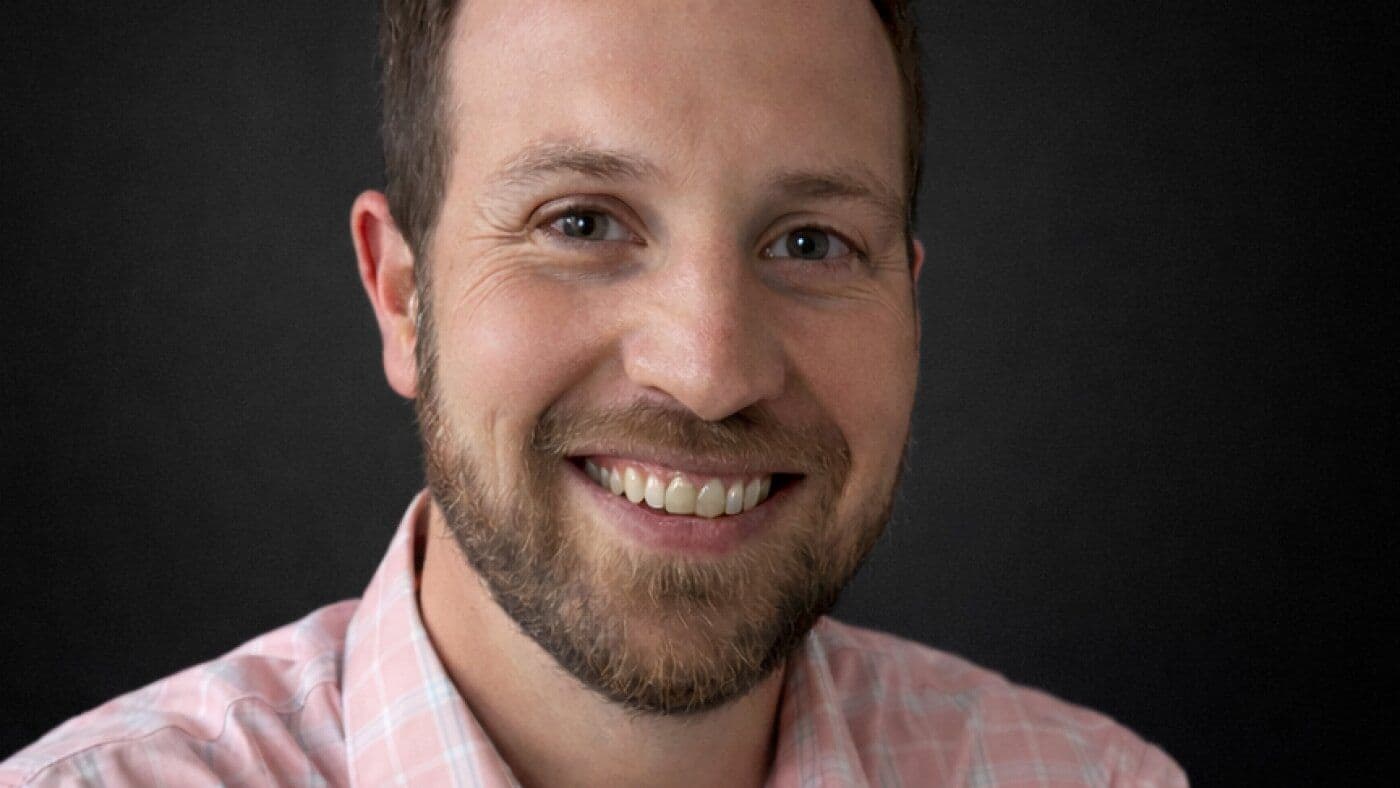
Former USAID Official Speaks Out: Ebola, Whistleblowing, and the Dismantling of America's Foreign Aid Agency
Nicholas Enrich served USAID under four presidents. Now dismissed after leaking internal memos, he's written a revealing book about the agency's collapse.

A Career Civil Servant Breaks His Silence
Nicholas Enrich spent his career quietly serving the United States Agency for International Development across four presidential administrations. He was not an activist. He was not a political operator. He was a civil servant — until the day he decided he could no longer stay silent.
After leaking internal documents that outlined plans to dismantle USAID, Enrich was placed on administrative leave and eventually terminated. Now, he has channeled his experience into a new book: Into the Woodchipper: A Whistleblower's Account of How the Trump Administration Shredded USAID, published by Simon & Schuster. The title itself is borrowed from language Elon Musk used when describing his vision for America's flagship foreign aid agency.
Ebola Called a 'Scam' as Outbreak Spread
In March 2025, Enrich held the position of top U.S. official for global health — a role that placed him at the center of two simultaneous crises. On one front, the Trump administration was aggressively dismantling USAID. On another, an Ebola outbreak was gaining ground in Uganda.
Enrich's responsibility was to lead the American response. Instead, he says he encountered resistance at every level.
"I was told by one of the political appointees, who was the head of the Bureau for Humanitarian Assistance, that Ebola is a scam," Enrich recounted in a recent interview with NPR.
That statement, he says, effectively paralyzed the response. Enrich was blocked from deploying teams into the affected country, prevented from coordinating with the Centers for Disease Control and Prevention, and even barred from communicating with the World Health Organization — a restriction that had direct logistical consequences.
Prior to the outbreak, USAID had pre-positioned personal protective equipment in nearby Kenya for rapid deployment. That equipment never moved. The warehouse storing it was operated by the WHO, and political leadership refused to authorize any contact with the organization.
Regrets From Inside the Collapsing Institution
Enrich is candid about his own role in what unfolded. He acknowledges that in his effort to work within the system, he made decisions he now deeply regrets.
"I wish I had been able to say earlier, 'This is not okay,'" he said. "I did implement directives from our political leadership that I'm not proud of — like making lists of our staff, knowing that some of those people would be terminated."
Among his most painful admissions: he removed Ebola-related activities from the list of programs he was seeking approval for, after being told the political appointees would reject them regardless. The decision, he says, haunts him.
Did USAID Have Its Own Problems?
Enrich does not paint the agency as beyond criticism. When asked directly whether the Trump administration had any valid points about waste or inefficiency at USAID, he offered a nuanced answer.
He acknowledged that the agency could have operated more efficiently and that some aid programs risked fostering dependency. However, he was emphatic that those issues were not why USAID was dismantled.
"It was destroyed by a bunch of people who did not understand what the agency did," he said, "who were completely uninformed and unqualified about our programs, and who were there for the sole purpose of soothing the ego of a billionaire."
He also pushed back on the narrative of a bloated bureaucracy, pointing out that USAID operated on less than one percent of the federal budget while saving an estimated 92 million lives over the past two decades.
Lessons from 2014 — Now Lost
Enrich was also part of USAID's response to the devastating 2014 Ebola outbreak, and he explained how that experience reshaped the agency's entire approach to infectious disease preparedness.
In the years that followed, billions of dollars were invested in building what former USAID Administrator Atul Gawande described as a "global immune system" — a network of surveillance systems, community health workers, early detection protocols, and rapid response infrastructure designed to catch outbreaks before they could spread.
That entire framework, Enrich says, was dismantled in 2025.
"What we're seeing with Ebola in the Democratic Republic of Congo and Uganda, and the recent hantavirus outbreak — these are a couple of examples within just a few weeks of how far American leadership has fallen in detecting and responding to infectious disease outbreaks," he said.
The Current DRC Outbreak and a World Without USAID
As Enrich's book hits shelves, the worst Ebola outbreak in more than a decade is spreading through the Democratic Republic of the Congo — and this time, USAID no longer exists to lead the response.
Enrich described the institutional knowledge that has been lost: the Disaster Assistance Response Teams that would deploy immediately, the logistics networks for moving protective equipment, the expertise in contact tracing, community education, and culturally sensitive burial practices. In its place, he says, the State Department is trying to improvise systems that once ran on institutional muscle memory.
"What instead we have is a State Department that, in the best of light, is rapidly trying to respond but is reinventing the wheel," he said.
His concern extends beyond the current outbreak. With the infrastructure for global health security now gutted, Enrich worries that the United States is dangerously underprepared for the next major pandemic.
"If there is a pathogen that is more likely to be the next pandemic, we are just way, way underprepared compared to how we were just a few months ago," he warned.
What Comes Next for Foreign Aid?
Despite the weight of his account, Enrich says he remains cautiously optimistic about the future of American foreign aid. He believes a new, independent agency will eventually need to be established — one with a dedicated structure that mirrors the distinct role international development plays in U.S. foreign policy.
He draws a direct analogy: just as no one would suggest folding the State Department into the Department of Defense because they serve fundamentally different functions, international development requires its own organizational identity and mandate.
"I think of it as an era that I'm very proud of in American history," he said of USAID's legacy. "I remain optimistic that we will need to have a new and independent agency that does international development and foreign aid."
For Enrich, the book is not just a personal reckoning — it is a public record of what was lost, and a call to understand why it matters.

