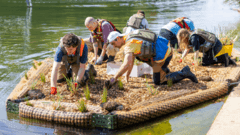
Floating Saltmarsh Initiative Set to Revive Degraded Coastal Ecosystems Across the UK
A groundbreaking project is deploying floating wetlands in coastal waters to restore lost marine habitats and boost biodiversity in areas dominated by concrete infrastructure.
Floating Wetlands Could Transform the UK's Coastal Environments
A pioneering new environmental project is set to breathe life back into some of Britain's most damaged coastal zones — by deploying specially engineered floating wetlands directly into the water. Led by the University of Portsmouth in collaboration with Southern Water, the initiative aims to reverse decades of habitat loss along coastlines increasingly dominated by hard, man-made structures.
The Problem: Disappearing Aquatic Habitats
Over the past half-century, the UK's coastal ecosystems have suffered dramatic decline. Researchers estimate that more than 85 percent of aquatic and marine vegetation — including saltmarsh, seagrass, and kelp — has disappeared. In their place, concrete seawalls, flood defences, and urban development have left little room for the natural ecosystems that once supported thriving marine communities.
This widespread loss has had cascading consequences for water quality, marine biodiversity, and the overall resilience of coastal environments.
How the Floating Wetland Technology Works
The solution at the heart of this project is both inventive and practical: specially constructed floating rafts, designed to support a diverse range of saltmarsh plant species. Once deployed in coastal waters, these platforms effectively simulate the conditions of a natural saltmarsh — a habitat type that has been almost entirely erased from many developed shorelines.
This particular application of floating wetland technology in a marine setting is exceptionally rare, having been trialled only six times globally prior to this project. The rafts are engineered to deliver a range of environmental benefits, including:
- Water quality improvement through the natural absorption of excess nutrients and pollutants
- Habitat creation for fish and a wide variety of marine organisms
- Biodiversity enhancement in heavily modified coastal areas
- Ecosystem function restoration in zones where natural processes have long been suppressed
A Long-Term Research Programme in Portsmouth
The floating wetlands have been installed at the Southcoast Wake Park in Portsmouth as part of a structured, long-term research effort. Scientists are employing a before-and-after monitoring methodology to rigorously evaluate the environmental impact of the installations over time.
Key metrics under observation include changes in water quality, shifts in local biodiversity, and improvements in ecosystem resilience — all of which will help determine whether the technology is viable for broader deployment.
The Vision Behind the Project
Dr. Ian Hendy from the University of Portsmouth's Institute of Marine Sciences, who is leading the initiative, described the project as a significant step forward in coastal restoration thinking.
"By creating a floating saltmarsh, we are reintroducing habitat into spaces where it has been completely lost to development," he explained. "These systems can provide refuge for marine species, improve water quality, and help rebuild biodiversity in some of our most impacted coastal areas."
Joff Edevane, Environment and Water Quality Lead at Southern Water, echoed that enthusiasm, highlighting the project's wider potential: "The vision is to use this nature-based solution in protected areas in the future."
Scalable Potential Across the UK
If the Portsmouth trials demonstrate measurable environmental gains, Southern Water has indicated that the floating wetland model could be scaled and replicated across both marine and freshwater environments throughout the United Kingdom. Researchers describe the approach as a practical, scalable solution to an urgent and widespread ecological challenge.
As pressure on coastal infrastructure continues to grow alongside climate-related concerns, projects like this represent a compelling model for working with nature — rather than against it — to restore balance to some of Britain's most vulnerable ecosystems.