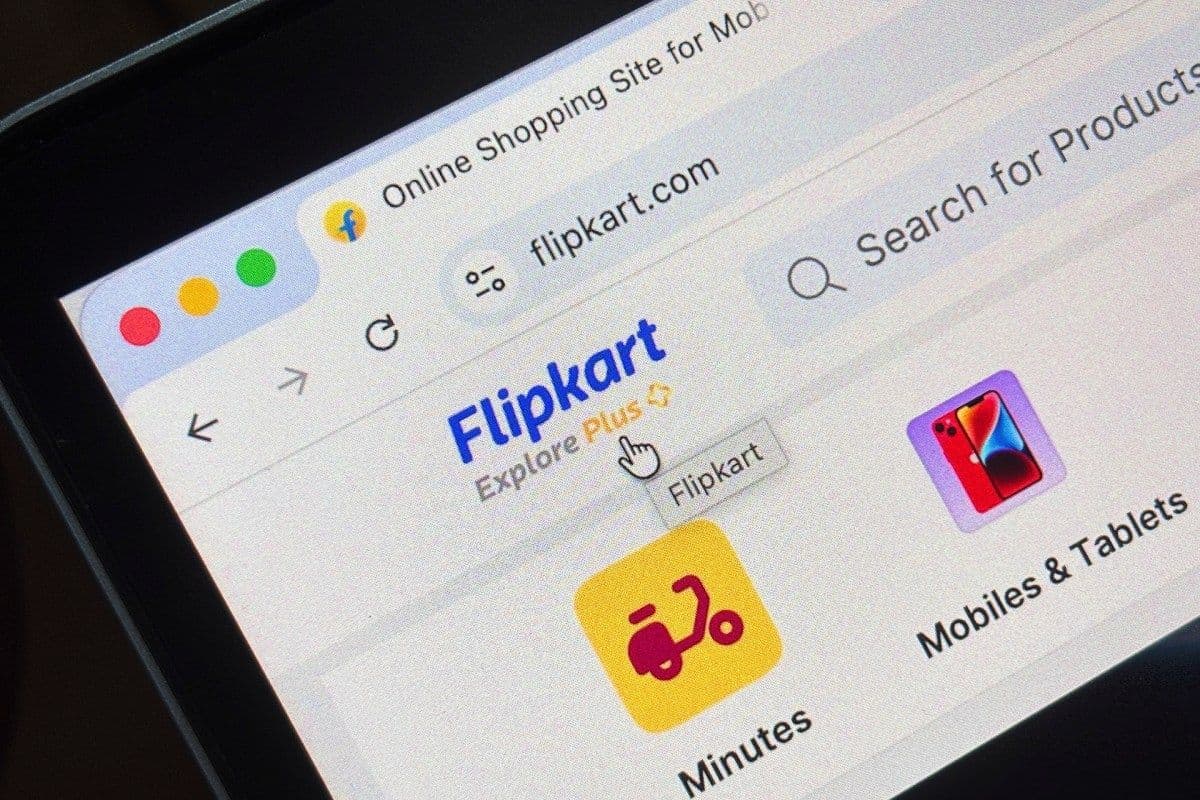
Flipkart's Quick-Commerce Network Hits 1,000 Dark Stores as Amazon Intensifies India Rivalry
Flipkart Minutes crosses 1,000 micro-fulfillment centers while Amazon Now surpasses 500, turning India into the world's hottest quick-commerce battleground.

Flipkart and Amazon Clash in India's Booming Quick-Commerce Arena
India's e-commerce landscape is undergoing a dramatic transformation, and two global retail giants are charging toward the front of the pack. Walmart-owned Flipkart announced this week that its rapid-delivery service, Flipkart Minutes, has successfully built a network of 1,000 micro-fulfillment centers — compact, strategically positioned warehouses engineered to dispatch orders within minutes. The achievement comes less than two years after the platform's launch, placing Flipkart firmly in the crosshairs of an intensifying battle with Amazon and homegrown competitors.
A Network Built for Speed
Micro-fulfillment centers — often called dark stores — are the backbone of quick commerce, allowing retailers to store inventory close to customers and fulfill orders at unprecedented speed. Flipkart's ability to scale to 1,000 such locations in under two years signals serious strategic commitment to the segment.
The company isn't stopping there. Flipkart has announced plans to grow its network to 1,500 micro-fulfillment centers before the close of 2026, adding between 75 and 100 new locations every month. If those targets are met, Flipkart could establish itself as India's second-largest quick-commerce operator by dark store count, trailing only Blinkit, which currently operates approximately 2,243 centers according to a recent analysis by Jefferies.
Amazon Accelerates Its Own Quick-Commerce Ambitions
Flipkart's expansion push is happening in direct competition with Amazon, which has been aggressively scaling its own fast-delivery offering, Amazon Now. The service is currently live in more than 15 Indian cities and is supported by over 500 micro-fulfillment centers. Amazon has outlined plans to extend Amazon Now to 100 cities and surpass 1,000 dark stores, while broadening its product catalog well beyond groceries to include apparel, electronics, and home goods.
The company also revealed that 70% of its new Prime members are now coming from smaller Indian cities — a trend that underscores the enormous untapped potential outside major metropolitan hubs. Amazon further noted that everyday essentials now represent one in every two units shipped on Amazon.in, with Amazon Now driving notable increases in shopping frequency.
Flipkart Minutes: Orders Up 400%, Demand Shifting Beyond Groceries
Since its August 2024 launch, Flipkart Minutes has evolved well beyond a simple grocery courier. Kunal Gupta, who heads the service, told TechCrunch that orders on the platform have surged roughly 400% compared to the same period last year, while customer retention has improved by 20% year-over-year. The company provided both figures directly, and they have not been independently confirmed.
Equally notable is how customer behavior is shifting. Demand is increasingly flowing from categories like electronics, beauty, and personal care — not just household staples. Average order values for fresh produce such as fruits and vegetables climbed 30% year-over-year, suggesting that consumers are leaning on quick commerce for a wider range of purchases.
"What began as a way to fulfill everyday essentials has evolved into a fundamentally new shopping habit for millions of Indians," Gupta said. "Customers are not just ordering more — they are ordering differently."
Smaller Cities Emerge as the Next Growth Frontier
Flipkart Minutes is now available across more than 130 cities and 8,000 postal codes, with growth increasingly concentrated in India's Tier-2 and Tier-3 markets. According to the company, those smaller cities recorded growth exceeding 4,000% year-over-year, driven largely by expansion into 90 new urban centers.
Gupta highlighted cities such as Patna, Guwahati, and Siliguri as examples where newly opened stores are scaling up faster than anticipated. He also singled out Lucknow as one of Flipkart Minutes' strongest-performing markets — remarkable given that the company's network there is still incomplete.
This geographic diversification strategy mirrors Amazon's own focus on non-metro India and reinforces a broader industry conviction that the country's smaller cities will define the next chapter of quick-commerce growth.
A Crowded Field With High Stakes
Who's Competing?
Flipkart and Amazon are far from alone in this race. Blinkit, owned by food-delivery giant Eternal, holds the top position in the market. Zepto and Swiggy Instamart are also investing heavily to expand their respective networks and capture a greater share of consumer spending.
India as a whole already hosts more than 5,500 dark stores, according to research firm Bernstein. That figure is projected to climb to approximately 7,500 by 2030 as platforms push deeper into smaller cities and widen their assortments.
Beyond Groceries: A New Kind of E-Commerce
Gupta emphasized that customers are increasingly using Flipkart Minutes in tandem with Flipkart's core e-commerce platform rather than as a substitute for it — a dynamic that is lifting overall purchase frequency and drawing new product categories into the quick-commerce fold.
The convergence of rapid infrastructure investment, shifting consumer expectations, and fierce multi-player competition is reshaping what e-commerce looks like in India. Quick commerce is no longer a grocery niche — it is rapidly becoming a full-spectrum retail channel.
"We will continue to expand rapidly, will not slow down after 1,000 stores, and we are going all in," Gupta said.