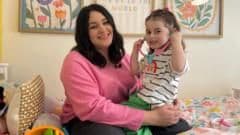
Five Months in a Mother and Baby Mental Health Unit Changed Everything — One Mom's Story
After giving birth, Sofii Lewis had no idea how ill she truly was. Her five-month stay in a specialist unit may have saved both her life and her daughter's.

A Bag Packed for Two Weeks — A Stay That Lasted Five Months
When Sofii Lewis gathered her belongings and prepared to check into a mother and baby mental health unit, she fully expected to be back home within a couple of weeks. What followed instead was a five-month journey through diagnosis, treatment, and recovery — one she now credits with saving both her own life and that of her newborn daughter.
The 27-year-old from Aberdare, Rhondda Cynon Taf, was diagnosed with OCD and postpartum psychosis tendencies following childbirth. Looking back, she admits she had little understanding of just how serious her condition had become.
"I knew I wasn't safe," she recalled. "But I didn't think I was out of control."
What Is Postpartum Psychosis?
Postpartum psychosis is a rare yet severe psychiatric condition that typically emerges suddenly within days or weeks of giving birth. It affects approximately one in every 1,000 new mothers. Although the condition is treatable, it can deteriorate rapidly if left unaddressed.
According to the NHS, symptoms can vary widely and shift quickly — ranging from mania and deep depression to confusion and hallucinations. It is significantly less common than postnatal depression or anxiety but is considered far more acute.
Health professionals in Wales now confirm that specialist support for postpartum psychosis is accessible across all health boards in the region.
'There Was Nothing' — The Moment Sofii Knew Something Was Wrong
Sofii's pregnancy and birth were both difficult, and she sensed almost immediately that something wasn't right when her baby daughter, Evie, was first placed in her arms.
"There was nothing," she said. "I had no interest — even though I had just given birth to my first child."
In the weeks that followed, sleep became nearly impossible. She was tormented by a persistent beeping sound in her bedroom at night — not her phone, not the baby monitor — but something her mind had constructed into a terrifying narrative.
"I thought it must have been someone trying to buy Evie, because my brain had connected the beeping to the sound of a till or a checkout," she explained. "It makes no sense to me now, but at the time it felt completely real."
Sofii also found herself becoming increasingly frustrated each time Evie cried. Seeking help, she visited a counsellor and openly discussed what she was experiencing. It was the counsellor who first suggested she might benefit from a stay at a mother and baby unit.
"I didn't even know they existed," Sofii said.
Life Inside the Unit
Initially, the idea of being separated from her partner filled Sofii with dread. She feared the unit would feel like a prison and described her early reaction as "hysterical."
The reality, however, was far removed from her fears. The environment was more akin to a university hall of residence — a communal space shared with other women navigating similar experiences. Alongside prescribed medication and structured therapy, staff actively supported Sofii in forming a bond with her baby daughter.
One moment, in particular, remains deeply significant to her.
"Evie was 16 weeks old, and that was the first time I had done skin-to-skin contact with her," she said. "That was a really big moment for me."
Transitioning back to everyday life after such an extended and intensive period of care was challenging. But three years on, Sofii is focused on turning her experience into a source of strength for other mothers.
"They aren't alone in this," she said. "When you are in it, it feels like the most isolating thing in the world. You think you'll never get back to being a normal mum — but you will."
A Doctor Who Lived It Too
Sofii's story is far from unique. Dr. Sally Wilson, who works with the charity Action on Postpartum Psychosis, experienced the condition herself over a decade ago — just days after the birth of her own daughter.
"In my mind, I had died," she recalled. "I believed I was living in an afterlife, being punished for something that had happened to my daughter."
At that point, Dr. Wilson was diagnosed with postpartum psychosis and admitted to a general psychiatric ward — separated from her baby during a time when specialist mother and baby units were far less available.
"It took a long time to recover," she said, though she acknowledges that the standard of care has improved considerably since her experience.
Specialist Care Is Growing — But Awareness Still Lags Behind
Dr. Wilson highlighted the progress that has been made in Wales, noting that perinatal specialist teams are now in place across every health board. A dedicated mother and baby unit operates in Swansea, and a newly opened facility in Chester serves as a joint initiative between NHS England and NHS Wales.
Despite these advances, she stressed that significant work remains — particularly when it comes to raising awareness among expectant parents, the wider public, and healthcare professionals alike.
For mothers who may be struggling in silence, both Sofii and Dr. Wilson share the same message: help exists, recovery is possible, and no one should have to face this alone.