Feathered But Earthbound: How Fossil Clues Reveal These Dinosaurs Never Flew
Some feathered dinosaurs evolved wings only to lose the ability to fly. New fossil evidence from ancient molting patterns is rewriting the story of flight.

Feathered But Earthbound: How Fossil Clues Reveal These Dinosaurs Never Flew
Wings do not always mean flight. A fascinating new study has revealed that certain feathered dinosaurs — despite possessing fully developed wings — were almost certainly incapable of taking to the air. The surprising evidence comes not from bones or body shape, but from something far more subtle: the way these ancient creatures shed their feathers.
An Unexpected Window Into Prehistoric Life
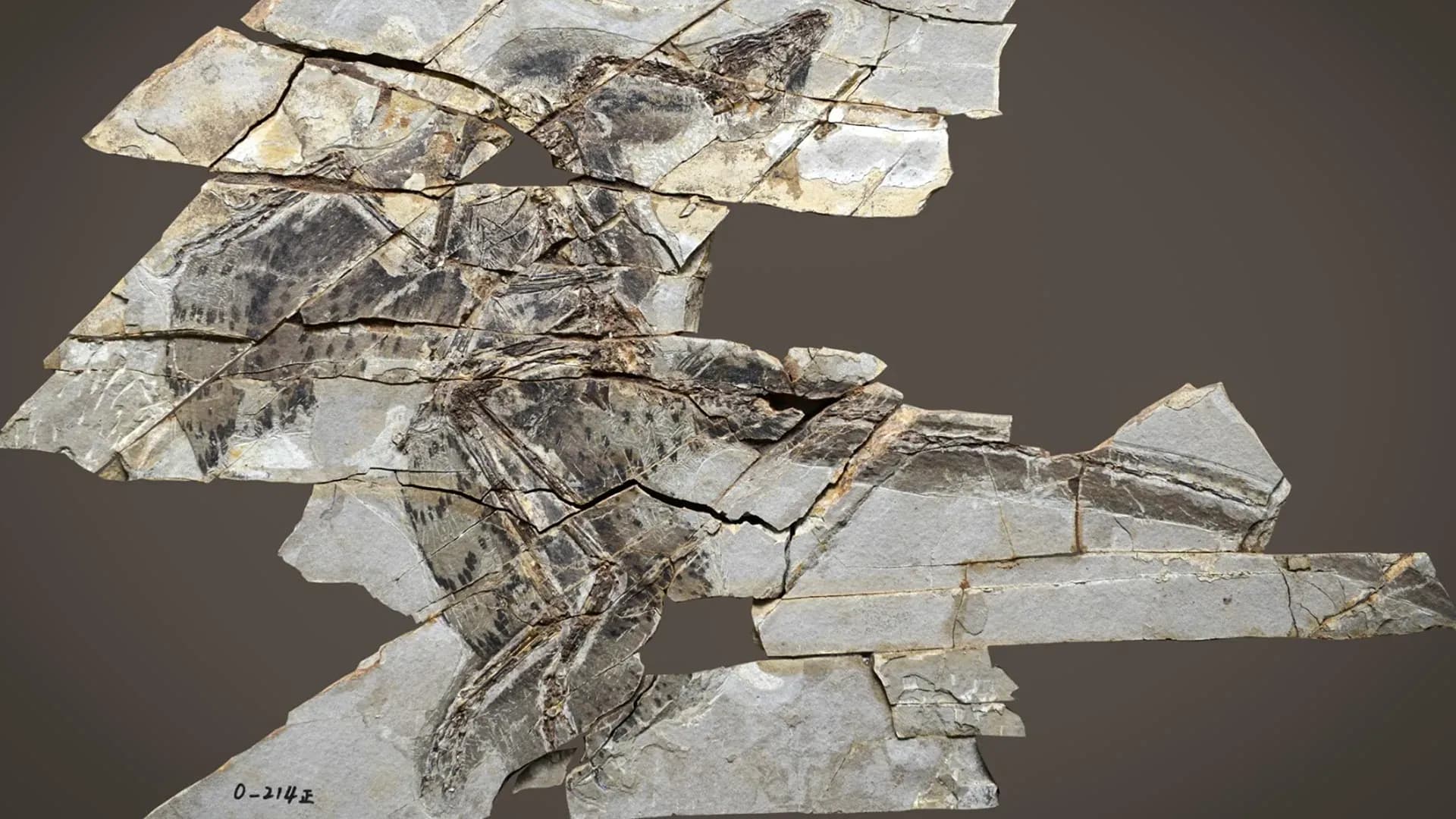
Researchers from Tel Aviv University's School of Zoology and the Steinhardt Museum of Natural History led a detailed analysis of nine exceptionally rare fossils discovered in eastern China. These specimens belong to Anchiornis, a feathered dinosaur from the Pennaraptora group — a lineage considered to be among the distant ancestors of modern birds. What makes these fossils extraordinary is that they preserved not just the physical structure of the feathers, but also their original coloration: white plumage with a sharp black spot at each tip.
This rare level of preservation gave scientists an unprecedented opportunity to study feather growth and replacement patterns in a creature that lived approximately 160 million years ago.
The study was led by Dr. Yosef Kiat, an ornithologist specializing in feather biology, alongside collaborators from China and the United States. Their findings were published in the journal Communications Biology by Nature Portfolio.
What Molting Tells Us About Flight
To understand why molting matters, it helps to know how feathers work. According to Dr. Kiat, feathers grow over a period of two to three weeks. Once fully developed, they detach from the blood vessels that sustained their growth and become inert, lifeless structures. Over time, these feathers wear down and must be replaced — a cyclical process known as molting.
Critically, the pattern of molting differs significantly between birds that fly and those that do not.
Orderly Molt vs. Irregular Molt
In birds that rely on flight, molting follows a highly organized, symmetrical sequence. Feathers on both wings are replaced in a balanced, gradual manner, ensuring the bird retains its aerodynamic ability throughout the process. Disrupting this balance would compromise flight — so natural selection has enforced strict order.
Flightless birds, by contrast, molt in a far more random and irregular fashion. Without the pressure to maintain wing symmetry for sustained flight, there is no biological need for an orderly replacement schedule.
This distinction became the key to unlocking Anchiornis's secret.
The Fossil Evidence That Changed Everything
By carefully examining the preserved feathers, researchers identified a continuous row of black-tipped spots running along the edges of the wing. Crucially, some feathers showed black spots that were visibly out of alignment — a sign that new feathers were still in the process of growing in, replacing older ones at irregular intervals.
When the team mapped out the full molting sequence across the nine specimens, the pattern was unmistakably disordered — consistent with what is observed in flightless animals today, not in those capable of sustained flight.
Dr. Kiat stated, "Based on my familiarity with modern birds, I identified a molting pattern indicating that these dinosaurs were probably flightless. The preserved coloration of the feathers gave us a unique opportunity to identify a functional trait of these ancient creatures — not only the body structure preserved in fossils of skeletons and bones."
Rethinking the Origins of Flight
Dinosaurs first diverged from other reptiles roughly 240 million years ago. Within tens of millions of years on the evolutionary timeline, many species began developing feathers — lightweight, protein-based structures that serve dual purposes: regulating body temperature and enabling flight. Around 175 million years ago, the Pennaraptora group emerged, and scientists have long believed these animals developed feathered wings as an adaptation for flight.
However, this new research suggests the evolutionary story is far more complicated. Much like ostriches and penguins today — birds that descended from flying ancestors but eventually lost that capability — some Pennaraptoran dinosaurs may have developed rudimentary flight and then abandoned it as their environments changed.
As the researchers note, "The development of flight throughout the evolution of dinosaurs and birds was far more complex than previously believed. Certain species may have developed basic flight abilities and then lost them later in their evolution."
A Small Detail With Major Implications
Anchiornis now joins a growing list of feathered dinosaurs confirmed to have been earthbound despite their winged appearance. This finding challenges the long-held assumption that feathered wings in the fossil record are reliable indicators of flight capability.
Dr. Kiat summarized the broader significance: "Feather molting seems like a small technical detail — but when examined in fossils, it can change everything we thought about the origins of flight. It highlights how complex and diverse wing evolution truly was."
For paleontologists and evolutionary biologists alike, this study opens a compelling new avenue of investigation — one where the subtle chemistry and timing of feather replacement may reveal as much about ancient life as the fossils themselves.