Extraordinary Deep-Sea Expedition Uncovers Hidden Worlds Beneath the Caribbean
Scientists exploring the deep waters around Britain's Caribbean territories have revealed stunning new discoveries, from never-before-seen sea creatures to untouched coral reefs.

Scientists Lift the Veil on Britain's Caribbean Deep-Sea Mysteries
For generations, the deep waters surrounding Britain's Caribbean island territories have remained largely unexplored and poorly understood. That has now changed dramatically. A landmark scientific expedition has brought back breathtaking evidence of underwater mountain ranges, colossal sinkholes, pristine coral ecosystems, and marine species that have never before been documented by science.
A Historic Voyage Into the Unknown
Operating around the clock for six consecutive weeks aboard the British research vessel RRS James Cook, a team of scientists pushed their equipment to its limits — capturing footage and data at depths reaching 6,000 meters (approximately 19,700 feet). Their mission took them through the waters surrounding the Cayman Islands, Anguilla, and Turks and Caicos.
Navigating these waters presented its own serious challenges. Researchers were forced to depend on outdated maps riddled with inaccuracies and conspicuous gaps. Despite these obstacles, the team pressed forward, and the results have astonished even the most experienced marine scientists.
The UK Centre for Environment, Fisheries and Aquaculture Science (CEFAS) partnered exclusively with BBC News to share the expedition's footage and findings with the public.
Creatures That Science Had Never Recorded
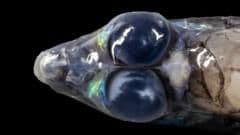
Among the expedition's most exciting revelations was the discovery of marine life previously unknown to science. A swimming sea cucumber was observed but has yet to be formally identified. The team also documented a pelican eel equipped with a luminescent pink tail that flashes red to attract prey, a barreleye fish whose tubular eyes point skyward to detect the silhouettes of passing food, and a dragonfish bearing a glowing lure beneath its chin.
In total, researchers catalogued nearly 14,000 individual specimens representing approximately 290 distinct marine species — though further scientific analysis will be required to validate all findings.
"Just yesterday we found a kind of swimming sea cucumber, and we still don't know what it is," said Dr. James Bell, who led the expedition. "The diversity we've encountered is really, really astonishing."
The Cayman Islands, Anguilla, and Turks and Caicos are already home to 146 species found nowhere else on Earth, and this expedition is expected to expand that list considerably.
An Underwater Mountain Teeming With Life
One of the expedition's most dramatic moments came while navigating an uncharted underwater mountain known as Pickle Bank, located north of Little Cayman island. Rising from a depth of approximately 2,500 meters (8,200 feet) to just 20 meters (65 feet) below the ocean surface, the seamount posed genuine navigational risks.
"We're not sure how close to it we are. It's quite difficult to map it without running the risk of running aground," Dr. Bell noted as the ship carefully traced the mountain's outline.
Camera footage captured a vivid scene — a mountainside blazing with color, featuring golden towers of coral alongside brain-shaped coral formations, gorgonian whip coral sheltering darting fish, orange sea sponges, and ancient black coral. Researchers identified this site as one of the healthiest and most biologically diverse reefs in the entire Caribbean region.
Critically, the reef shows no signs of stony coral tissue loss disease, a condition that has devastated reefs throughout the Caribbean. Scientists believe the reef's depth and the mountain's steep topography have effectively shielded it from both disease and the ocean warming driven by climate change — conditions that have damaged an estimated 80% of the world's coral systems since 2023.
Mapping the Ocean Floor — A Monumental Task
Using deep-sea cameras and echo-sounding equipment deployed from the ship, the team successfully mapped nearly 25,000 square kilometers (9,700 square miles) of ocean floor and captured more than 20,000 photographs, including images of glowing lanternfish and otherworldly cephalopods.
Dr. Bell offered a sobering comparison to underscore how little humanity knows about its own oceans: "We know the surface of Mars or the Moon better than we know the surface of our own planet. You can send a satellite around them and map them in a matter of weeks. We can't do that for our ocean. We have to map it bit by bit using acoustic instruments on ships."
A Towering Ridge and a Massive Blue Hole Discovered
In the waters off Turks and Caicos, researchers uncovered two extraordinary geological features that had never appeared on any existing nautical charts.
The first was a vast mountain ridge — 3,200 meters (10,500 feet) high and stretching 70 kilometers (45 miles) along the seabed west of Gentry Bank. This enormous underwater formation had been entirely absent from official sea maps.
The second discovery was equally dramatic: a massive vertical sinkhole, or blue hole, located approximately 75 kilometers south of Grand Turk Bank. Formed when an ancient underwater cave collapsed, the structure measures roughly 300 meters (980 feet) wide and plunges to 550 meters (1,800 feet) below sea level.
"Imagine taking an ice cream scoop out of the sea floor — that's what we saw," said Dr. Bell. Scientists believe its steep walls may make it the deepest blue hole in the Caribbean, potentially rivalling Belize's world-famous Great Blue Hole.
While blue holes are typically devoid of life due to oxygen-poor conditions, cameras lowered into this newly found sinkhole revealed small sponges, a species of large spatangoid urchin, and a variety of fish — suggesting this particular formation may support more life than expected.
Ancient Coral and Hidden Reefs Off Anguilla
North of Anguilla, the research team followed up on long-standing local rumors circulated among fishermen who had occasionally hauled up coral fragments in their nets. Investigating these accounts, scientists confirmed the existence of a 4-kilometer (2.5-mile) reef adorned with vibrant coral mosaics set within expansive sponge gardens.
Perhaps most remarkably, the team discovered black coral specimens believed to be thousands of years old — placing them among the most ancient coral ever recorded anywhere on the planet.
"It tells us that these environments are really pristine and healthy," Dr. Bell said.
Racing to Protect What Has Been Found
The significance of these discoveries extends well beyond scientific curiosity. The UK government shares responsibility for protecting nature in its Overseas Territories, and up to 90% of Britain's unique biodiversity is found in regions like these. Scientists are now calling for urgent action to safeguard these environments from the mounting threats of climate change and ocean pollution.
Deep-water and mesophotic reefs — those situated beyond the reach of recreational diving — are of particular scientific interest because steep underwater terrain can channel nutrient-rich water toward the surface, creating productive ecosystems that support diverse marine life and serve as crucial feeding grounds.
"This is the first step into environments people have never seen, and in some cases didn't know existed," Dr. Bell concluded. With the ocean still largely uncharted, the expedition serves as a powerful reminder that Earth's greatest unexplored frontier may not be in outer space — but right here, beneath the waves.