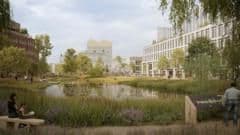
Europe's Oldest Science Park Eyes Major Redevelopment to Triple Economic Output
Cambridge Science Park has submitted ambitious redevelopment plans that could generate 20,000 new jobs and transform the site into a world-class public destination.
Cambridge Science Park Plans Ambitious Redevelopment to Boost Jobs and Innovation
Cambridge Science Park, the oldest science park in Europe, has submitted sweeping redevelopment proposals that could fundamentally transform the iconic Milton Road site — tripling its economic output and creating tens of thousands of new opportunities.
A Historic Site Ready for a New Era
Established in 1970 by Trinity College Cambridge, the park has spent more than five decades at the forefront of scientific discovery. With over 7,000 professionals currently working on-site, the park has contributed to landmark breakthroughs — including pioneering cancer treatments, the development of Bluetooth technology, and the creation of mobile phone chips.
Despite growing organically over 56 years, stakeholders believe the time has come to unlock the full potential of the site through a structured, large-scale transformation.
What the Redevelopment Plans Include
Under the submitted proposals, the total built space would expand dramatically — rising from 2.8 million square feet to 8 million square feet. This significant increase in infrastructure is projected to push the park's annual economic contribution from roughly £1 billion to an impressive £3 billion.
Key highlights of the development plans include:
- 20,000 new jobs spanning science, construction, horticulture, and human resources
- New green public spaces, open-air exhibits, and outdoor cafes
- An open-air museum and stronger connections to the Cambridge Science Centre
- Improved transport links, including enhanced bus routes and dedicated cycling paths
- Flood resilience measures and biodiverse landscaping throughout the site
Opening Science to the Wider Community
A central ambition of the project is to make the park more accessible and engaging for local residents, families, and young people across Cambridge and its surrounding areas.
Dame Sally Davies, Master of Trinity College Cambridge — which is co-funding the proposals alongside leasehold partners — emphasised that a defining principle of the redevelopment is "opening up the new Park of Science to the young people and families of Cambridge and the towns and villages around."
The college has also pledged that any expansion will deliver tangible benefits for communities across Cambridge, Peterborough, and the wider region.
Strengthening STEM Engagement
The redeveloped park would deepen its relationship with the Cambridge Science Centre, an organisation dedicated to inspiring participation in science, technology, engineering, and mathematics (STEM).
Rebecca Porter, CEO of Cambridge Science Centre, expressed enthusiasm about the project's potential: "We are incredibly excited by the opportunities that the continued growth of Cambridge Science Park presents. Since Trinity College supported our move to the park, we have transformed our scale, reaching over 30,000 people in 2025 alone — from our Cambridge centre to dedicated outreach with nearly 1,400 pupils in Wisbech."
She added that the site's proximity to world-leading research is irreplaceable, allowing the Centre to translate real-time innovation into accessible experiences for families and schools rather than simply interpreting science from afar.
A Vote of Confidence in UK Science Leadership
The proposal has been widely praised within the academic and innovation communities. Roland Sinker, chair of innovation and growth at the University of Cambridge, described the plans as "a strong vote of confidence in the UK as a science and technology leader."
Sinker noted the development would "create thousands of high-quality jobs, contribute billions to the national economy, and help ensure that the breakthroughs of the future are developed here in the UK."
Next Steps for Approval
The redevelopment application has officially been submitted to the Greater Cambridge Shared Planning Service. The joint development management committee will now review and consider the plans before any decisions are made.
If approved, the transformation of Cambridge Science Park could mark one of the most significant investments in UK science infrastructure in decades — cementing the region's status as a global hub for research, technology, and innovation.