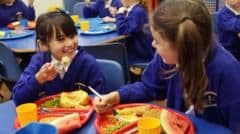
England's School Dinners Set for Biggest Shake-Up in a Decade as Deep-Fried Food Faces the Ban
The UK government is overhauling school food standards, banning deep-fried items and slashing sugar to give millions of children healthier, more nutritious meals.
England's School Canteens Are About to Look Very Different
Millions of schoolchildren across England could soon be eating significantly healthier lunches after the government unveiled sweeping plans to transform school food standards — the most significant reform in over ten years.
At the heart of the proposals is a ban on deep-fried foods and tight restrictions on high-sugar items, replacing what officials describe as a culture of sugar-laden treats and unhealthy convenience snacks with fresh fruit, wholegrains, and more vegetables.
What's Actually Changing?
Under the new framework, schools will no longer be permitted to serve popular grab-and-go options — such as sausage rolls and pizza — on a daily basis. Sweetened desserts will be limited to just once a week, while fresh fruit will become the default option for most of the school week.
The proposals also call for expanded servings of vegetables and wholegrain foods across all school menus, targeting both primary and secondary schools throughout England.
Education Secretary Bridget Phillipson described the initiative as "the most ambitious overhaul of school food in a generation", adding: "Every child deserves to have delicious, nutritious food at school that gives them the energy to concentrate, learn and thrive."
Why Now? The Health Case for Change
The statistics driving these reforms are stark. According to the Department for Education (DfE), more than one in three children finish primary school either overweight or obese. Meanwhile, tooth decay — directly linked to high-sugar diets — remains the single leading cause of hospital admissions among children aged five to nine.
These updated standards replace guidelines that have been in place since 2015, with revisions having been repeatedly delayed, partly due to disruptions caused by the pandemic. Early Education Minister Olivia Bailey told BBC Breakfast the government's goal was to "reduce sugar, increase fibre, and eliminate some of the most harmful foods, including deep-fat-fried options."
Schools Will Need to Publish Menus Online
Transparency is also a key pillar of the overhaul. Under the new rules, schools will be required to publish their menus publicly online, allowing parents and guardians to see exactly what their children are eating each day.
Secondary schools will benefit from a phased transition for certain elements of the changes, giving them adequate time to redesign recipes, revise menus, and train catering staff accordingly.
A dedicated enforcement mechanism will also be introduced to monitor compliance and ensure schools are genuinely adhering to the updated standards.
The Funding Question Looms Large
While the proposals have been broadly welcomed across the education sector, concerns about financial viability have emerged quickly.
The Association of School and College Leaders expressed full support for raising the quality of school food, but warned that additional funding would be "essential" to make the transition workable. Tom Middlehurst from the organisation stressed that changes "must be implemented in a practical way," with resources to match.
Brad Pearce, national chair of the School Food People, echoed this sentiment, urging that new standards be "monitored and funded appropriately." A 2025 survey conducted by the organisation found the true cost of delivering a school meal sits at around £3.45 — approximately 80p more than the £2.61 currently allocated per free school meal in England.
Despite these concerns, Prime Minister Keir Starmer suggested on Radio 5 Live that schools should be able to manage the changes within existing budgets. Minister Bailey similarly argued that "healthier food doesn't have to mean more expensive food."
Political Reactions Are Mixed
The Liberal Democrats called for meal funding to keep pace with rising costs, while the Green Party welcomed the changes as "long overdue." Reform UK, however, criticised the government, accusing it of "trying to micromanage people's lives."
Timeline: When Do the Changes Take Effect?
The government has launched a nine-week public consultation on the proposals. Final school food standards are expected to be formally announced in September 2025, with full implementation scheduled for September 2027.
Free Meals and Breakfast Clubs Also Expanding
Alongside the food quality reforms, the government confirmed that children whose parents receive Universal Credit will become eligible for free school meals from September 2026 — a change estimated to benefit around 500,000 additional children.
More than 500 new free breakfast clubs are also set to open this week, with per-pupil funding increased from 60p to £1 following earlier complaints from schools about insufficient resources.