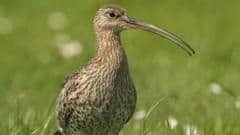
Endangered Curlew Found Nesting in Hopeful Conservation Breakthrough
A rare curlew has been discovered with a nest and three eggs in Northern Ireland, marking a significant milestone for a species that has declined by 98% since the 1980s.

Endangered Curlew Spotted Nesting in Major Conservation Milestone
Footage of a rare curlew tending to a nest containing three eggs has been hailed as a remarkable breakthrough by conservationists working to save one of Ireland's most threatened bird species. The Sliabh Beagh Curlew Conservation Trust shared the video on social media, describing the discovery as a genuinely significant moment in the fight to preserve the curlew's future.
A Species on the Brink
Once a familiar presence across Northern Ireland's countryside, the curlew has suffered a catastrophic population collapse. Numbers have plummeted by more than 98% in Ireland since the 1980s, leaving an estimated 150 breeding pairs remaining in Northern Ireland. Against this stark backdrop, every confirmed nesting attempt carries enormous weight for those dedicated to the bird's survival.
Discovery in the Sliabh Beagh Region
The nesting bird was found in the Sliabh Beagh area, a landscape that straddles the border between Counties Tyrone and Fermanagh in Northern Ireland and County Monaghan in the Republic of Ireland. Conservationists had located a pair of curlews in this region last month, and upon closer inspection, one bird was found to be wearing coloured leg rings — identifying it as a headstarted bird released in 2024.
What Is Headstarting and Why Does It Matter?
Donal Beagan, Nest Protection and Headstarting Manager at the Breeding Waders EIP Project, described the find as genuinely exciting. He explained that headstarting is employed as an emergency conservation measure designed to give vulnerable curlew populations a fighting chance.
The process involves carefully removing at-risk eggs from wild nests and placing them in artificial incubation. Once hatched, the chicks are raised in a controlled environment until they reach the point of fledging — the stage at which they are capable of flight. Only then are the young birds released into the wild, having safely navigated one of the most dangerous periods of their early lives.
A First-of-Its-Kind Record
Beagan highlighted that this discovery represents the first confirmed case of a headstarted curlew returning to breeding grounds and potentially reproducing. He described the sighting as carrying considerable significance, suggesting that conservation efforts to rebuild curlew numbers may genuinely be producing results.
The nest itself was located with the help of GPS thermal imaging technology and is believed to be the bird's second nesting attempt this season, given how late in the breeding calendar it was found. Beagan noted that three eggs is an entirely typical clutch size for a younger bird.
A Hopeful but Cautious Outlook
Despite the excitement surrounding the discovery, Beagan urged measured optimism. The eggs are currently only around two weeks into an incubation period that typically lasts approximately 28 days. Should any chicks successfully hatch, they would then require a further 40 to 45 days before becoming capable of independent flight.
The road ahead remains long, but Beagan and his team will be closely monitoring the nest's progress throughout the remainder of the breeding season, hopeful that the eggs will produce fledglings that survive to adulthood.
Community Effort Behind the Milestone
The Sliabh Beagh Curlew Conservation Trust acknowledged that this breakthrough would not have been possible without the collective efforts of the Breeding Waders EIP Project, RSPB Northern Ireland, dedicated local landowners, and the many volunteers who contribute tirelessly to curlew conservation across the island of Ireland.
Earlier this year, the species made headlines for another reason when firefighters in County Fermanagh intervened to rescue curlew eggs threatened by a significant wildfire that had encroached directly on a nesting site.
How the Public Can Help
Conservationists are encouraging the public to play an active role in protecting the species. Anyone who spots a curlew bearing coloured leg rings is asked to take careful note of the ring colours and report the sighting to the relevant authorities. Continued public vigilance and reporting of curlew sightings remains a valuable tool in tracking and supporting the population's recovery.