Eight Decades On, the Chemex Remains the Gold Standard of Coffee Brewing
Invented in 1941, the Chemex coffee maker has outlasted countless trends and gadgets. Here's why this elegant glass brewer still reigns supreme.

A Morning Ritual Worth Waking Up For
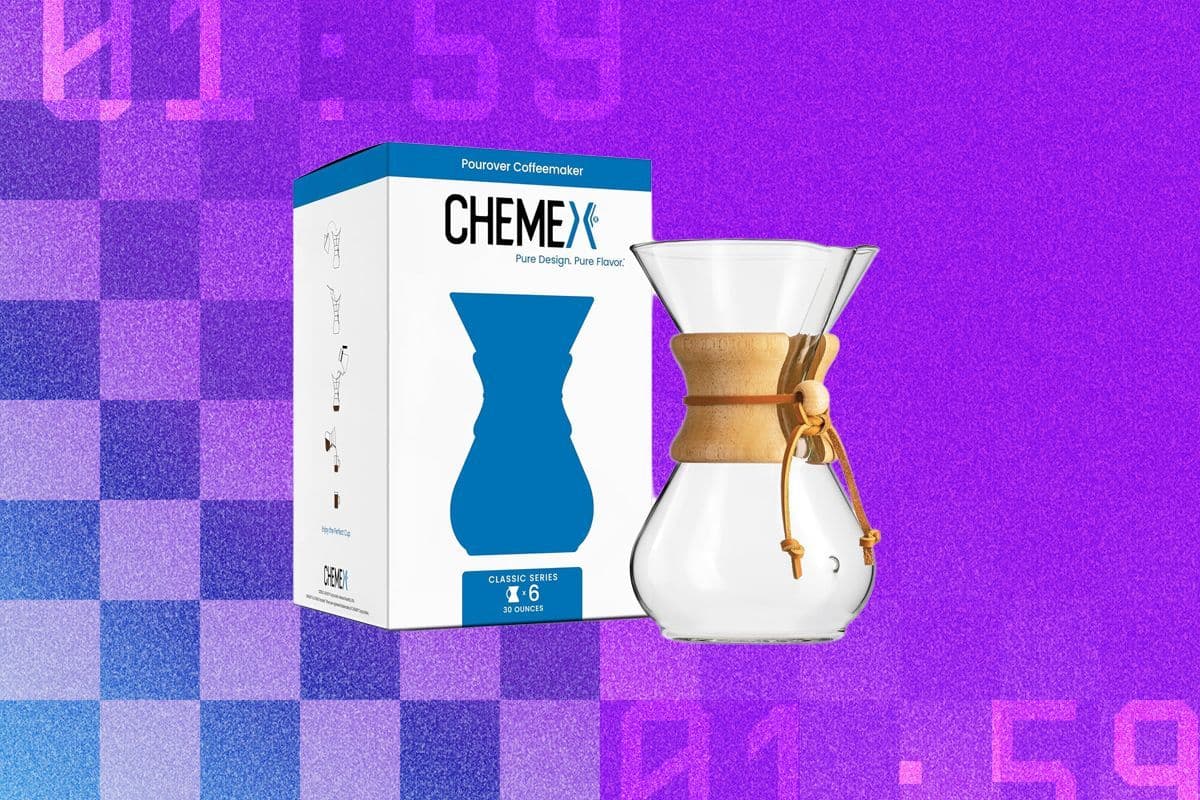
Most mornings blur together in a fog of routine. But certain rituals cut through the noise — and for countless coffee enthusiasts, brewing with a Chemex is one of them. The hourglass-shaped borosilicate glass brewer is arguably one of the most beautifully engineered objects in everyday domestic life. It combines elegant aesthetics with flawless function, and it has been doing so for over eighty years.
The design is refreshingly straightforward. A thick, bonded paper filter sits at a precise 60-degree angle inside the upper chamber, holding hot water in optimal contact with ground coffee before gravity draws the brew into the vessel below. There are no mechanical components, no plastic parts, and nothing that can malfunction. Just glass, paper, water, and coffee — working together in perfect harmony.
A Design Classic With Deep Roots
The Chemex is often grouped alongside midcentury modern design icons, but it actually predates that era. It was invented in 1941 by German chemist Peter Schlumbohm, making it older than many people assume. By the time it graced the set of Mad Men — a show set in the early 1960s — it was already a vintage object. When it appeared in the James Bond film From Russia With Love, it had been around longer than the Blu-ray disc has been around today. And when it popped up on the set of Friends in 1994, it was already as old as the Betamax format is now.
Longevity like that doesn't happen by accident. The Chemex has endured because nothing else has come along to do what it does as effectively — and certainly not while looking as sophisticated doing it.
Is It Really That Difficult to Use?
There's a persistent narrative that the Chemex carries a steep learning curve, even relative to other manual pour-over methods. That reputation is somewhat exaggerated. Compared to dropping a pod into an office machine or spooning pre-ground coffee into an automatic drip maker, yes — the Chemex requires more engagement. But that's hardly a fair benchmark.
The Chemex is a tool designed for people who genuinely care about what's in their cup. Placed alongside alternatives like manual espresso machines or the Aeropress, it's actually one of the more forgiving and intuitive brewing methods available. The margin for error is wider than most enthusiasts admit.
From Casual Mornings to Coffee Perfection
That said, the Chemex is fully capable of producing an extraordinary cup when handled with precision. Walk into any serious specialty coffee shop — the kind that sources a low-yield Peruvian single-origin or a Panama Esmeralda Special Geisha roasted to exacting standards — and there's a strong chance the barista behind the counter is reaching for a Chemex.
At elite cafés, baristas may pour 900 grams of water in careful 200-gram increments, pausing 90 seconds between each pour, using a gooseneck kettle aimed precisely at the center of the filter cone. The entire process can take six to seven minutes and produces a cup of extraordinary clarity and depth. For premium beans — the kind priced at $85 per pound — this level of care is not just worthwhile, it's essential.
Everyday Brewing Without the Stress
Of course, most mornings don't call for that level of ceremony. On a typical weekday, the process might look more like this: grinding beans loaded into the hopper days earlier, eyeballing the amount of grounds, and pouring near-boiling water while simultaneously packing a lunch and skimming through emails. A quick bloom pour, then the rest of the water in one go.
And the result? Still genuinely good coffee. That's the quiet brilliance of the Chemex — it rewards precision without punishing imprecision. It elevates the everyday cup without demanding perfection from the person making it.
The Secret Is in the Filter
One of the most underappreciated aspects of the Chemex experience is its proprietary filter. Schlumbohm was a chemist by training, and he modeled the Chemex filter on laboratory-grade paper. These filters are noticeably thicker and denser than standard coffee filters, and they're engineered to remove oils, fine sediment, and excess acidity from the brew.
The result is a cup that is noticeably cleaner, crisper, and more balanced than what most other pour-over devices produce. Compared to brewers like the Hario V60 or the Kalita Wave — both capable devices in their own right — the Chemex consistently delivers a rounder, more refined flavor profile.
For devoted users, stocking up on Chemex filters becomes something close to a household priority. During the supply chain disruptions of the pandemic, when filters briefly disappeared from shelves, many Chemex loyalists made a firm commitment to never run low again. It's the kind of quiet devotion that speaks to just how integral this brewer becomes to daily life.
Why the Chemex Endures
Eighty-plus years after its invention, the Chemex continues to occupy a unique space at the intersection of design and function. It belongs equally in a museum of modern design and on a kitchen counter being used every single morning. It asks only that you pay a little attention to your coffee — and in return, it delivers beauty, consistency, and a genuinely superior cup, day after day.