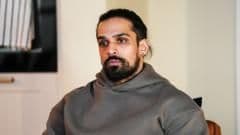
EastEnders Actor Aaron Thiara on Why Ravi's PTSD Story Speaks to Everyone
Aaron Thiara opens up about portraying Complex PTSD in EastEnders and why the storyline carries meaning far beyond one community.

EastEnders Actor Opens Up About Powerful Mental Health Storyline
For Aaron Thiara, stepping into the role of Ravi Gulati in EastEnders has meant far more than delivering lines on a soap opera set. The 32-year-old actor has been at the heart of one of the show's most ambitious mental health storylines to date — and he's acutely aware of the weight that comes with it.
A Story That Transcends Community Boundaries
Speaking to BBC Newsbeat from the EastEnders set, Thiara acknowledged the unique sense of responsibility he feels as a South Asian actor taking on such a visible and vulnerable role.
"Because of the colour of my skin, people will identify themselves through that," he explained. "You can't help but think about those expectations."
However, he was quick to stress that the storyline is not exclusively aimed at South Asian viewers. In his view, it is a narrative designed to be "universally for everyone and anyone" — a story about human suffering that knows no cultural boundaries.
Understanding Complex PTSD
In the show, Ravi Gulati receives a diagnosis of Complex PTSD (CPTSD) — a condition that, according to the NHS, can develop as a result of prolonged trauma, including childhood abuse. Symptoms associated with CPTSD include self-destructive behaviour, persistent feelings of emptiness, and suicidal ideation.
Viewers have watched Ravi spiral through a series of harrowing moments: holding staff and customers hostage in a pharmacy while trying to secure medication for his son, revealing himself as a police informant, and attempting to take his own life following a car accident. His journey has since led him to a mental health facility, where he is receiving professional treatment.
According to the charity PTSD UK, approximately 6.6 million people are expected to develop PTSD or CPTSD at some point during their lifetime — underlining just how widespread and relevant this story truly is.
Tackling a Taboo in South Asian Culture
The storyline also shines a light on the cultural stigma surrounding mental health that remains prevalent in many South Asian communities worldwide. In the show, Ravi's family are portrayed as supportive, yet simultaneously eager to conceal his struggles from those outside their circle — a dynamic that reflects real-world attitudes.
"There is a rich history over many years of what our South Asian community wants to show to the outside world," Thiara said. "And that is strength, honour, culture — getting the job done by any means necessary."
Research has long confirmed that mental health remains a deeply stigmatised subject across South Asian communities globally, making EastEnders' decision to confront it head-on all the more significant.
Bringing Authenticity to the Role
Interestingly, Thiara made a deliberate choice not to over-research Ravi's condition before filming. Rather than becoming an expert on CPTSD, he chose to inhabit the character's confusion from the inside out — allowing his own uncertainty to mirror Ravi's disorientation.
"Not only is Ravi not knowing what's happening, I don't know what's happening," he admitted. "So I can allow myself to just go moment to moment."
This organic approach gave his performance an authenticity that a more calculated method might have diluted. That said, for pivotal scenes — particularly those depicting Ravi's gradual mental decline — Thiara did engage in more deliberate preparation to ensure each moment carried its own distinct emotional weight.
Balancing Sensitivity With Entertainment
Crafting a storyline of this nature required months of careful planning. The EastEnders writing team consulted with leading mental health organisations including Samaritans, Mind, and Rethink Mental Illness to ensure the portrayal was handled responsibly.
Yet there remained a fundamental challenge: how do you tell a painful, sensitive story while still keeping millions of viewers engaged?
"How do we delicately tell this story in our way — but also in an entertaining way, because we also need to entertain our audience?" Thiara reflected.
He was careful not to let the broader responsibility overshadow his core purpose as a performer. "The responsibility is just to be in a place where I can spiritually, mentally, and emotionally give myself to the story in service of Ravi's illness," he said.
A Call for Empathy and Openness
Ultimately, Thiara hopes the storyline encourages viewers — regardless of their background — to look beyond surface-level differences and extend compassion to those who are struggling.
"My hope is that we can look beyond the colour of our skin and support one another," he said. "Seek help, be delicate, and empathise with anyone who may be going through certain problematic issues."
EastEnders has a well-established tradition of confronting difficult social issues, and Thiara made clear that meaningful representation of mental health on screen is not a box to be ticked once and forgotten. It is an ongoing conversation — one that Ravi's story has helped to amplify.
If you have been affected by any of the issues raised in this article, support is available through Samaritans (116 123), Mind (0300 123 3393), and Rethink Mental Illness (0300 5000 927).