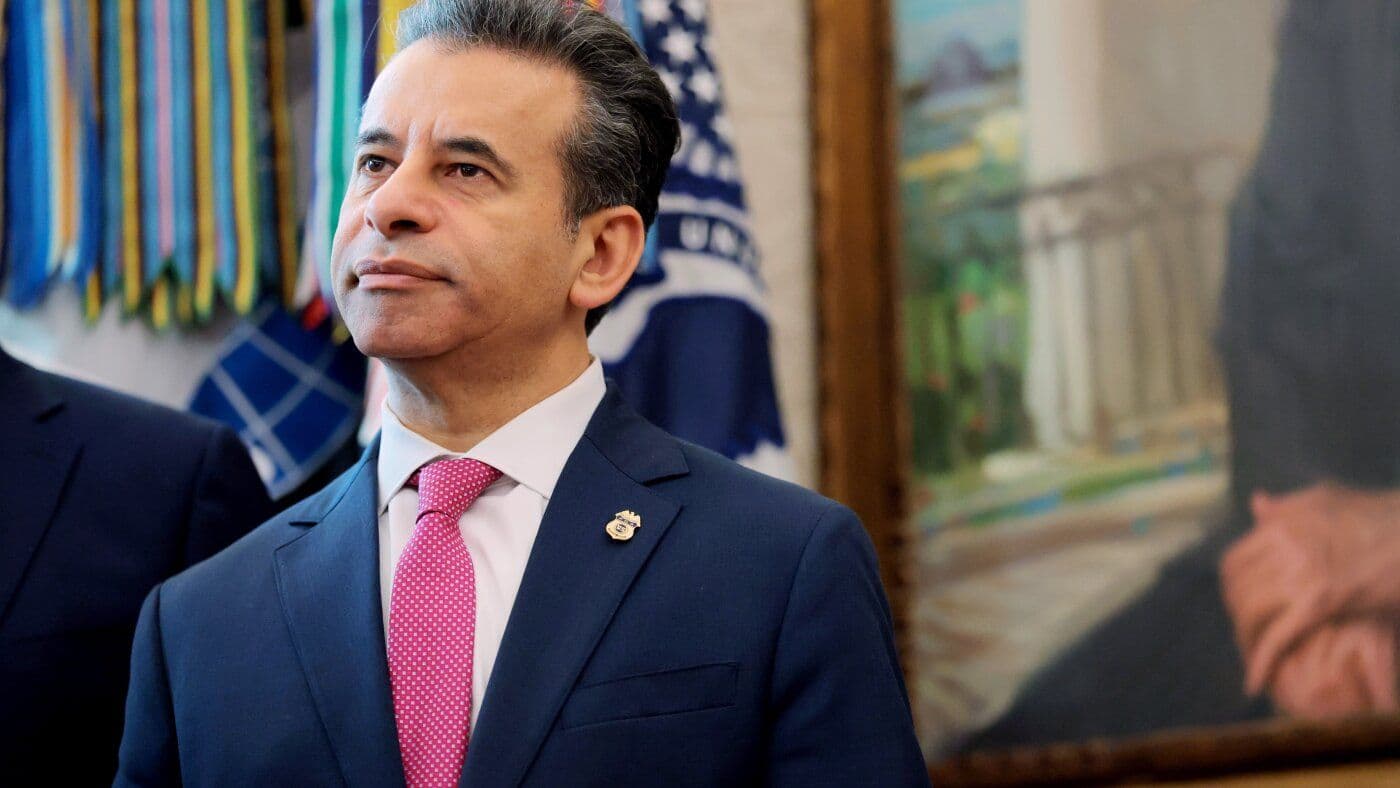
Dr. Marty Makary Steps Down as FDA Commissioner After 13 Months of Controversy
FDA Commissioner Dr. Marty Makary has resigned after a turbulent 13-month tenure marked by internal conflicts, policy reversals, and political pressure.

FDA Commissioner Dr. Marty Makary Resigns After Contentious 13-Month Run
Dr. Marty Makary has officially stepped down as commissioner of the Food and Drug Administration, bringing an end to one of the more turbulent chapters in the agency's recent history. His departure, confirmed on a Tuesday, follows 13 months defined by political friction, regulatory inconsistencies, and clashes with multiple factions across the health policy landscape.
President Trump Weighs In on the Leadership Change
President Donald Trump addressed the FDA leadership transition while preparing to depart for a meeting with Chinese President Xi Jinping. Speaking from the White House, Trump offered measured praise for his departing commissioner.
"Marty is a great guy. He's a friend of mine. He's a wonderful man," Trump said. "He was having some difficulty, you know, he's a great doctor... but he's going to go on and he's going to do well."
Trump later took to Truth Social to offer a more formal farewell, stating that Makary had "done a great job" and that "so much was accomplished under his leadership." The president named Kyle Diamantas, who previously served as deputy commissioner for food, as the acting head of the agency.
A Tenure Caught Between Two Worlds
From the outset, Makary found himself in a difficult position — unable to fully satisfy either side of the ideological divide surrounding federal health regulation.
On one front, he drew criticism from supporters of the Make America Healthy Again movement, championed by Health Secretary Robert F. Kennedy Jr., who felt Makary was too slow in pushing forward their agenda. On the other, traditional regulatory advocates grew uneasy as the FDA veered from the institutional norms they had long relied upon.
Some of the sharpest backlash came when Makary's FDA approved updated mRNA COVID-19 vaccines, frustrating MAHA movement allies. He also drew fire from anti-abortion groups after the agency approved a second generic version of mifepristone and failed to complete a previously promised safety review of the drug.
Flavored Vapes May Have Been the Breaking Point
According to a federal health official with knowledge of internal agency affairs — who spoke on condition of anonymity — the final trigger for Makary's resignation was mounting pressure from the White House to greenlight the sale of fruit-flavored e-cigarettes.
"It came down to the fruit-flavored vape issue," the official said, adding that Makary "is at peace with the decision [to leave]" and was reportedly "in good spirits."
A Career Built Before Washington
Prior to his role at the FDA, Makary was a respected surgeon and health policy researcher at Johns Hopkins University School of Medicine. During the COVID-19 pandemic, he became a prominent critic of federal vaccine policy and the Biden administration's public health response, which helped position him as a candidate for the commissioner role under the second Trump administration.
The Senate confirmed his appointment on March 25, 2025 — just days before mass layoffs orchestrated by the Department of Government Efficiency (DOGE) gutted hundreds of positions across the agency.
Policy Contradictions Undermined His Leadership
Throughout his tenure, Makary pursued an agenda of regulatory modernization, aiming to eliminate what he viewed as bureaucratic redundancies. Among his initiatives was the consolidation of multiple voluntary reporting systems tracking adverse events related to drugs, devices, and vaccines.
However, his leadership was repeatedly undermined by internal contradictions. While he advocated for accelerating drug approvals by requiring only a single pivotal clinical trial instead of the traditional two, the agency simultaneously began requesting additional studies from some applicants — sending mixed signals to the pharmaceutical industry.
FDA Credibility Takes a Hit
One of the most damaging episodes came when the FDA refused to accept Moderna's mRNA flu shot application, citing concerns about a control arm in a clinical study. The pharmaceutical sector reacted with alarm, questioning whether the agency's legendary regulatory predictability could still be counted on. Days later, in a stunning reversal, the FDA accepted the application — a U-turn that drew widespread criticism.
Similar flip-flop decisions under Dr. Vinay Prasad, director of the FDA's Center for Biologics Evaluation and Research, further alienated the rare disease community and medical advocacy groups.
Makary also oversaw the removal of longstanding safety warnings on certain hormone replacement therapy products, bypassing the standard advisory committee process — a move he defended at the time as avoiding what he called a system that was "bureaucratic, long, often conflicted and very expensive."
What Comes Next for the FDA
With Kyle Diamantas now serving as acting commissioner, the agency faces the challenge of restoring its credibility while navigating an administration with ambitious — and at times conflicting — health policy goals. The FDA's next chapter remains uncertain, but the instability of the Makary era has left a clear mark on the institution's standing both domestically and internationally.

