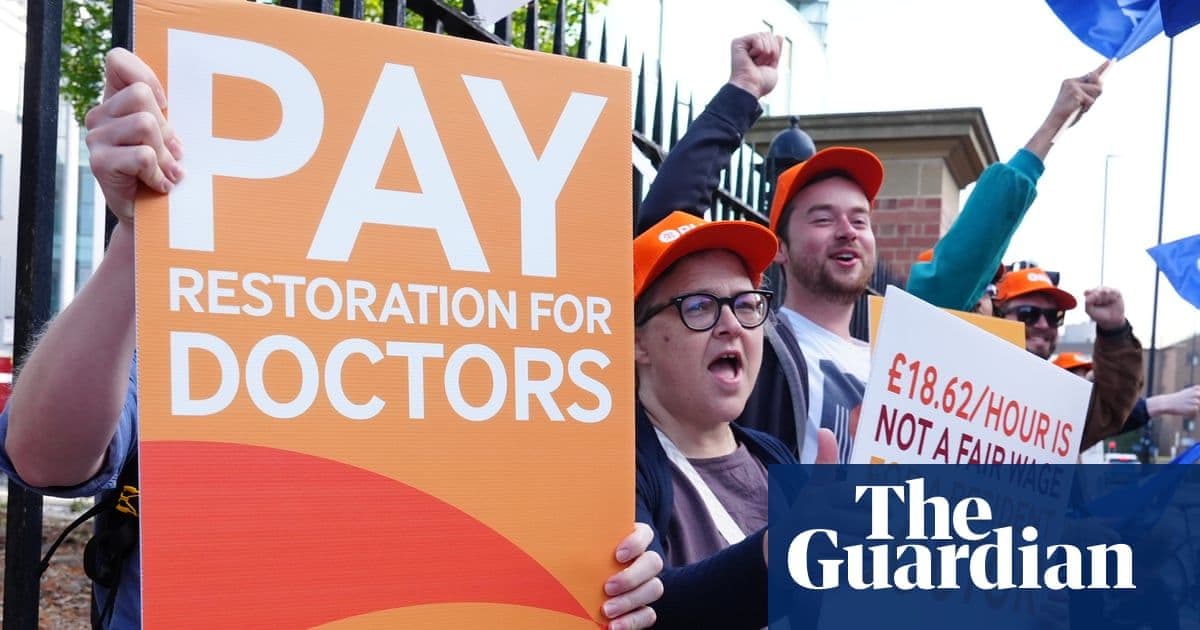
Doctor Strikes Are Hurting the NHS and Splitting the Medical Community
Senior physicians are speaking out against ongoing resident doctor strikes, warning that industrial action is damaging patient care and creating deep divisions within the medical profession.

Doctor Strikes Are Hurting the NHS and Splitting the Medical Community
Two experienced physicians have stepped forward to voice their concerns about the ongoing wave of resident doctor strikes, responding to commentary from journalist Polly Toynbee, who argued that both the government and doctors have mishandled the dispute with no resolution in sight.
Doctors Are Feeling the Strain Too
Contrary to the suggestion that striking doctors are sheltered from the consequences of industrial action, many physicians say they are deeply affected. Consultant physician Dr. Helen Holt, who also chairs the medical staff committee at University Hospitals Dorset, describes widespread anxiety among colleagues about patients facing cancelled appointments and postponed procedures.
Staff covering unfamiliar roles are running on empty, and those earning overtime for shifts they never wanted are increasingly troubled by the financial burden being placed on an already stretched NHS.
Dr. Holt acknowledges that many doctors, herself included, reluctantly backed the early stages of the strikes when the government appeared unwilling to engage with junior colleagues whose salaries had fallen significantly behind those of their peers in comparable professions. However, as the strikes have dragged on, the cracks within the medical community have grown impossible to ignore.
"Communication and diplomacy are skills we pride ourselves on," Dr. Holt noted, "and politicians have never needed them more than now. Diplomacy is the way to resolve this crisis for our NHS."
Questions Over the BMA's Strike Justification
Dr. Peter Davis, writing from Bristol as a BMA member, takes a harder stance, stating that he cannot support the latest round of industrial action. His central criticism targets the BMA's use of 2008 as the baseline year for pay comparisons — a year when physician salaries reached their historic peak.
However, Dr. Davis argues that working conditions in 2008 were vastly different, with doctors routinely working long, demanding hours. Today, he points out, many resident doctors work fewer than 40 hours per week, partly because current compensation packages — including bonuses that actually incentivize part-time working — allow them to do so comfortably.
Strike Support Is Quietly Fading
The data on strike participation tells its own story. Not only are fewer resident doctors voting in favour of strike action, but an even smaller proportion are actively taking part. Dr. Davis reports that in his own area of practice, no resident doctors participated in the latest strike. Many even attended educational sessions that continued to run throughout the dispute, and no clinical activity was cancelled as a result.
Advanced Practitioners Filling the Gap — Permanently?
Perhaps the most significant long-term consequence of prolonged strike action is the accelerating rise of advanced practitioners stepping into roles traditionally held by resident doctors. Dr. Davis highlights the warning issued by Jim Mackey, Chief Executive of NHS England, that resident doctors could ultimately be replaced — and suggests that warning is already becoming reality.
Advanced practitioners are taking on expanded responsibilities on a permanent basis, and some argue this shift may actually deliver a more consistent standard of patient care. Unlike resident doctors, who typically rotate through different posts every few months, these practitioners offer continuity — a quality patients and healthcare systems increasingly value.
The Call for Dialogue
Across both letters, the message is clear: the strikes have run their course, and continued industrial action risks doing more harm than good — to patients, to the NHS, and to the medical profession itself. What is needed now is genuine negotiation, mutual respect, and the kind of measured diplomacy that medicine, at its best, has always stood for.

