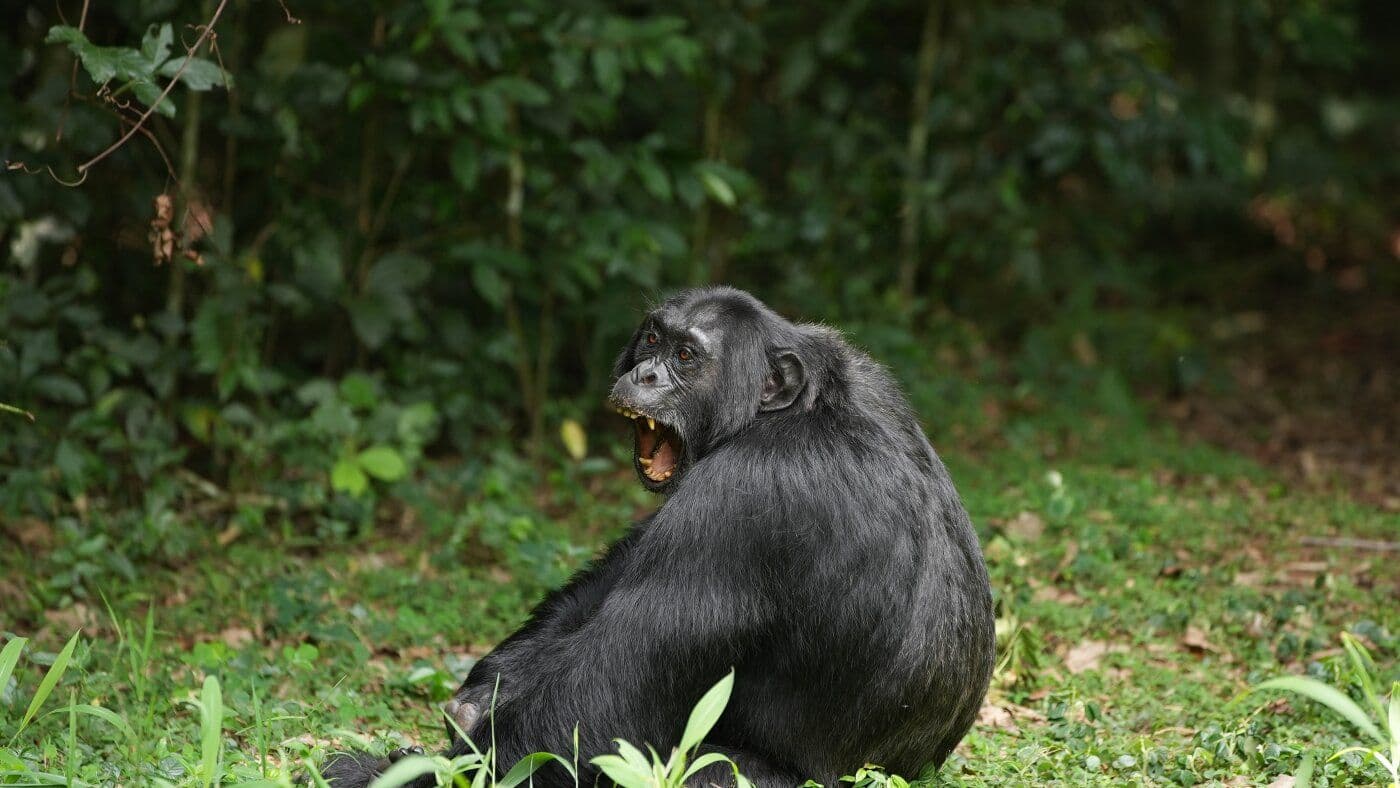
Do Chimps Get a Buzz? How Fermented Fruit May Explain Humanity's Love of Alcohol
Wild chimpanzees routinely consume alcohol through fermented fruit, new research suggests — and it may reveal why humans are drawn to drinking.

The Surprising Drinking Habits of Wild Chimpanzees
Deep in a Ugandan rainforest, a UC Berkeley Ph.D. student spent 11 days doing something most researchers rarely have to consider: chasing chimpanzee urine. Aleksey Maro, a doctoral candidate in integrative biology, knew that the early morning hours were his best window of opportunity.
"Just like people, the first thing they do when they wake up is they go pee," Maro explains. That simple biological routine became the foundation for a revealing new study published in Biology Letters — one that sheds light not just on chimp behavior, but potentially on the deep evolutionary roots of human alcohol consumption.
Ripe Fruit, Fermented Sugars, and Ethanol
The central question Maro and his team set out to answer was straightforward: when wild chimpanzees eat ripe, fermenting fruit, are they actually absorbing meaningful amounts of alcohol? Previous research had already confirmed that fruits commonly found in chimp diets across Uganda and Côte d'Ivoire contain measurable levels of ethanol. But consuming ethanol-laden fruit is one thing — metabolizing it is another.
To find out, the research team employed several creative collection techniques. Some urine samples were carefully pipetted off leaves where chimps had urinated. Others were gathered using a more daring method: holding a plastic bag stretched over a forked branch beneath a chimp and catching the stream mid-flow.
"You need to make sure that you are not going to be splashed," says Sharifah Namaganda, a Ph.D. candidate at the University of Michigan who assisted in the fieldwork. Despite the challenges, she notes that a freshly caught plastic-bag sample is the gold standard — uncontaminated and collected before the animals move on.
What the Urine Revealed
The results were striking. Of 19 chimpanzees included in the study, 17 tested positive for ethanol in their urine. At least 10 of those samples reflected alcohol concentrations comparable to what a human would register after one or two standard drinks.
The chimps were primarily feasting on African star apple, a fruit also consumed by humans, known for its sweet flesh and unusual latex content that Maro describes with amusement: "You chew it and as you eat the fruit, you get a little bubble gum."
On average, chimpanzees consume around ten pounds of fruit pulp daily — meaning consistent exposure to fermented sugars is entirely plausible as a routine part of their diet.
The Drunken Monkey Hypothesis
These findings connect directly to a broader theory in biological anthropology known as the drunken monkey hypothesis. The idea proposes that primates developed an evolutionary affinity for the scent and taste of alcohol because fermentation signals the presence of ripe, calorie-dense food.
"In primates, it could be that when you smell alcohol, that means that's where the sugars are," Maro explains. Over millions of years, this association between alcoholic aroma and nutritional reward may have been hardwired into primate biology — and by extension, into our own.
This ancient preference, Maro suggests, may help explain why modern humans are so readily drawn to alcohol. "It could represent a profound mismatch between the way we live today and the way we evolved," he says. While early primates encountered alcohol only in small, naturally occurring amounts, humans today can concentrate and consume it at dramatically higher levels.
Interestingly, the affinity for fermented substances may predate primates entirely. Maro points to fruit flies, which have evolved to lay their larvae specifically in fermenting fruit pulp — with a clear preference for the more alcohol-rich varieties.
Expert Reactions and What Comes Next
Researchers outside the study were largely enthusiastic about the findings. Matthew Carrigan, an evolutionary biologist at the College of Central Florida, called it "a wonderful study" that builds meaningfully on earlier work. While he acknowledged the sample size is modest, he praised the methodology: "It nicely supports what earlier studies have alluded to. This takes it one step further and is measuring the output."
Cat Hobaiter, a primatologist at the University of St. Andrews, suggested the research could open entirely new lines of inquiry — not only into chimpanzee behavior, but into the evolutionary origins of human social rituals and cultural traditions surrounding alcohol consumption.
For Maro, the immediate next step is determining whether chimps are deliberately seeking out ethanol-containing fruits or simply encountering alcohol as a byproduct of eating ripe produce. If the animals are actively pursuing fermented food based on its aroma or taste, the parallels with human behavior become considerably more compelling.
The answer could bring us one step closer to understanding one of humanity's oldest and most complex relationships — with a substance that may have been part of our ancestral diet long before we ever thought to brew it ourselves.

