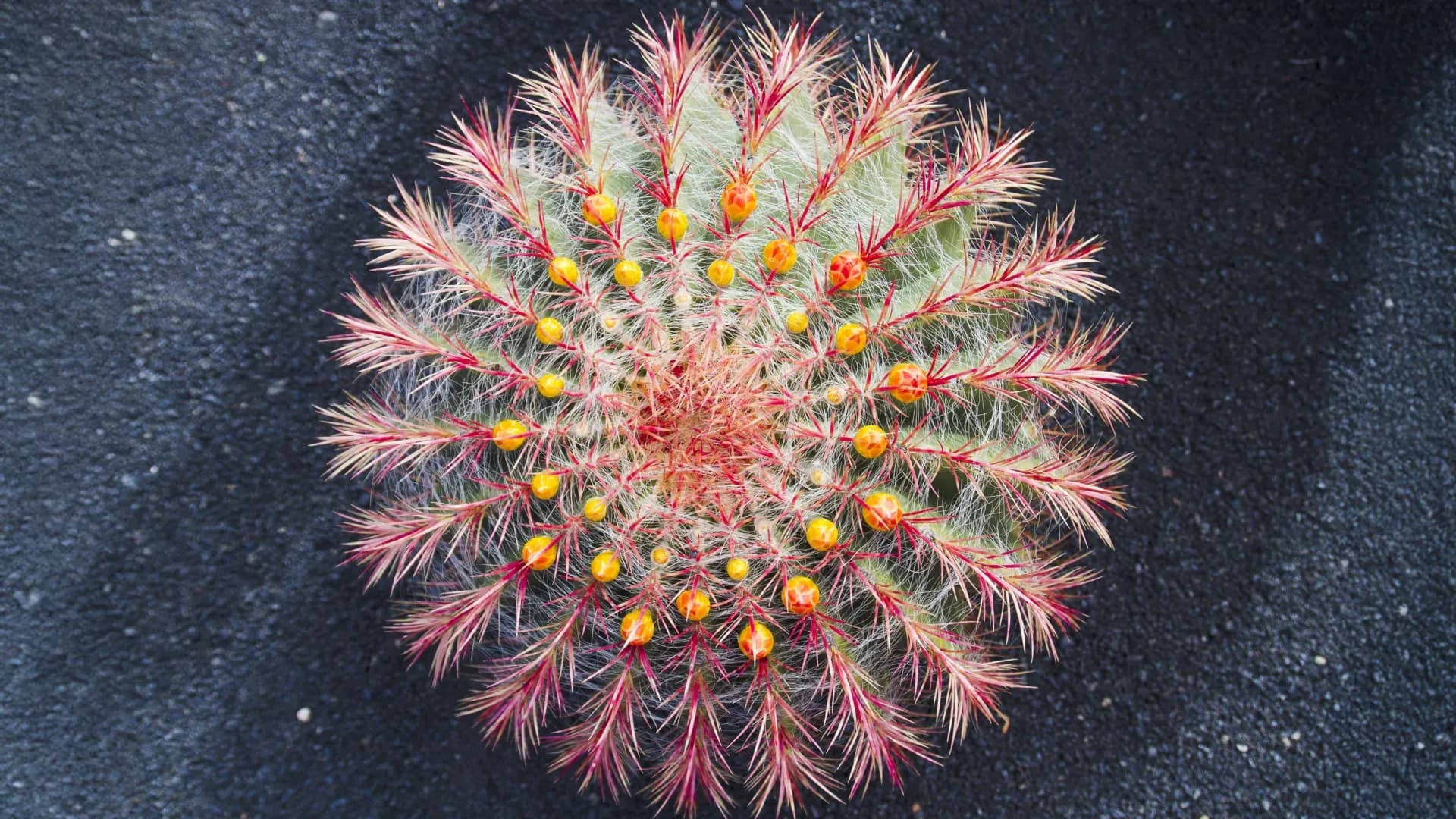
Desert Surprise: Cacti Are Among Earth's Fastest-Evolving Plants — And Scientists Finally Know Why
Cacti look ancient and slow, but new research reveals they evolve at a startling pace. The secret lies not in flower size, but in how fast their blooms change shape.

Cacti Are Evolving at a Surprisingly Rapid Pace
At first glance, cacti seem like relics of a slower world — spiny, patient, and built for endurance rather than change. But groundbreaking new research has turned that assumption on its head. Scientists have discovered that cacti are actually among the fastest-evolving plant groups on the planet, and the driving force behind this evolutionary sprint is something no one expected.
What the Research Found
A team of researchers at the University of Reading analyzed floral data from more than 750 cactus species to understand what fuels the rapid creation of new cactus species. For years, the prevailing scientific belief held that specialized pollinators and elaborate flower structures were the primary engines of plant diversification — a concept rooted in Charles Darwin's famous observations of orchids.
The cactus data told a completely different story.
Flower sizes across the species studied ranged from a mere 2mm to an impressive 37cm — a 185-fold difference — yet flower length showed almost no relationship to how quickly new species formed. Instead, the real predictor was the rate at which flower shape changed over time. Cactus species whose flowers evolved most rapidly were significantly more likely to branch off and become entirely new species. This pattern held true across both recent and ancient evolutionary timelines.
The findings were published in the journal Biology Letters.
Overturning a Darwin-Era Assumption
The discovery challenges ideas that have shaped evolutionary biology for well over a century. Darwin's work suggested that highly specialized floral structures played a central role in species formation. The cactus study directly contradicts this, showing that the speed of floral evolution — not the complexity or size of the flower — is what truly matters.
Lead author Jamie Thompson explained the significance of the findings:
"People may think of cacti as tough, slow-growing plants, but our research shows that the cactus family is one of the fastest-evolving plant groups on Earth. Deserts, often seen as harsh and unchanging, are actually hotbeds of rapid natural change."
Thompson added that the team had initially expected longer, more specialized flowers to be the biggest drivers of new species formation. Instead, flower shape change rate proved to be the decisive variable — regardless of how elaborate or simple the flower appeared.
Why This Matters for Conservation
With approximately 1,850 known species and a history stretching back 20 to 35 million years across the Americas, cacti represent a remarkably diverse and resilient plant family. Yet nearly one-third of all cactus species are currently threatened with extinction, making these findings especially timely.
Thompson noted that evolutionary pace should now be factored into conservation strategies:
"Rather than searching for a single trait that predicts which cacti are most at risk, conservationists may need to look at how fast a species is evolving instead. Although rapid evolution does not guarantee survival — especially as the planet changes faster than most cacti can adapt — it could help identify which species need the most urgent protection."
This perspective offers a fresh framework for prioritizing conservation efforts, moving beyond physical traits toward a dynamic understanding of evolutionary biology.
A New Database Powering Future Research
Supporting the study is a newly developed open-access resource called CactEcoDB, built by Jamie Thompson and ten co-authors representing institutions across three continents, including six researchers from the University of Reading. The database consolidates seven years of data on cactus traits, habitats, and evolutionary relationships.
Published in Nature Scientific Data, CactEcoDB is expected to become an essential tool for scientists studying cactus biodiversity and assessing how these plants might respond to ongoing climate change.
The Bigger Picture
This research reframes how scientists — and the rest of us — think about deserts and the life within them. Far from being static wastelands frozen in time, desert ecosystems are proving to be surprisingly dynamic arenas of rapid biological change. The humble cactus, it turns out, has been quietly racing through evolutionary history all along.

