Could Your Memories Be Cosmic Illusions? The Boltzmann Brain Paradox Revisited
A groundbreaking new study suggests your memories might not be real — just random illusions spawned by cosmic entropy fluctuations.

Could Everything You Remember Be a Random Illusion?
What if your memories — every experience, every moment you believe happened — were never real? What if they simply appeared, fully formed, out of the random chaos of the universe? This is the deeply unsettling premise at the heart of the Boltzmann brain paradox, and a compelling new study has breathed fresh life into the debate.
Researchers David Wolpert of the Santa Fe Institute, physicist Carlo Rovelli, and Jordan Scharnhorst have jointly published a rigorous new analysis of this famous cosmological puzzle. Their findings suggest that not only does the paradox remain unresolved, but that much of the reasoning physicists have used to dismiss it may be fundamentally flawed.
What Is the Boltzmann Brain Hypothesis?
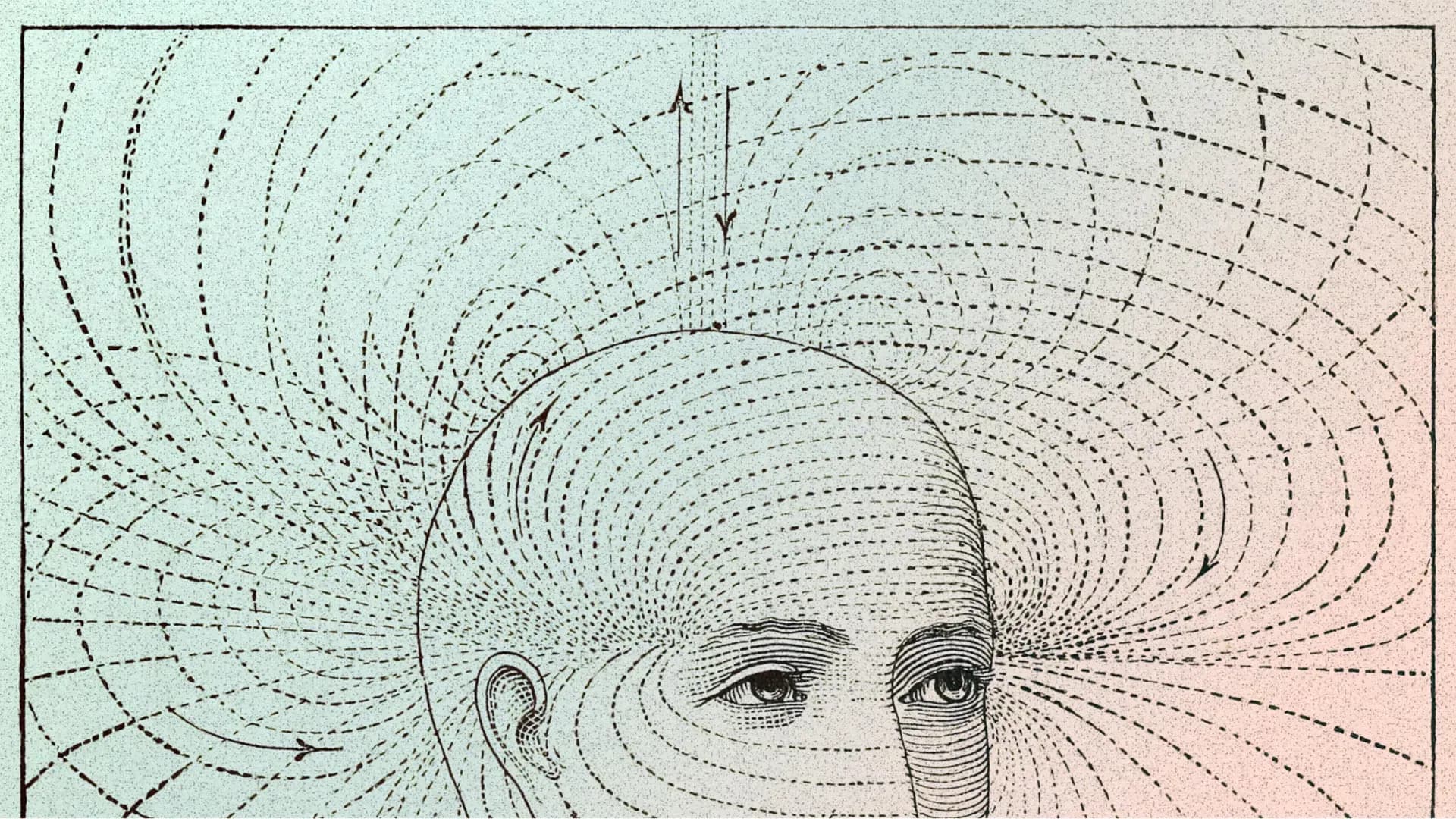
At its core, the Boltzmann brain hypothesis challenges the reliability of memory and perception. Rather than your recollections representing a genuine sequence of past events, this idea proposes they could have materialized spontaneously through random fluctuations in entropy — a chaotic cosmic accident that mimics the appearance of a coherent personal history.
This isn't mere philosophical speculation. It emerges directly from the mathematics of statistical physics. The foundation of our understanding of time's direction rests on Boltzmann's H theorem, a cornerstone of statistical mechanics deeply tied to the second law of thermodynamics. This law describes why entropy — essentially, disorder — tends to increase over time, which is what gives us our intuitive sense of past and future.
The catch? The H theorem itself is time-symmetric. It holds no preference for one direction of time over another. This mathematical neutrality opens a startling door: statistically speaking, it is actually more probable for the complex patterns forming our memories and observations to arise from a spontaneous entropy fluctuation than from a genuine chain of historical events.
How the Researchers Approached the Problem
To systematically dissect this paradox, Wolpert, Rovelli, and Scharnhorst constructed a rigorous formal framework examining how varying assumptions about time influence conclusions about entropy and memory.
Their work weaves together three major concepts:
- The Boltzmann brain hypothesis itself
- The second law of thermodynamics
- The past hypothesis — the assumption that the universe originated in an exceptionally low-entropy state at the Big Bang
The Role of Fixed Time Points
One of the study's key insights concerns which moments in time are treated as fixed reference points when modeling entropy's evolution. Some analytical approaches anchor themselves to the universe's present state and extrapolate outward. Others begin with the low-entropy conditions of the Big Bang and move forward.
Critically, the laws of physics do not dictate which approach is correct. This interpretive freedom, the researchers argue, is where much of the confusion and controversy originates.
Circular Reasoning at the Heart of the Debate
Perhaps the most striking contribution of this study is the identification of what the authors term the "entropy conjecture" — a concept designed to expose a pervasive logical problem lurking within existing arguments.
The researchers demonstrate that many conventional discussions about entropy, time's arrow, and memory validity are caught in a loop of circular reasoning. Assumptions about the nature of the past are employed to validate conclusions — such as the trustworthiness of memory or the specific direction of entropy increase. Those very conclusions are then recycled to justify the original assumptions.
This logical circularity doesn't mean our memories are definitely illusions. But it does mean that the arguments we typically rely on to rule out that possibility may not be as solid as previously believed.
What This Means for Our Understanding of Reality
The researchers are careful not to overstate their conclusions. This study does not claim that your memories are fake or that the past didn't happen. Rather, it illuminates hidden assumptions embedded in how physicists reason about time, entropy, and memory — and shows that those assumptions have not been adequately examined.
By separating the role of objective physical laws from the interpretive frameworks we use to apply them, the study offers a cleaner, more transparent lens through which to examine some of science's most enduring and profound questions.
The Boltzmann brain paradox may be decades old, but this new analysis makes clear it is far from settled — and that confronting it honestly requires acknowledging just how much we silently take for granted about the reality we think we remember.