Could Creatine Be the Next Weapon Against Depression?
Best known as a gym staple, creatine is now under scientific scrutiny for its potential to ease depression. Here's what the latest research reveals.

Could Creatine Be the Next Weapon Against Depression?
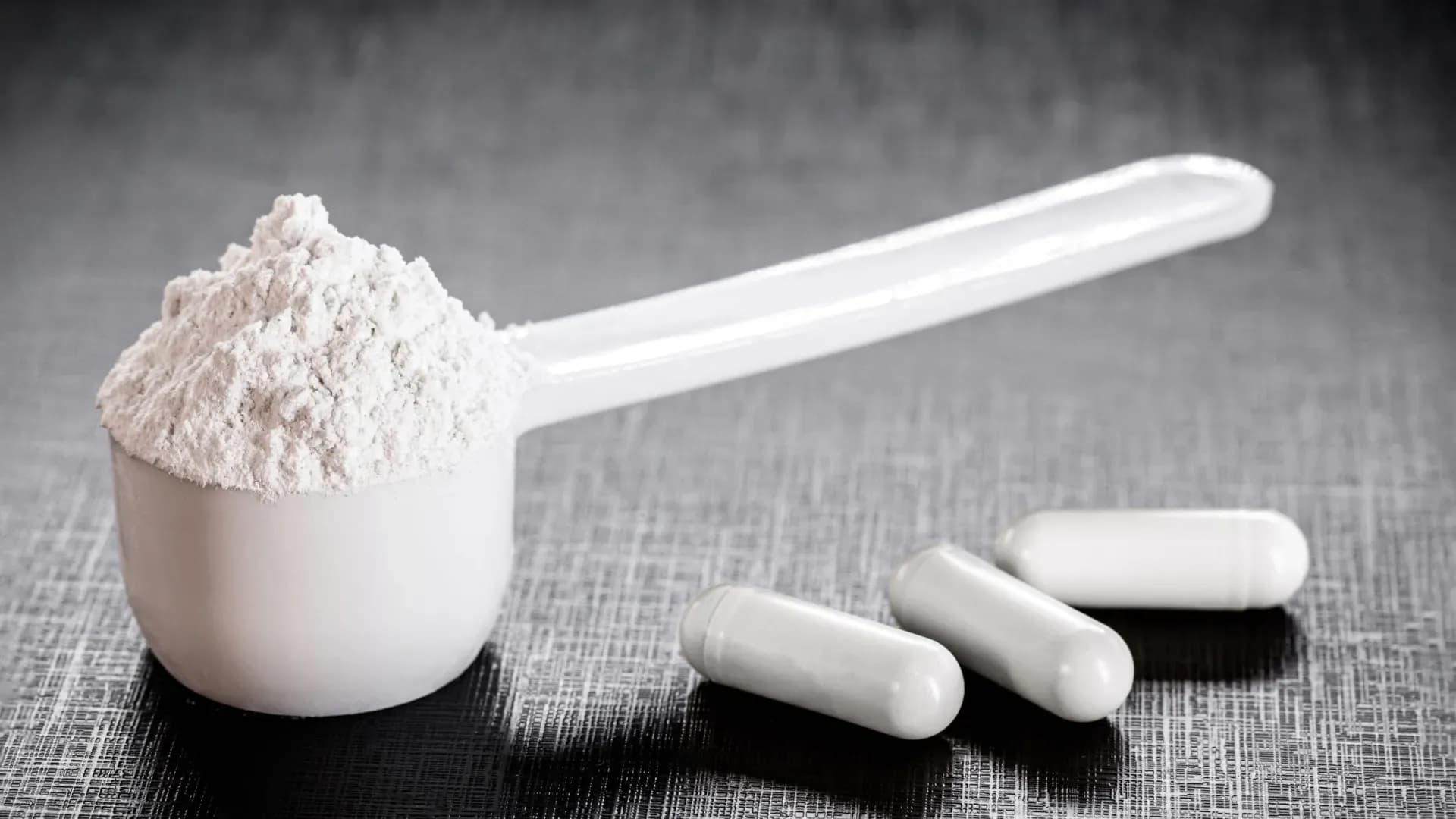
For decades, creatine has been a fixture in gym bags and sports nutrition stacks, prized for its ability to boost muscle strength and athletic performance. Now, a growing body of scientific interest is pointing in an unexpected direction — toward the brain. Researchers are beginning to ask whether this popular supplement might also play a role in treating depression, one of the world's most prevalent and difficult-to-manage mental health conditions.
What the Latest Research Found
A newly published systematic review in the journal Brain Medicine took a close look at existing clinical evidence surrounding creatine as a potential treatment for depression. Rather than conducting a fresh experiment, the team — led by Bassam Jeryous Fares of the University of Ottawa — analyzed five randomized controlled trials involving a combined 238 participants. Of those, 126 received creatine supplementation and 112 were given a placebo.
The trials were conducted across five countries: South Korea, the United States, Brazil, Israel, and India. Participants averaged 36 years of age, and the majority were women. Four of the five studies focused on major depressive disorder, while one examined participants with bipolar disorder who were experiencing a depressive episode.
Because the study designs varied significantly, researchers chose not to pool the data into a single statistical analysis. Instead, each trial was assessed on its own merits.
Mixed Results, But Some Encouraging Signals
The findings were far from uniform, but two studies stood out with notably positive outcomes — both involving women diagnosed with major depressive disorder.
In the first, participants who took five grams of creatine daily alongside the antidepressant escitalopram showed significantly greater reductions in depressive symptoms after eight weeks compared to those taking escitalopram with a placebo. The effect size was considered large by conventional standards, with a Cohen's d of 1.13 on the Hamilton Depression Rating Scale. A higher rate of remission was also observed in the creatine group.
The second positive trial combined creatine supplementation with cognitive behavioral therapy (CBT). Participants receiving creatine alongside CBT demonstrated greater symptom relief on standardized depression assessments than those undergoing therapy with a placebo.
Where the Evidence Falls Short
The remaining three trials told a different story. One found that neither five nor ten grams of creatine per day improved outcomes in patients whose depression had not responded to medication. Another study testing various doses among adolescent girls showed no advantage over placebo. A third trial involving individuals with bipolar disorder also reported no meaningful improvement.
Beyond the lack of benefit, researchers flagged a notable safety concern: two participants with bipolar disorder developed hypomania or mania after taking creatine, suggesting the supplement may carry distinct risks depending on a person's underlying diagnosis.
Why Scientists Believe Creatine Could Influence the Brain
The scientific rationale behind this research stems from the brain's extraordinary energy requirements. While creatine is widely recognized for helping muscles rapidly regenerate adenosine triphosphate (ATP) — the molecule that fuels cellular activity — the brain relies on this same energy system just as heavily.
Prior research has identified abnormalities in creatine metabolism within the brains of individuals with mood disorders, prompting scientists to investigate whether disruptions in cellular energy production might contribute to depressive illness. Additionally, creatine may interact with dopamine and serotonin pathways, the very neurotransmitters targeted by most antidepressant medications.
However, the review's authors are careful to distinguish between correlation and causation. These connections remain theoretical, and depression itself is a complex condition involving numerous overlapping biological mechanisms.
Researchers Urge Measured Optimism
"The signal is interesting, but it is not a verdict," said Fares, first author of the review and a medical student at the University of Ottawa. "Two trials pointed one way and three pointed another. That is not the kind of evidence on which you change clinical practice. It is the kind that tells you the question is worth further exploration."
Nicholas Fabiano, the review's corresponding author and a psychiatry resident at the University of Ottawa, echoed that caution. "Creatine appears to be a safe intervention. The adverse events we found were limited to mild gastrointestinal discomfort. We cannot yet reliably say that creatine helps with depressive symptoms or if the findings are generalizable to everyone."
Important Limitations to Consider
The review's authors are transparent about the constraints of the current evidence base. The trials were relatively small in scale, skewed heavily toward female participants, and varied in methodological quality. Two studies were rated as having a low risk of bias, while the remaining three raised concerns related to participant assignment procedures and missing data — factors that could influence the reliability of their conclusions.
As a result, experts are not recommending creatine as a routine treatment for depression at this time.
What Comes Next
The review calls for larger, longer-duration clinical trials that extend well beyond the eight-week windows used in most existing studies. Researchers also recommend exploring creatine in combination with exercise, investigating optimal dosing strategies, and acknowledging that higher doses may not automatically produce stronger effects.
Animal research may also offer valuable clues. Laboratory experiments have demonstrated that creatine affects depression-like behavior differently in male and female rodents — a distinction that could help explain why the human trials involving predominantly female participants yielded the most promising results.
For now, creatine remains a compelling hypothesis rather than a confirmed therapeutic tool. A supplement long associated with physical performance is capturing the attention of mental health researchers — and while the evidence is still emerging, the question itself appears well worth pursuing.
The peer-reviewed study, "Creatine as a treatment for depression," was published in Brain Medicine and will be available via open access beginning June 30, 2026.