Community Volunteers Join Forces to Save Rare Bog Bush Cricket From Extinction
A pioneering citizen rewilding project is enlisting volunteers to breed a nationally rare wetland insect at home, with hopes of restoring its populations across East Anglia.

Citizen-Led Breeding Program Aims to Rescue a Vanishing Wetland Insect
A nationally rare insect that once thrived across British wetlands could be given a new lease on life — thanks to the efforts of everyday volunteers. Citizen Zoo, an organization that engages local communities in grassroots rewilding initiatives, has launched a breeding program designed to bring the bog bush cricket back from the brink in East Anglia.
A Species Struggling to Survive
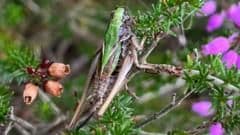
The bog bush cricket is one of ten bush cricket species currently recorded in the United Kingdom. Measuring approximately 18mm in length, this small but ecologically significant insect favors lowland peat bog habitats. According to conservation charity Buglife, the species has become nationally rare primarily due to widespread habitat loss over recent decades.
Unlike many insects, the bog bush cricket is almost entirely flightless. It typically develops only short, non-functional wings, making natural dispersal to new locations practically impossible without human assistance. In the East of England, the species now clings on at just a handful of sites in Norfolk, including Beeston Common, Holt Lowes, Cawston Heath, Marsham Heath, Buxton Heath, Broadland Country Park, Horsford Heath, and Swannington Upgate — all located near the towns of Aylsham, Sheringham, and Holt.
"It almost always has short wings and cannot fly, so its ability to colonize suitable new sites is very limited — it just needs a little help," explained entomologist Stuart Green.
Building on Proven Success
Citizen Zoo's approach draws directly from its established Hop of Hope citizen rewilding program, which has already demonstrated impressive results. Since 2018, that initiative has successfully reintroduced more than 8,000 large marsh grasshoppers to wetland habitats across Norfolk and Cambridgeshire. Last year, Natural England confirmed that the large marsh grasshopper had returned to the Norfolk Broads — a landmark conservation milestone.
Elliot Newton, Director of Rewilding at Citizen Zoo, expressed enthusiasm about applying the same framework to the bog bush cricket. "We are incredibly excited to apply a similar methodology that has already delivered remarkable success with the large marsh grasshopper to a new species," he said.
Unique Challenges Ahead
Despite the optimism, experts acknowledge that rearing the bog bush cricket will present greater challenges than previous projects. Stuart Green, who led the large marsh grasshopper recovery effort, noted two key hurdles: the species has a longer two-year life cycle, and it can exhibit cannibalistic behavior — both of which complicate captive breeding at scale.
"We will be testing a few methods that might get around these problems and allow us to rear significant numbers of the bush cricket for release into the wild," Green said.
Citizen Zoo is currently working to establish a scientifically sound captive breeding model that can reliably support future wild reintroductions and broader population recovery efforts.
Looking Toward a Wilder Future
While specific reintroduction sites have yet to be finalized, conservation experts have identified The Fens as a potentially suitable habitat for the species' return. The long-term vision is to restore the bog bush cricket to multiple locations across East Anglia, reversing decades of ecological decline.
For Newton, the significance of the project extends beyond the insects themselves. "At a time when ecological decline can often leave people feeling powerless, community-led projects like this offer something vital — hope," he said. "They show that local people can play a direct role in restoring nature and shaping a wilder future."
By placing conservation directly in the hands of local volunteers, Citizen Zoo is demonstrating that meaningful ecological restoration does not always require large institutions — sometimes, it begins at home.