Community Hostility and a Rare Ebola Strain Are Pushing Congo's Outbreak Toward Crisis
Aid workers battling a rare Ebola strain in eastern Congo face violence and deep mistrust as cases approach 1,000 with no vaccine available.
A Dangerous Mission on Two Fronts
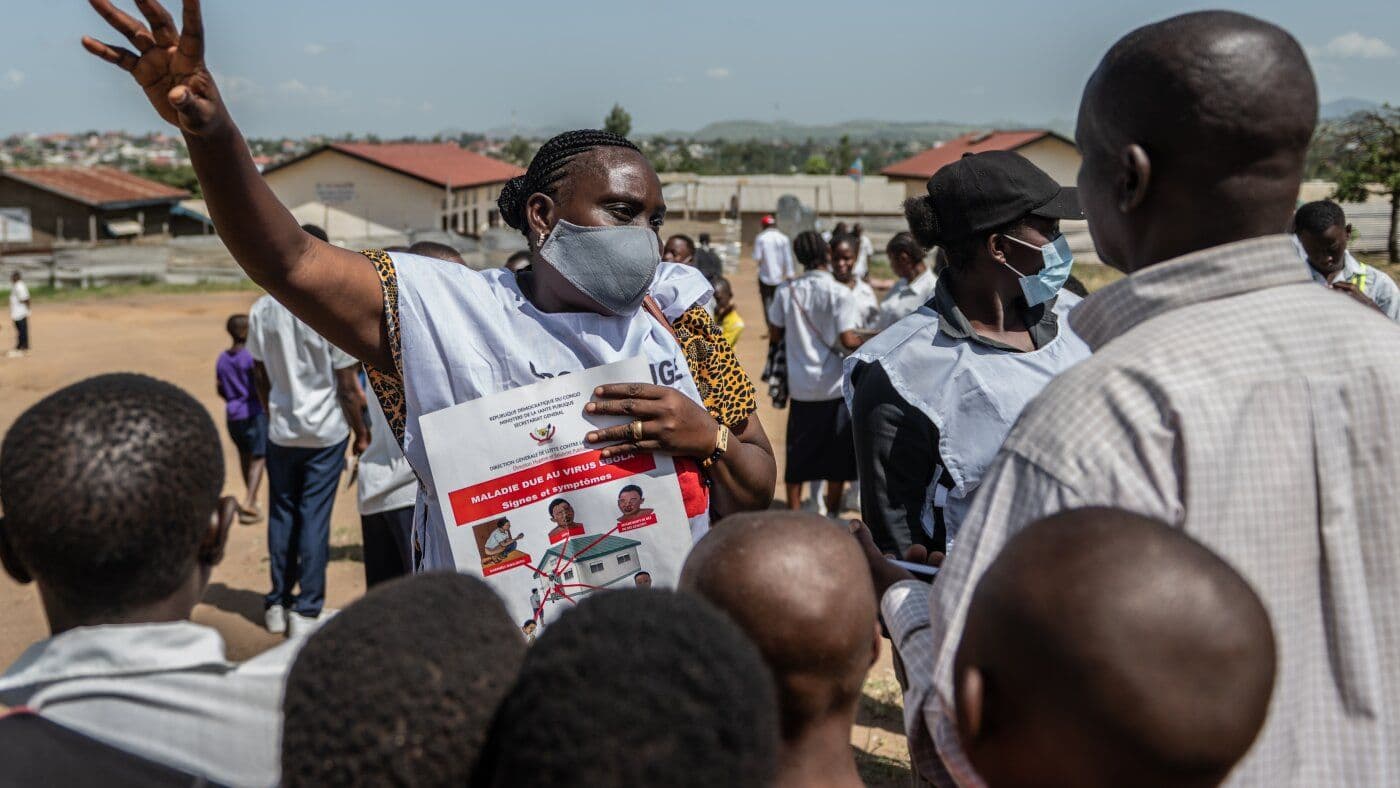
For Vanny Birungi, a Red Cross volunteer working in eastern Congo, every awareness campaign comes with an invisible second assignment — managing her own safety. As suspected Ebola cases inch toward 1,000 in the Ituri province, Birungi and her colleagues have been met not only with the threat of a deadly virus but with stones, insults, and outright hostility from the very communities they are trying to protect.
"We continue to tell them the disease is out there. Some accept, and others don't," she told the Associated Press while conducting outreach in a working-class neighborhood of Bunia, the provincial capital at the center of the crisis.
A Rare Strain With No Medical Safety Net
This outbreak involves the Bundibugyo strain of Ebola — one of the rarest forms of the virus and, critically, one for which there is currently no approved vaccine or treatment. Health authorities initially tested samples for a more common Ebola variant, losing precious weeks before the correct identification was made. Experts are still working to determine exactly when the outbreak began.
The World Health Organization's Director-General, Tedros Adhanom Ghebreyesus, confirmed Monday that suspected cases have surpassed 900 and suspected deaths have exceeded 220. "We are now playing catch-up with a very fast-moving epidemic," he warned.
Both the WHO and the Africa Centers for Disease Control and Prevention believe the true scale of the outbreak is significantly larger than official figures currently reflect.
Distrust Runs Deep in a Traumatized Region
Decades of armed conflict have left residents of eastern Congo deeply suspicious of outside intervention. Many locals openly reject the idea that Ebola is a genuine threat.
"These people should stop bothering us. They just want to get rich. Let's not forget that Ebola is a white man's invention," said Pierre Basola, a 56-year-old Bunia resident, before walking away.
Mado Nditamba, 70, reflected a different kind of fear — one rooted in helplessness rather than denial. "This epidemic today is worse. We go to the doctors in the hospitals, but they also die. That's what worries us. We don't know what to do and we leave everything to God."
Heather Kerr, country director for the International Rescue Committee in Congo, stressed that community trust is not a secondary concern. "Trust is almost as important as the health response, because if you get this massive distrust in the communities, they're not going to go to the health centers," she said.
Violence Against Healthcare Infrastructure
The breakdown in trust has escalated into direct attacks on medical facilities, severely disrupting response efforts.
A Week of Targeted Attacks
On Sunday, a group of young men stormed a hospital in Bunia that was treating Ebola patients, forcing staff to evacuate under gunfire. The day before, residents set fire to a Doctors Without Borders treatment tent in Mongbwalu, causing more than a dozen suspected patients to flee the facility. On Thursday, a response center in Rwampara was burned to the ground after community members were prevented from collecting the body of a suspected Ebola victim for traditional burial rites.
The tension surrounding burial practices is significant. The Ebola virus spreads through direct contact with the bodily fluids of infected individuals — including blood, sweat, vomit, and feces — making traditional handling of the deceased extremely dangerous. Yet preventing families from participating in final rites has deepened resentment and fueled conspiracy theories.
Health Workers Are Dying Too
Frontline responders are paying a devastating personal price. An unknown number of healthcare workers have contracted the virus, and some have died. A Congolese doctor was reported dead on Sunday in Rwampara, according to Rubens Dhedgia, who coordinates the Ebola response in the region.
In neighboring Uganda, where a smaller cluster of cases has emerged following cross-border travel, at least three health workers have been infected.
Perhaps most alarming is a disclosure from the International Federation of Red Cross and Red Crescent Societies: three of its volunteers are believed to have died in Mongbwalu after handling bodies on March 27 — work unrelated to the Ebola response at the time. If confirmed, this would push the outbreak's true start date back significantly earlier than the first officially confirmed death in late April.
Structural Weaknesses Hamper the Response
The region's infrastructure presents enormous logistical challenges. Travel from Bunia to Mongbwalu requires navigating roads through active conflict zones. The main airport serving as a humanitarian hub has been under rebel control for more than a year. Many health clinics operate on generators, and laboratory capacity for testing the Bundibugyo strain remains critically limited.
Disease surveillance in the area has also been weakened by cuts to U.S. and international aid funding, which experts say contributed to the delayed detection of this outbreak.
Health workers on the ground have told journalists they feel underprepared and underprotected, with shortages of both personnel and equipment at a moment when the epidemic is accelerating.
Community Engagement Seen as the Only Path Forward
Humanitarian organizations working in the region are emphasizing that rebuilding community trust is not optional — it is essential.
"The only way to go, as far as this particular virus is concerned, is community engagement," said Yakubu Mohammed Saani, country director for Action Aid in Congo. The organization noted that significant skepticism persisted among residents surveyed in mid-May, shortly after the outbreak was publicly announced.
How to meaningfully improve that engagement — and do so quickly enough to contain a rapidly spreading virus — remains an open and urgent question. Congo has experienced 17 Ebola outbreaks and the WHO maintains the country has the capacity to respond. But with a rare strain, damaged trust, active conflict, and a delayed start, the path to containment has never looked more difficult.

