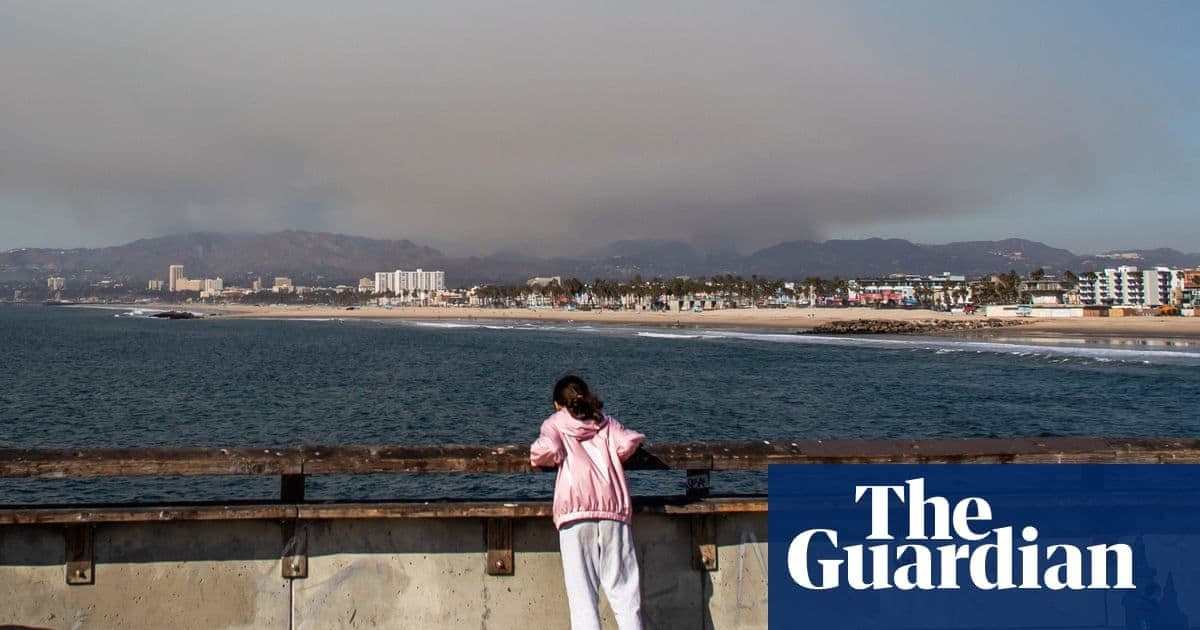
Close to Half of American Children Are Exposed to Hazardous Air Pollution Levels, New Study Finds
A landmark report reveals 46% of US children breathe dangerously polluted air, raising urgent concerns as federal environmental protections continue to be stripped away.
Close to Half of American Children Are Breathing Dangerously Polluted Air
A sobering new report has revealed that nearly half of all children living in the United States are regularly exposed to air pollution levels considered harmful to their health — and experts are warning that ongoing federal rollbacks of environmental safeguards will only make matters worse.
What the American Lung Association Report Found
The American Lung Association (ALA) released its 27th annual air quality report on Wednesday, offering a comprehensive evaluation of pollution conditions across the country. The report assessed ground-level ozone — commonly referred to as smog — along with both year-round and short-term surges in particle pollution, often called soot. All data analyzed was quality-assured and collected over a three-year window spanning 2022 to 2024.
The findings were alarming. Approximately 33.5 million children under the age of 18 — representing 46% of all minors in the US — reside in areas that received a failing grade for at least one pollution category. Even more concerning, around 7 million children, or roughly 10% of the nation's youth, live in communities that failed all three pollution measures evaluated in the report.
Why Children Face Greater Risk
Will Barrett, assistant vice-president of the ALA's Nationwide Clean Air Policy, explained to the Guardian why children are particularly vulnerable to the effects of air pollution.
"Children's lungs are still developing. For their body size, they're breathing more air. And also, kids play outdoors, they're more active, they're breathing in more outdoor air," Barrett said. "Air pollution exposure in children can contribute to long-term developmental harm to their lungs, new cases of asthma, increased risks of respiratory illness and other health considerations later in life."
Communities of Color Bear a Disproportionate Burden
The report also drew attention to significant racial disparities in pollution exposure. Communities of color are far more likely to live in areas with unhealthy air quality and are also more susceptible to its effects due to higher rates of pre-existing conditions such as asthma, diabetes, and heart disease.
While people of color account for 42.1% of the total US population, they make up 54.2% of those living in counties that failed at least one pollution grade. Furthermore, a person of color is 2.42 times more likely than a white person to reside in a community that fails all three pollution measures — a stark illustration of environmental inequality.
Smog Levels Reach a Six-Year High
Ground-level ozone remains the most pervasive air quality threat to public health across the country. Between 2022 and 2024, approximately 129.1 million Americans — or 38% of the entire US population — were exposed to ozone concentrations high enough to pose a health risk. This figure represents the highest number recorded in the ALA's annual report in six years, reflecting an increase of roughly 3.9 million people compared to the prior year.
Several interconnected factors are driving these elevated levels, including extreme heat events, prolonged drought conditions, and the increasing frequency and intensity of wildfires. The southwestern United States, stretching from California through Texas, as well as large portions of the Midwest, were among the regions most severely affected. Smoke drifting southward from Canada's devastating 2023 wildfires also played a significant role, compounding pollution levels in many US communities.
The Role of Climate Change
The report reinforces what climate scientists have long warned: rising global temperatures are directly worsening air quality. Climate change intensifies ozone pollution by increasing precursor emissions while simultaneously creating atmospheric conditions — such as elevated temperatures and reduced wind speeds — that allow pollutants to accumulate and ozone to form more readily.
Data Centers Emerge as a Growing Pollution Source
One of the more unexpected highlights of the report was its focus on data centers as an emerging contributor to air pollution. In recent years, data centers have consumed approximately 4.4% of total US electricity, a share that could climb to as high as 12% within the coming decade as demand for digital infrastructure continues to surge.
Much of this environmental impact stems from the fact that many regional electricity grids still rely heavily on fossil fuels, including methane gas and coal. Additionally, large-scale data centers typically operate dozens of diesel-powered backup generators, which emit carcinogenic particulate matter into the surrounding air.
"As the demand for increases in data centers continues to grow, the focus needs to be on non-combustion, clean renewable energy sources that are additive and not taking away from the grid," Barrett emphasized.
Federal Rollbacks Raise Alarm Among Health Experts
The release of this report comes at a particularly fraught moment for environmental policy in the United States. Since returning to office, the Trump administration has initiated at least 70 actions designed to weaken or reverse environmental and climate protections — a sweeping effort that health advocates say poses a direct threat to public wellbeing.
Barrett was pointed in his criticism of the current Environmental Protection Agency's direction. "There's a devaluing of children's health by this EPA as they are weakening, delaying and repealing critical health protection," he said, citing specific examples including missed deadlines for updating particle pollution standards, the repeal of vehicle emission regulations, and loosened restrictions on pollution from oil and gas operations.
He also flagged the rollback of limits on mercury emissions from coal-fired power plants as a serious public health concern, describing it as part of a broader institutional retreat from the agency's core mission.
"There is a wide-scale effort by the federal EPA to eliminate health protections while also distancing themselves from their own mission to protect public health," Barrett said.
Other notable rollbacks include overturning restrictions on major air pollution sources, dissolving EPA advisory panels focused on air quality, and abandoning the longstanding practice of calculating the monetary value of lives saved through reductions in fine particulate matter and ozone pollution — while still accounting for the financial costs imposed on corporations.
A Critical Moment for Air Quality in America
The ALA's latest findings arrive as a stark reminder that air quality remains one of the most pressing public health challenges facing the United States. With millions of children at risk and federal protections being steadily dismantled, health advocates are urging policymakers, communities, and industries alike to prioritize clean air as a fundamental right — not a negotiable policy option.