Claude Steals the Spotlight at HumanX AI Conference in San Francisco
Anthropic's Claude dominated conversations at this year's HumanX conference, while OpenAI faced growing scrutiny over its direction and leadership.
Claude Was the Name on Everyone's Lips at HumanX
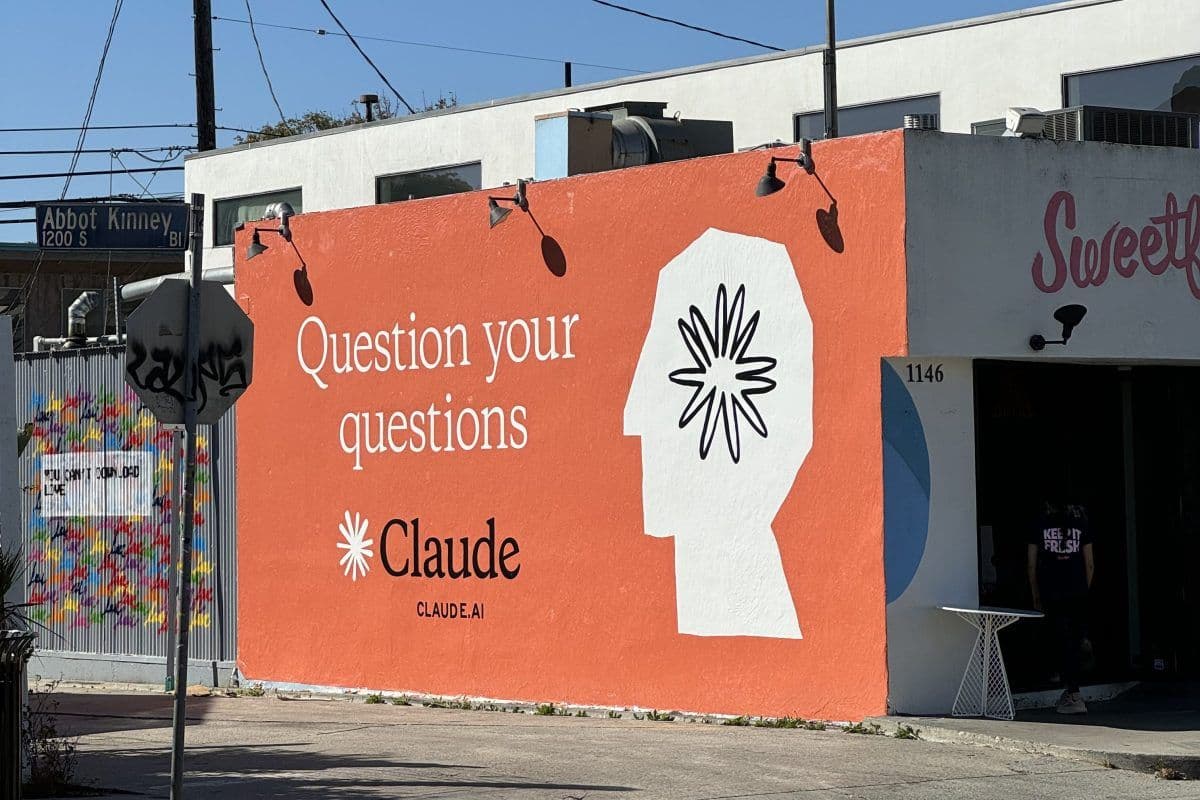
When thousands of technology professionals gathered at San Francisco's Moscone Center for the HumanX AI conference this week, one name kept surfacing in panel discussions, vendor conversations, and hallway chatter alike — Claude, the AI assistant developed by Anthropic.
The conference, which centers on the rapidly evolving world of artificial intelligence, drew a crowd eager to explore how agentic AI is transforming modern business operations. These AI agents — capable of autonomously handling everything from administrative workflows to complex coding tasks — are now being deployed across virtually every major industry, primarily through enterprise platforms and consumer-facing chatbots.
Anthropic's Moment in the Spotlight
Anthropics presence at HumanX was impossible to ignore. The company earned repeated mentions across multiple panel sessions, and vendors exhibiting on the convention floor were equally enthusiastic in their praise. One vendor made a point of emphasizing that his entire team had shifted heavily toward using Claude, adding that he believed OpenAI and its flagship product ChatGPT had noticeably declined in quality — what internet culture might bluntly describe as having "fell off."
Notably, ChatGPT — once the undisputed conversation-starter in any AI discussion — was conspicuously absent from most of those conversations.
OpenAI's Perception Problem
That sentiment toward OpenAI doesn't appear to be an isolated opinion. The company has found itself navigating a growing wave of negative public perception, even amid impressive financial milestones such as a recent $122 billion funding round and an anticipated IPO on the horizon.
Critics point to a pattern of inconsistency. OpenAI recently shelved several high-profile initiatives, including its AI video platform Sora and a controversial plan to launch a more personality-forward version of ChatGPT. The company has since refocused its efforts on business and coding services — a pivot some see as overdue, and others view as reactive rather than deliberate.
Adding to the turbulence, a widely discussed New Yorker profile raised pointed questions about the character and reliability of CEO Sam Altman. The company's growing ties to the Trump administration have drawn criticism from certain quarters, and its decision to introduce advertising into ChatGPT has done little to help its public image.
OpenAI's Leadership Responds
During one HumanX session, Sierra co-founder and CEO Bret Taylor — who also serves as chairman of OpenAI's board — stepped in to defend Altman when questioned about the New Yorker piece by journalist Alex Heath.
"Sam is one of the most visible leaders and executives in the world," Taylor said. "If you want to seek out detractors for him, you'll find them, and they'll be very vocal about it. I think Sam's remarkable — a remarkable leader in AI — and I genuinely trust his character from having worked alongside him."
The Race Between Two Giants
Despite the perception gap, OpenAI and Anthropic remain remarkably close competitors when it comes to revenue and market influence. A recent Wall Street Journal analysis described both companies as "the fastest-growing businesses in the history of tech," with data suggesting Anthropic is steadily gaining ground among enterprise users.
In that context, OpenAI "falling off" may simply mean it's no longer the sole dominant force in the industry — it now has a genuine rival. That's not a crisis; that's competition, and it's entirely normal in a healthy market.
OpenAI has shown it isn't willing to cede ground quietly. The company announced a new $100-per-month ChatGPT subscription tier this week, offering significantly expanded access to Codex, its coding assistant. The move is widely interpreted as a direct response to the growing popularity of Claude Code, signaling that the battle for developer loyalty is very much alive.
The Speed of Change in AI
Speaking at HumanX in a conversation with Bloomberg's Rachel Metz, OpenAI's CTO of B2B Applications, Srinivas Narayanan, reflected on just how rapidly the technological landscape has evolved.
"We are in this incredible moment in technology, where every month — and sometimes every day — we are all looking forward to something new," Narayanan said. He pointed to agentic coding as a prime example, noting that while AI's impact on software engineering had long been anticipated, the full scope of that transformation arrived far faster than most expected.
Agentic AI is commanding attention in part because other anticipated applications — particularly in creative fields — have yet to fully materialize. Yet the sheer volume of tasks that businesses are now delegating to automated systems is striking, and it has all unfolded within an astonishingly compressed timeline.
In an environment this unpredictable, one thing is certain: the competition between Claude and ChatGPT is only getting started, and the outcome remains anything but settled.
