Can Louise Casey Finally Fix Britain's Broken Social Care System?
Louise Casey's landmark review has reignited the debate over social care funding in England. But after 22 failed attempts at reform, is this time truly different?

Casey's Social Care Review Sparks Fresh Hope — But Old Frustrations Remain
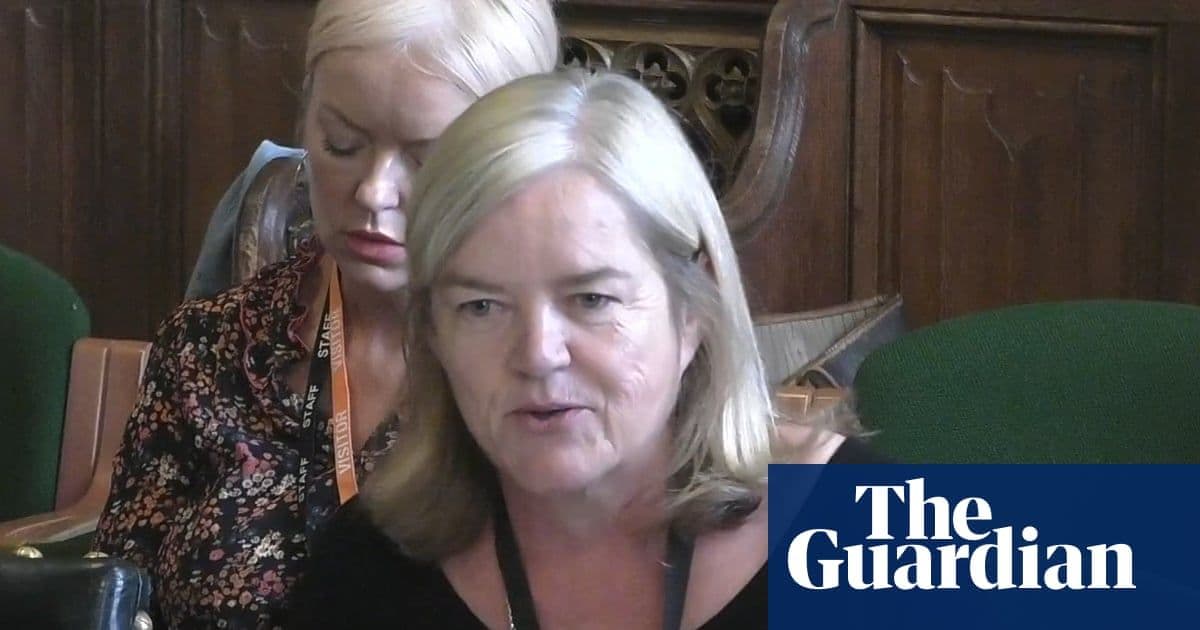
Louise Casey's recent speech on adult social care has drawn widespread attention, with many praising its candour and urgency. Yet for those who have spent years working within — or relying upon — the system, her findings are less a revelation and more a long-overdue acknowledgement of what councils and care professionals have been saying for decades.
Local Authorities Have Been Warning Us for Years
What Casey's commission has effectively surfaced is a reality that local government networks have been highlighting for some time: any national care service is destined to struggle unless the local infrastructure supporting it is properly stabilised first. Organisations such as Key Cities — a cross-party network representing UK local authorities — have repeatedly called for an urgent and comprehensive funding reset across the social care sector.
While the commission's proposed reforms are a step in the right direction, a critical piece remains absent: a credible transition plan that empowers councils to implement meaningful change. For reform to succeed, the government's NHS 10-year strategy must prioritise a significant expansion of joint commissioning at both regional and national levels. Such collaboration would help eliminate the costly and counterproductive tension between those who fund care and those who deliver it — and lay the groundwork for a coherent shift from local to national provision.
Councils are not merely victims of a broken system; they are also repositories of hard-won knowledge and workable solutions. Years on the frontline have demonstrated that preventative care is every bit as vital as crisis response. Locally developed models have already proven effective at reducing demand for emergency interventions. Given the right powers, councils could directly commission the care homes their communities desperately need, and trial innovative approaches through dedicated pilot programmes. Underpinning all of this, however, must be a robust national workforce strategy — one that addresses social care pay, training pathways and career development to tackle the chronic retention crisis that plagues the sector.
Addressing the funding gap in council finances may appear daunting, but it also represents a once-in-a-generation opportunity. A well-managed transition could free up local budgets for investment in housing and regeneration — the very foundations of long-term public health. Mishandle it, and the new system risks inheriting all the dysfunction of the old one.
Is Money Really the Core Problem?
Not everyone agrees that funding is the root cause of the crisis. Some argue that the issue is less about how much money enters the system and more about where it ends up. A significant portion of social care is now delivered by private providers — many of them registered in tax havens — whose profit-driven models extract value from the system rather than reinvesting it in quality care.
The consequences are stark. Wealthier individuals are paying premium prices in so-called luxury care homes that often deliver little more than hotel-style amenities with mediocre care standards. Those of more modest means struggle to meet the cost of home care or residential placements. And at the sharp end, thousands of vulnerable people receive no meaningful support at all — not because the money doesn't exist, but because it is haemorrhaging out of the system entirely.
One proposed efficiency measure worth serious consideration is the abolition of the Care Quality Commission (CQC). Critics argue the regulator is expensive to operate, rarely identifies poor care before others have already flagged it, has significantly scaled back on-site inspections, and has imposed a heavy administrative burden on providers — disproportionately harming smaller, community-based organisations that are often the most responsive and cost-effective.
Personal Stories Lay Bare the Human Cost
Behind the policy debate lie real people facing agonising financial decisions. One retired health and social care professional described watching decades of savings disappear to meet a weekly care home fee of nearly £1,418 for her husband — a figure that demands urgent attention from policymakers. She echoed a sentiment shared by many: that the question of social care funding has been raised, studied and shelved by successive governments no fewer than 22 times since 1997, with each administration lacking the political courage to act decisively.
Her suggested solution is straightforward and arguably overdue: merge income tax and national insurance into a single, progressive tax. National insurance, after all, was designed at a time when average life expectancy hovered in the early-to-mid fifties. With life expectancy now approaching three decades beyond that in many parts of the country, the original logic of the system no longer holds. A merged, progressive contribution model would ensure that funding burdens are shared proportionally — a principle most people would struggle to argue against.
Twenty-Two Reviews, Zero Decisive Action
Social care has never had its defining "Beveridge moment" — that watershed juncture when a bold vision for collective welfare galvanises public and political will alike. When Beveridge published his landmark report in 1942, in the midst of wartime economic strain, people queued in their thousands outside government offices just to obtain a copy. The appetite for systemic change was unmistakable.
By contrast, the past three decades have produced something more akin to a condemned building that every surveyor agrees is structurally unsound — yet whose owners consistently defer the necessary repairs, citing unclear costs or the hope that the next inspection might yield a different verdict. All the while, the people living within that structure — elderly individuals, disabled people, and care workers earning barely above minimum wage — are left to cope with what Casey herself described as "sticking plasters and glue."
Casey calls this a moment of reckoning. It is a compelling phrase. But as observers have noted, we have already had 22 such moments. What Britain has not yet had is a government prepared to act on one.

