Can Granting Legal Personhood to Lough Neagh Be Its Last Hope for Survival?
A groundbreaking legal concept that saved a Spanish lagoon may now offer a lifeline to Lough Neagh, the largest freshwater lake in the British Isles.

A Lake in Crisis
Lough Neagh, the largest freshwater lake across the British and Irish Isles, has been struggling under the weight of environmental damage. Since 2023, the lough has been repeatedly choked by potentially toxic blue-green algal blooms — a direct consequence of pollution stemming largely from agricultural runoff and wastewater discharge. Now, an unconventional legal strategy that once revived a dying European lagoon is being seriously considered as a potential solution.
What Is Rights of Nature?
Rights of Nature (RoN) is a legal framework that grants a natural environment the same status as a legal person. Under this approach, a lake, river, or ecosystem is no longer simply a resource to be managed — it becomes an entity with enforceable rights. These include the right to exist, to flourish, to be restored, and to be respected.
Crucially, RoN also empowers individuals and organisations to take legal action on behalf of that natural site, acting as its defenders in a court of law. Without such recognition, natural environments must rely on indirect, human-centred environmental legislation — protection that has repeatedly proven inadequate for places like Lough Neagh.
The Man Who Helped Save Mar Menor
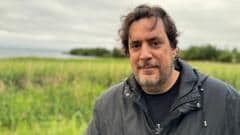
Professor Eduardo Salazar-Ortuño is a former lawyer and environmental specialist who spearheaded the Rights of Nature campaign for Mar Menor — Europe's largest Mediterranean saltwater lagoon, located on the south-eastern coast of Murcia, Spain.
Mar Menor holds enormous ecological and economic significance for the region. Its wetlands, seagrass beds, and marine prairies support diverse wildlife, while its waters sustain local fishing families and a thriving tourism industry. Yet despite holding multiple environmental designations intended to shield it, the lagoon fell victim to the same forces now threatening Lough Neagh: intensive farming on surrounding land.
By 2016, agricultural pollution had dramatically altered the lagoon's chemical balance, triggering a devastating bloom of algae known as ovas. The bloom stripped the water of oxygen, wiping out thousands of species in the process.
A Childhood Home Destroyed
For Salazar-Ortuño, who grew up in Murcia and spent his childhood at Mar Menor, the devastation was deeply personal.
"We lost 85% of the marine prairies, and we saw the fishes on the shore looking for oxygen, and these images were horrible," he recalled. "If you have been as a child in the Mar Menor, you cannot see these images and stay the same person after."
Driven by both professional expertise and personal grief, he turned to the law for a solution.
How Rights of Nature Transformed Mar Menor
Salazar-Ortuño's campaign drew the support of more than 600,000 residents across Murcia, who signed a legal petition demanding protection for the lagoon. Armed with this extraordinary public mandate, he and his team took their case directly to the Spanish parliament.
"We went to the parliament in order to change the existing anthropocentric law into an ecocentric law," he explained. "Then we decided to propose to our parliament, with 600,000 signatures, that the Mar Menor needs to have rights and legal personhood."
The campaign succeeded. A formal guardianship structure was established, giving any citizen or organisation the legal standing to represent the lagoon in court. Mar Menor was assigned its own tax identification number and a dedicated financial account — meaning that any compensation or restoration funds won through legal action flow directly back into the lagoon's recovery.
The guardianship is shared by a wide coalition of stakeholders, including fishermen, farmers, local residents, and environmental groups — all united in their role as protectors of the lagoon.
Could Lough Neagh Be Next?
Earlier this month, lawyers, activists, fishermen, and policymakers convened in Belfast to explore whether a similar Rights of Nature framework could be applied to Lough Neagh. Professor Salazar-Ortuño believes it absolutely can.
He argues the model could "transform" the future of the lough, shifting it from a site dependent on inadequate protections to one with the legal standing to demand and enforce its own restoration.
The idea is gaining traction beyond Northern Ireland as well. The Republic of Ireland is currently exploring the possibility of adding Rights of Nature provisions directly to its constitution through a national referendum — a move that could set a powerful precedent for the entire island.
A New Legal Era for Nature?
The Rights of Nature movement is growing globally, with the concept already implemented in several countries to protect ecologically vital sites. For Lough Neagh, a lake that has suffered years of neglect despite existing legal protections, granting it legal personhood may represent not just a novel idea — but a necessary one.