Bronx Zoo Bids Farewell to Happy the Elephant, a Pioneer in Animal Self-Awareness Research
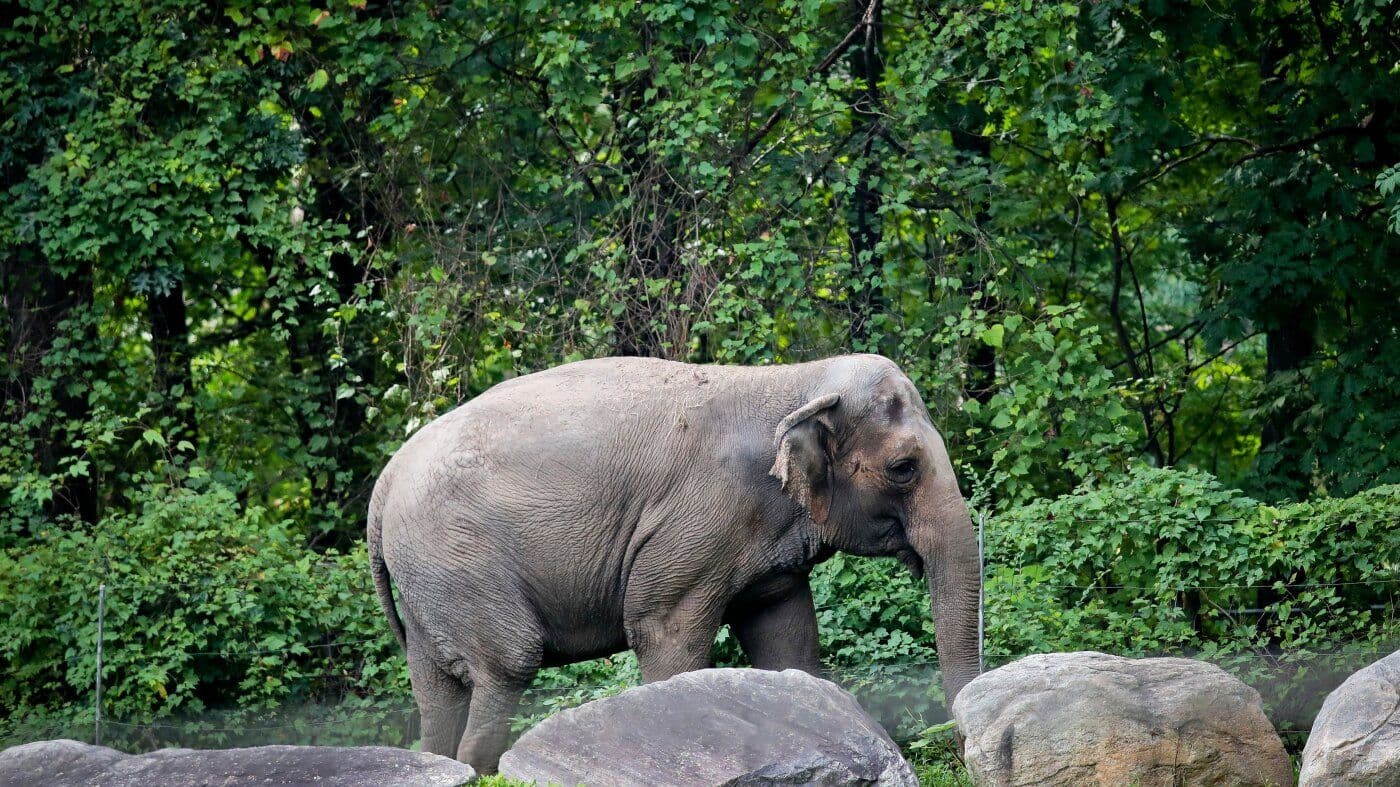
Happy, the Bronx Zoo elephant who made scientific history by recognizing herself in a mirror, has been euthanized at age 55 after decades of groundbreaking contributions to animal science.

Bronx Zoo Mourns the Loss of Happy, a Landmark Elephant in Animal Cognition Research
The Bronx Zoo announced Wednesday that Happy, one of its most celebrated Asian elephants, was humanely euthanized at the age of 55. Over the course of nearly five decades, Happy not only became a beloved fixture at the zoo but also transformed scientific understanding of animal intelligence — and sparked a landmark legal battle over the rights of nonhuman beings.
A Life Rooted in Science and History
Born in the wild in Asia, Happy was captured and transported to the United States at just one year of age. She was named after one of the seven dwarfs in the classic Disney fairy tale before taking up residence at the Bronx Zoo in 1977. For nearly 50 years, she called that facility home.
Her most significant scientific contribution came in 2005, when researchers discovered that Happy could recognize her own reflection — a rare cognitive ability previously documented in only a handful of species. During the groundbreaking experiment, she used her trunk to repeatedly touch an "X" painted above her eye, a mark that was only visible to her through a mirror. This behavior served as compelling evidence of self-awareness, placing elephants alongside great apes, dolphins, and a select few other animals in terms of higher-order cognition.
A Beloved Animal with a Distinctive Personality
Those who worked closely with Happy described her as highly engaged, curious, and easy to motivate. She had a particular fondness for watermelon and strawberries, and according to interim zoo director Craig Piper, she occasionally tucked treats inside her ear for safekeeping — a charming habit that endeared her to caretakers.
"She was a wonderful elephant," Piper said in a statement following her death. "She served as a tremendous ambassador for elephants and for elephant conservation worldwide."
Keith Lovett, the zoo's director of animal programs, noted that Happy had a natural gift for connecting with her human keepers, making her an ideal subject for behavioral research and an invaluable part of the zoo's educational mission.
Health Decline and Final Days
Zoo officials reported that Happy's age-related health conditions worsened significantly in her final weeks. She exhibited signs of declining kidney or liver function, which prompted the difficult decision to proceed with euthanasia. A subsequent necropsy confirmed the presence of severe arthritis as well as large, inoperable uterine tumors — conditions that cannot be detected in elephants through standard physical examinations or imaging techniques.
In her final weeks, Happy chose to spend her time in an off-exhibit barn and yard within her enclosure. Zoo staff provided round-the-clock hospice-style care, including hydration, nutritional support, and pain management, ensuring her comfort until the end.
The median life expectancy for Asian elephants in U.S. zoos is approximately 45 years, meaning Happy surpassed that benchmark by a full decade.
A Legal Legacy That Reshaped Animal Rights Conversations
Beyond the laboratory, Happy became the central figure in a closely watched legal dispute. In 2018, the Nonhuman Rights Project filed a lawsuit against the Bronx Zoo, seeking to have Happy legally recognized as a "person" under the law — specifically invoking the principle of habeas corpus, a legal concept typically used to challenge unlawful imprisonment of humans.
The advocacy group argued that Happy was "an extraordinarily cognitively complex and autonomous nonhuman being" whose confinement without the company of other elephants constituted an unjust deprivation of liberty. Zoo officials countered that Happy received exceptional care, had ample space for natural behaviors including swimming and foraging, and that relocating her could be detrimental to her well-being given her long history at the facility.
New York's highest court ultimately ruled against the activists in a 5-2 decision. However, two dissenting judges penned sharp critiques of Happy's situation, with one describing her captivity as "inherently unjust and inhumane" and "an affront to a civilized society." A similar ruling was later issued by Colorado's top court regarding five elephants housed at a zoo in that state.
The Nonhuman Rights Project has continued to pursue comparable cases involving elephants across multiple states, with Happy's case serving as a foundational precedent in the ongoing debate.
What Comes Next for the Bronx Zoo
With Happy's passing, Patty — a 57-year-old elephant who has lived at the Bronx Zoo for 53 years — is now the only elephant on public display in New York City. Zoo officials report that Patty remains in good health.
The Wildlife Conservation Society, which oversees the Bronx Zoo, made the decision two decades ago to stop acquiring new elephants. The organization previously indicated that if the zoo's elephant population were reduced to a single animal, relocation to another facility might be considered under the right circumstances.
Piper confirmed that zoo leadership will approach any potential decision about Patty's future with great care and deliberation, recognizing the profound disruption that a move could pose for an animal so deeply rooted in her environment.
Happy's legacy endures — not only in the scientific literature that her mirror test helped shape, but in the broader cultural and legal conversations she inspired about how society values, protects, and understands the inner lives of animals.