Bracing for Impact: How the Iran Conflict Could Trigger a Fresh Economic Price Shock in the UK
Rising oil prices driven by Middle East tensions are pushing up costs for British households and businesses — and policymakers may be powerless to stop it.

Another Global Crisis, Another Economic Shockwave
The conflict involving Iran may be geopolitically unprecedented, but its economic ripple effects are disturbingly familiar. Once again, the United Kingdom — and the broader global economy — finds itself bracing for a significant price shock, the latest in a series of financial disruptions that have defined the past several years.
From the economic paralysis of the Covid-19 pandemic and its chaotic aftermath to Russia's invasion of Ukraine sending energy costs soaring, the world has absorbed one costly blow after another. Add to this the growing volatility in commodity prices driven by climate change — affecting everything from coffee and cocoa to olive oil — and the picture becomes even more turbulent.
Oil Prices: The Domino That Topples Everything Else
Of all commodities, oil remains uniquely destructive when its price surges. Its role extends far beyond fuel — it feeds into fertiliser production, manufacturing processes, and transportation networks. When oil prices spike, the pain is felt across virtually every sector of the economy.
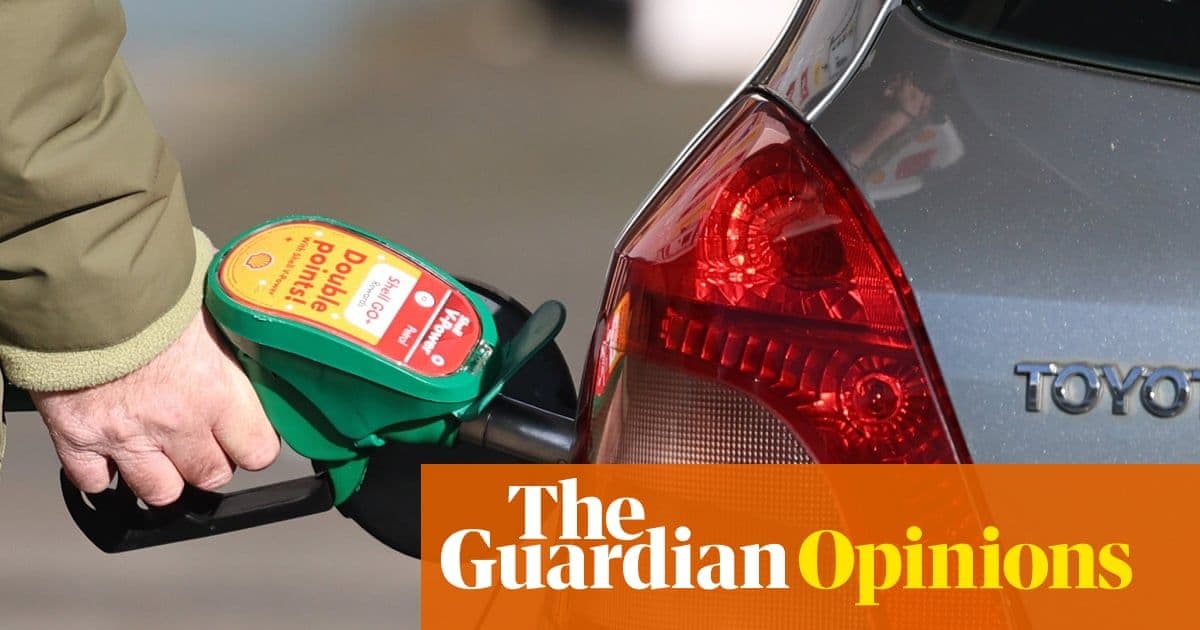
According to the RAC, the ongoing Middle East conflict has already pushed up the price of a litre of unleaded petrol in the UK by 3 pence. While that may seem modest, it signals the beginning of what could become a much steeper climb.
Perhaps most troubling is who bears the heaviest burden when prices rise. Research from economists at the University of Massachusetts Amherst found that energy, food, and agricultural commodities have a disproportionate ability to worsen economic inequality when their prices increase. Simply put, the poorest households suffer most.
The Wealth Gap in Energy Profits
While ordinary consumers struggle with higher bills, the financial gains from rising oil prices are concentrated among a privileged few. A notable study examining the 2022 US oil price surge found that 50% of the windfall profits generated by elevated prices flowed to the wealthiest 1% of individuals through stock market gains. Meanwhile, the bottom half of the population captured just 1% of those benefits.
Lead researcher Gregor Semieniuk summarised the injustice bluntly: everyone bears the cost of energy-driven inflation, yet the very prices creating that inflation are simultaneously delivering extraordinary profits to a small and already-affluent class of shareholders.
Unlike the United States — a net oil exporter that can offset some of the damage — the UK is a net importer, meaning higher oil prices are an almost entirely negative development for the British economy.
Household Energy Bills and the July Price Cap
If the current spike in natural gas prices is sustained, British households could face sharply higher energy bills when the next quarterly price cap comes into effect in July. This would be a significant political setback for the Labour government, which has made reducing household costs a central plank of its domestic agenda. Government ministers are reportedly already exploring options to shield consumers from the worst potential increases.
Central Banks Caught in a Difficult Position
A fresh energy price shock creates an especially thorny problem for central bankers, and nowhere more so than in the UK. In theory, monetary policymakers can choose to "look through" supply-side shocks — temporary surges in energy costs that slow growth and ultimately ease inflationary pressure as consumers reduce spending elsewhere.
Alan Taylor, an independent member of the Bank of England's Monetary Policy Committee (MPC), recently acknowledged this limitation plainly. "Large energy shocks move faster than inflation-targeting central banks can respond," he noted, adding that central banks and their mandates simply cannot fully resolve every category of inflation problem.
Nevertheless, with inflation on the verge of returning to the Bank's 2% target, a renewed price surge is likely to prompt the divided MPC to pause any planned interest rate cuts. The result could be several difficult months in which the Bank holds rates steady while unemployment continues to rise — with young workers disproportionately affected.
Research from the Institute for Public Policy Research, conducted by Joseph Evans and Carsten Jung, has already highlighted the dangers of running the economy "too cold for too long" in pursuit of inflation control — a strategy that risks causing serious, lasting harm to the labour market.
Rethinking the Policy Framework
With geopolitical instability and climate disruption looking increasingly permanent, some economists are calling for a fundamental rethink of how monetary policy operates. Economists at the London School of Economics' Grantham Research Institute have proposed "adaptive inflation targeting" — a more flexible approach that would allow central banks greater room to manoeuvre during periods of repeated external shocks.
But monetary policy alone cannot carry the full weight of the response. Politicians must also step up. That means actively securing supply chains for critical commodities, protecting lower-income households from the harshest economic consequences, and taking a harder line against the price gouging that routinely emerges during periods of tight supply.
The Long-Term Answer: Energy Independence
In the energy sector, the most durable solution remains reducing dependence on volatile global fossil fuel markets. Energy Secretary Ed Miliband has made this argument forcefully, framing Labour's clean energy agenda as both an environmental and an economic imperative: moving toward homegrown, renewable power that the UK can actually control.
However, the transition will take time — and the challenge extends well beyond energy. Governments worldwide are being forced to take a far more hands-on approach to the supply chains that underpin daily life, from food to rare earth minerals. The era of lean, just-in-time global supply chains, built on the assumption of stability, is rapidly giving way to a more cautious, resilience-focused model.
Preparing for What Comes Next
Should the conflict show signs of de-escalating in the near term, some of the pressure on energy supplies could ease. But for now, as Chancellor Rachel Reeves prepares to deliver the annual Mais lecture outlining Labour's growth strategy, the economic backdrop is anything but reassuring. The UK must prepare itself for yet another unwelcome jolt to an already strained economy.