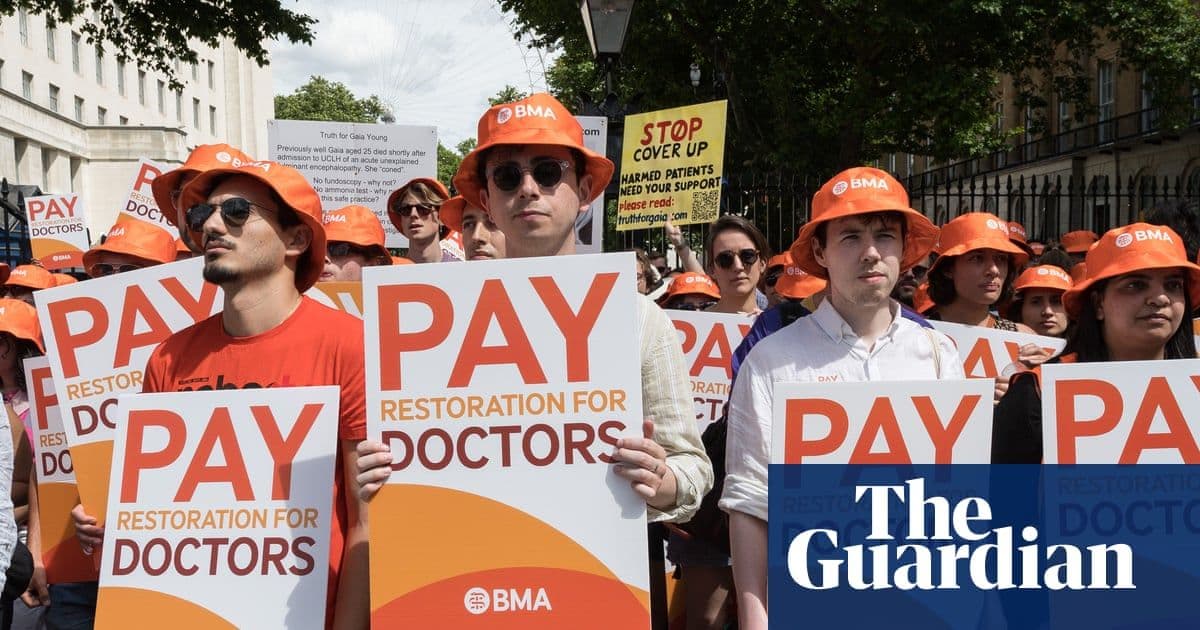
BMA Faces Financial Meltdown as Doctors' Union Plans to Cut Up to 200 Jobs
The British Medical Association is planning to slash up to a third of its workforce in England amid a deepening financial crisis, sparking fury among staff.

Britain's Largest Doctors' Union Eyes Massive Job Cuts Amid Financial Crisis
The British Medical Association (BMA), the United Kingdom's leading doctors' union, is reportedly planning to eliminate up to one-third of its entire workforce as it scrambles to address a mounting financial crisis. The move has sent shockwaves through the organisation, igniting anger and accusations of hypocrisy from staff members who feel blindsided by the decision.
200 Jobs at Risk in Major Restructuring Drive
Approximately 200 of the BMA's 600 England-based employees have been placed at risk of redundancy as part of a sweeping restructuring effort aimed at plugging a persistent financial deficit. The announcement comes just days after resident doctors narrowly voted to accept a government-brokered pay agreement that will see the highest-earning junior doctors receive a base salary of £77,348 — a deal that followed 15 gruelling rounds of strike action that cost the NHS billions of pounds and severely disrupted patient care across the country.
The irony of the situation has not been lost on BMA employees. One staff member remarked: "BMA leaders seem to think it's one rule for them and another for everyone else. If a hospital treated its workers this way, we would come down on them like a ton of bricks."
A Union Haemorrhaging Money Despite Record Membership
Despite reaching a record membership of 200,000 — fuelled largely by its high-profile campaigns and strike action in recent years — the BMA has been losing millions of pounds annually. The organisation's financial position has become so precarious that it has required a staggering £86.8 million in subsidies from the British Medical Journal (which it owns) since 2008, averaging roughly £5.1 million per year just to remain solvent.
Although previous cost-cutting measures succeeded in reducing the deficit by £4 million, rising inflation has pushed it back up to approximately £5 million. The BMA says it must now reduce fixed operating costs while maintaining investment in membership levels.
Staff Furious Over Treatment and Lack of Transparency
The vast majority of BMA staff are members of the GMB trade union, which has accused the BMA of violating its own HR protocols during the redundancy process and attempting to silence employees from speaking out. Notably, the BMA's own membership has not been officially informed about the scale of the restructuring or its potential human impact.
One internal source painted a bleak picture: "BMA staff are very scared. Everyone thinks they're going to lose their job. People are absolutely miserable. This is the worst reorganisation we've ever seen."
The discontent among staff has reached boiling point. GMB members at the BMA passed a vote of no confidence in chief executive Rachel Podolak — who is leading the restructuring — with a staggering 91% voting against her on a 72% turnout.
Restructuring Raises Concerns About Core Union Functions
The reorganisation is reportedly designed to refocus the BMA on its trade union role — advocating on pay and workplace issues — while scaling back its function as a professional medical association. This shift has alarmed many within the organisation.
Critical Roles Being Eliminated
Among the most contentious elements of the restructuring plan:
- Up to 20 of 45 staff supporting the BMA's board of science and board of ethics face redundancy
- Industrial relations officer (IRO) posts will be cut from 23.5 to just 14 — personnel who play a vital role in helping hospital doctors negotiate disputes with NHS management
- Three of the BMA's seven regional heads are also set to be eliminated
Senior BMA figures have described the axing of IRO posts as "madness," arguing it directly contradicts the union's own strategic priorities for 2025–2030, which include "organising to win" and "campaigning to influence."
Chairs of 110 local negotiating committees — local BMA branches representing hospital doctors — have written a strongly worded letter to Podolak and Deputy Chair of Council Dr Emma Runswick, condemning the planned cuts to IRO and regional head posts. The BMA's consultants committee also passed a motion criticising the move, though the BMA hierarchy blocked it from being debated at last week's annual conference.
BMA Downplays Scale of Redundancies
In a statement to media, the BMA claimed that as few as 20 staff members would ultimately lose their jobs — a figure dramatically lower than the 200 discussed in negotiations with GMB representatives. The union said it expects most departures to be voluntary.
"Any process which involves people leaving the BMA will always be difficult," a BMA spokesperson said. "We have been engaging extensively with the GMB as our trade union partner since last year and through a comprehensive process involving all affected staff. Final decisions have not yet been made."
GMB Vows to Protect Workers
Gavin Davies, a senior GMB organiser, acknowledged the difficult situation facing BMA employees. "Workers are understandably worried, and we will work hard to avoid compulsory redundancies and the financial hardship they inevitably bring," he said, adding that negotiations were ongoing and he remained hopeful a solution could be found.
The unfolding crisis places the BMA in an uncomfortable spotlight — a union that fought aggressively for better pay and conditions for doctors now facing accusations of treating its own staff with the very disregard it has long campaigned against.

