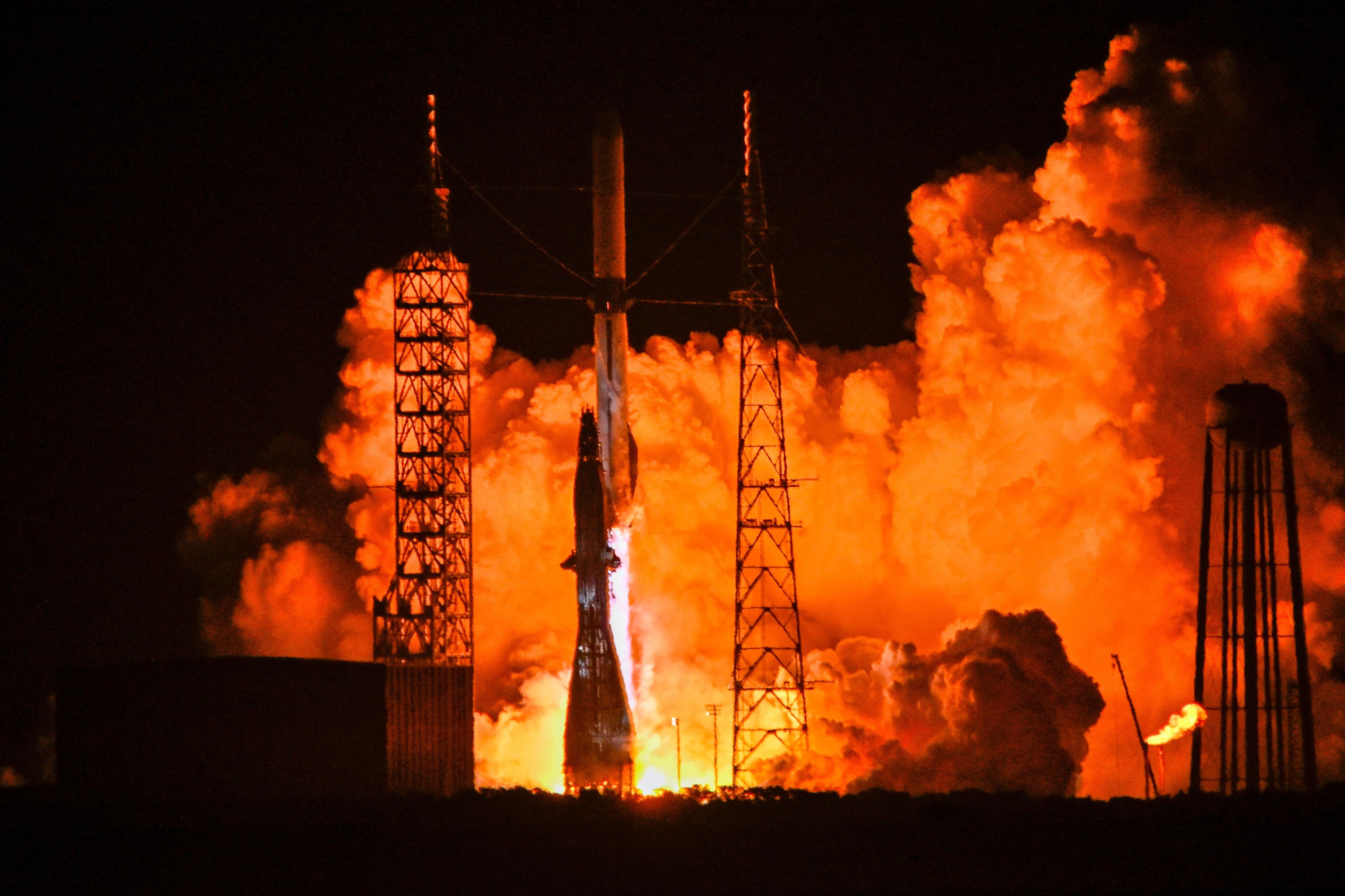
Blue Origin's New Glenn Rocket Suffers Explosive Failure During Ground Test
Jeff Bezos' space company Blue Origin faces another major setback after its New Glenn rocket exploded during a routine static-fire test, threatening upcoming satellite launch plans.
Blue Origin's New Glenn Rocket Destroyed in Ground Test Explosion
Jeff Bezos has vowed to press forward after his aerospace company, Blue Origin, suffered a devastating blow when its flagship New Glenn rocket was destroyed during a pre-launch engine test. The billionaire founder acknowledged the severity of the incident while remaining publicly committed to recovery.
"It's too early to know the root cause, but we're already working to find it," Bezos stated. "Very rough day, but we'll rebuild whatever needs rebuilding and get back to flying. It's worth it."
What Is a Static-Fire Test?
The explosion occurred during what engineers call a hot-fire test — also referred to as a static-fire test. This is a routine but critical procedure in which a rocket's engines are briefly ignited while the vehicle remains firmly anchored to the launchpad. The test is designed to confirm that all systems are operating correctly before an actual flight takes place. It is considered a standard safety checkpoint in modern rocket development.
In this case, the vehicle involved — standing an impressive 98 meters tall, making it one of the largest rockets ever constructed — did not survive the procedure.
Mission Details and What Was at Stake
Had it succeeded, this test would have paved the way for New Glenn's fourth mission, which was scheduled to lift off as soon as the following week. The rocket was set to deliver 48 satellites into orbit, where they would join Amazon's Leo satellite internet constellation — a direct competitor to SpaceX's Starlink network.
NASA Administrator Jared Isaacman responded swiftly to news of the incident, posting on X: "NASA is aware of the anomaly that occurred tonight at Launch Complex 36 involving Blue Origin's New Glenn rocket at Cape Canaveral Space Force Station. Spaceflight is unforgiving, and developing new heavy-lift launch capability is extraordinarily difficult."
Isaacman confirmed that the agency would assess any potential effects on NASA's upcoming Artemis program and Moon Base missions, noting that both Blue Origin and SpaceX hold contracts with NASA as part of its lunar exploration strategy.
A Pattern of Recent Setbacks
This latest incident is not an isolated event for Blue Origin. The company's difficulties began mounting earlier this year when, on April 19, the rocket's third flight encountered a significant failure that triggered a formal Federal Aviation Administration investigation.
During that mission, New Glenn's first stage performed successfully, completing an autonomous landing on a floating ocean platform. However, the second stage — responsible for delivering the payload to its intended orbit — malfunctioned, leaving AST SpaceMobile's BlueBird 7 satellite stranded outside a safe orbital path. The FAA concluded its investigation into that incident on May 22, just days before this latest explosion occurred.
As Blue Origin works to identify the root cause of the most recent failure, the broader space industry is watching closely. The company faces mounting pressure to demonstrate the reliability of New Glenn as it competes for commercial and government launch contracts in an increasingly crowded market.
