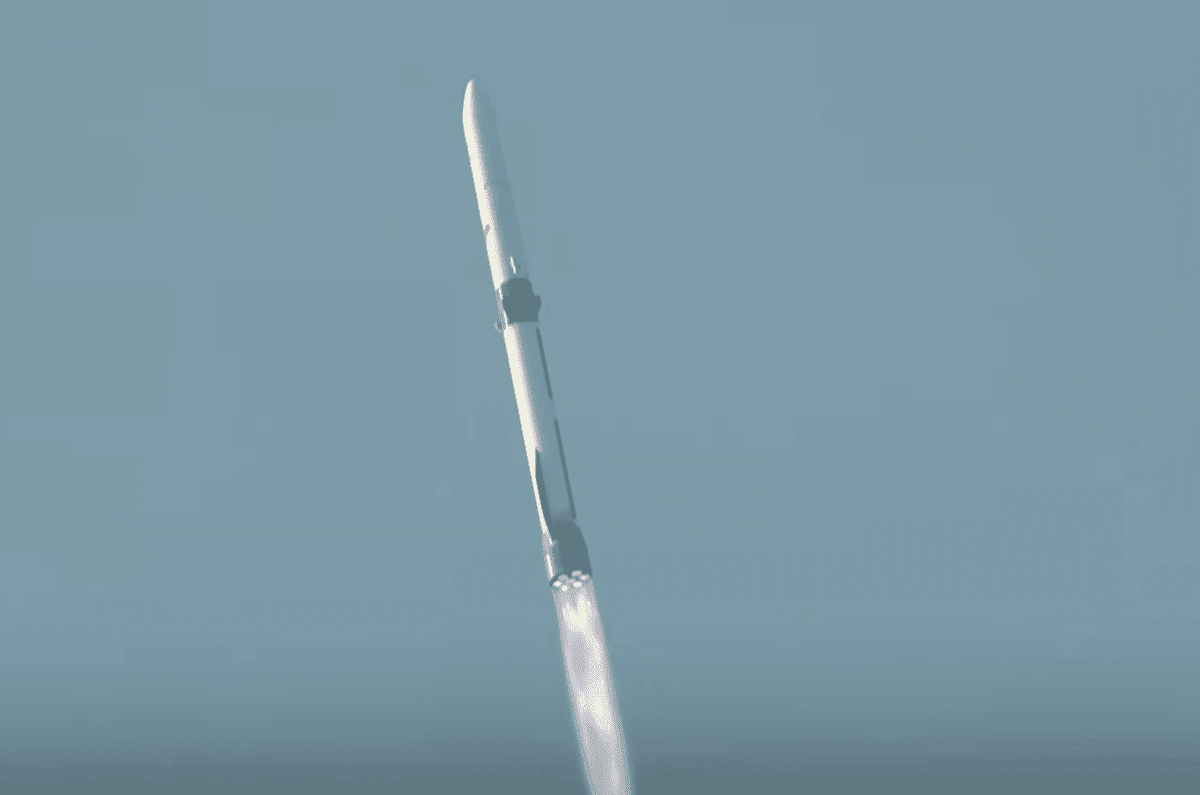
Blue Origin Achieves Historic New Glenn Rocket Reuse — But Satellite Deployment Raises Concerns
Blue Origin successfully reused its New Glenn rocket for the first time, marking a major leap forward — though questions linger over a satellite deployment gone wrong.
Blue Origin Hits a Landmark Milestone With New Glenn Rocket Reuse
Blue Origin has achieved a significant breakthrough in commercial spaceflight, successfully flying and recovering one of its New Glenn heavy-lift rockets for the second time. The achievement positions Jeff Bezos' space venture as a more credible rival to Elon Musk's SpaceX, which has long held dominance over the global orbital launch market thanks to its own reusable rocket technology.
The milestone was reached on just the third-ever launch of the New Glenn rocket — a system that has been more than a decade in development — and comes roughly one year after the vehicle made its inaugural flight.
A Successful Landing, But an Uncertain Mission
Despite the triumphant booster recovery, the overall mission outcome is still under scrutiny. Approximately two hours after liftoff, Blue Origin disclosed that the communications satellite aboard New Glenn — launched on behalf of AST SpaceMobile — had ended up in what the company described as an "off-nominal orbit." This suggests something may have gone wrong with the rocket's upper stage during ascent.
"We have confirmed payload separation. AST SpaceMobile has confirmed the satellite has powered on," Blue Origin stated on X. "We are currently assessing and will update when we have more detailed information."
Prior to the mission, Blue Origin's published flight timeline indicated the upper stage was scheduled to perform a second engine burn approximately one hour after launch. Whether that burn was completed as planned — or encountered technical difficulties — remains unclear.
The Booster Recovery: A Familiar Success Story
The reused booster was the same one that flew on New Glenn's second mission in November, during which it helped deliver two NASA robotic spacecraft into space on a trajectory toward Mars before touching down on an ocean-based drone ship. On Sunday's mission, that same booster was recovered again on a drone ship, just around ten minutes after lifting off from Cape Canaveral, Florida.
Why Reusability Matters for Blue Origin
The ability to refurbish and refly rocket boosters is widely regarded as one of the most critical economic factors in modern commercial spaceflight. SpaceX built its market-leading position in large part by mastering the art of landing and relaunching its Falcon 9 boosters, dramatically cutting the cost per launch. Blue Origin is now following a similar playbook with New Glenn.
Beyond commercial satellite launches, Blue Origin has ambitious plans for the New Glenn platform. The company intends to use the rocket to support NASA's lunar exploration programs and to help construct space-based satellite networks — both for itself and for Amazon, its sister company under the Bezos umbrella. Blue Origin is also preparing its first robotic Moon lander for a launch attempt later this year.
Potential Impact on AST SpaceMobile Partnership
The apparent satellite deployment issue could have near-term consequences for Blue Origin's commercial pipeline. The company holds a multi-launch agreement with AST SpaceMobile, which is actively building out a space-based cellular broadband network. If the satellite fails to reach its intended orbit or operate as expected, it could strain that commercial relationship and complicate the broader launch schedule.
For now, both companies are monitoring the situation closely as engineers work to assess the satellite's status and determine whether corrective action is possible.
Looking Ahead
Despite the uncertainty surrounding Sunday's payload, the successful reuse of New Glenn's booster represents a genuine step forward for Blue Origin. If the company can consistently recover and refly its rockets while improving upper-stage reliability, it stands a stronger chance of capturing a meaningful share of the competitive global launch market — and perhaps, one day, closing the gap with SpaceX.