Behind Bars and Forgotten: The Harsh Reality Facing Women in Senegal's Prison System
Women in Senegal's prisons endure poor conditions, lengthy pre-trial detention, and devastating social stigma that cuts them off from family support.

A System That Fails Its Most Vulnerable
For women caught within Senegal's criminal justice system, the ordeal extends far beyond any legal sentence handed down by a court. Substandard living conditions, an agonizingly slow judicial process, and deep-rooted cultural stigma combine to create a uniquely punishing experience — one that can permanently sever a woman from her family and community long before a verdict is ever reached.
This reality was brought into sharp focus during International Women's Day events held across Senegal recently, where organizations distributed free reusable menstrual products to female inmates — basic hygiene supplies that the prison system does not consistently provide.
One Woman's Story
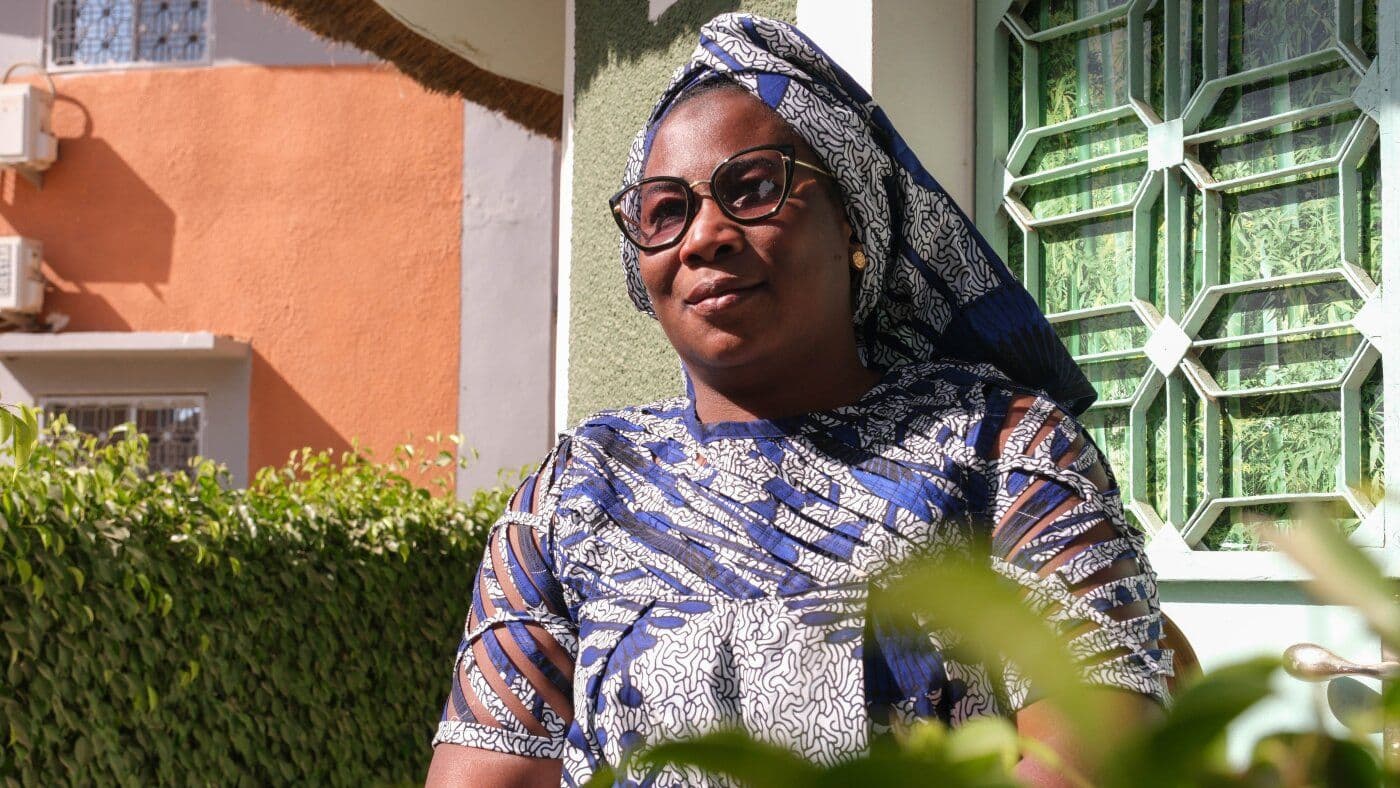
Maïmouna Diouf still remembers the wave of dizziness that came over her the first time she walked through the doors of the Thies detention center in 2021. Convicted of infanticide — a charge she firmly disputes, maintaining that she gave birth to a stillborn child and buried it without informing authorities — Diouf found herself assigned to a cramped room shared with nine other inmates.
The mattresses were worn and filthy, spread across the bare floor. An unidentifiable odor filled the air. "This is my life now? How am I supposed to sleep here?" she recalled thinking in those first overwhelming moments.
Released in 2025, Diouf has since channeled her experience into advocacy, volunteering to support female inmates still navigating the system she endured. Her account sheds light on the circumstances faced by roughly 280 women currently imprisoned in Senegal — a group representing approximately 2% of the country's total prison population of 14,000.
Justice Delayed: Years Behind Bars Without Trial
The challenges women face in Senegal's prisons are compounded by an overburdened judicial system. A 2024 report from the U.S. State Department noted that court backlogs and judicial absenteeism result in an average two-year gap between when charges are filed and when a trial actually begins. During this prolonged waiting period, an estimated 60% of those charged remain incarcerated. Women are held at the Liberté VI women's prison in Dakar.
Seynabou Dieme, who heads social-education services at Liberté VI, has witnessed the toll this takes firsthand. "It's very difficult for these women, especially those who are innocent, waiting in prison for a trial," she explained. "They sometimes cannot afford a lawyer, and with so few judges available in Senegal, delays stretch even further."
Dieme confirmed that some women have waited as long as six years before their trials begin — an almost incomprehensible period of uncertainty.
In February, the Senegalese government reportedly adopted legislation targeting prison reform and improved conditions. However, NPR was unable to obtain official confirmation or an update on the status of these reforms from relevant government offices.
The Weight of Cultural Judgment
Beyond inadequate infrastructure and judicial delays, women in Senegal's prisons carry an additional burden: social condemnation that often strips them of the family ties and community connections essential for both survival and eventual reintegration.
"The culture often says that a woman has no right to make a mistake," Dieme observed. "Because the woman must manage the household, the community, raise the children. If she falls, she brings the whole family down with her."
This judgment is intensified by the nature of the offenses for which many women are incarcerated. According to a 2021 report by Prison Insider, an organization that monitors conditions inside Senegalese detention facilities, nearly half of all female prisoners had been convicted of infanticide. A further 23% were imprisoned for abortion — a procedure that remains illegal in Senegal except in life-threatening circumstances.
Stripped of Support When It Matters Most
Fatou Faye, who serves as a supervisor for the Prison Project at Tostan — a Senegalese human rights organization that both distributed hygiene products on International Women's Day and provides inmates with education in human rights and income-generating skills — notes that the stigma surrounding these specific charges often destroys relationships before a woman has even been sentenced.
Diouf considers herself fortunate. Her family stood by her throughout her imprisonment. Her brother accompanied her on that first harrowing day and, horrified by the condition of the mattresses in her cell, arranged to bring her a clean one. Family members also regularly supplied her with additional food and essential hygiene products that the state failed to provide.
But for many of her fellow inmates, that kind of support was absent. "They were always crying, because it is so difficult to be rejected by your own family," Diouf said of the women she befriended during her time behind bars.
One Woman's Fight for Anonymity
The stigma persists long after release, as illustrated by the experience of a woman identified here only as AF — her full name withheld because of the ongoing shame associated with her imprisonment.
In 2001, AF was a young mother who found herself pregnant and unable to provide for a second child. She sought a clandestine abortion, but medical complications brought her to a hospital, where healthcare workers reported her to the police. She was subsequently convicted and served four years in prison.
Her mother and sister desperately wanted to support her. But extended family members and community figures — including uncles — pressured them relentlessly to cut ties. "They kept saying I was a bad woman and didn't deserve their support," AF recalled. Fortunately, her mother and sister refused to abandon her, providing food, soap, emotional encouragement, and a promise to welcome her home upon release.
"It was painful to watch them suffer while I could do nothing from inside the prison," she said.
After her release in 2005, AF began working with Tostan's prison education program, helping other incarcerated women prepare for the transition back into society — a transition she knows from painful experience is rarely smooth.
The Cycle That Follows Release
"There are women who leave prison and their families do not take them back," AF explained. "With nowhere to go and no support, many turn back to crime and end up returning to prison. Families and communities need to adopt a mindset of forgiveness and assistance."
Faye echoes this sentiment with quiet conviction. Her work bringing education and skills training to women inside Senegal's prisons is driven by a belief that society must extend grace to those who have made mistakes.
"They are all human beings," she said. "A person can do something they deeply regret. They deserve the chance at a clean slate."
A Call for Systemic Change
The experiences of Diouf, AF, and the hundreds of other women navigating Senegal's prison system point to failures that are both structural and cultural. Overcrowded cells with inadequate sanitation, a judiciary ill-equipped to process cases in a timely manner, and a society that withdraws compassion precisely when it is most needed — all of these forces converge to make incarceration an especially isolating and damaging experience for women.
Advocates and social workers on the ground are doing what they can. But lasting change, they argue, will require not only prison reform at the government level, but also a fundamental shift in how Senegalese society views — and responds to — women who have broken the law.