Bees Have Lived Among Us for Thousands of Years — But Their Name Still Puzzles Experts
Bees are among Earth's most vital creatures, yet the origin of their name remains a linguistic mystery. Here's what we know — and why it matters now more than ever.

Bees Have Lived Among Us for Thousands of Years — But Their Name Still Puzzles Experts
Small in size but enormous in importance, bees are among the hardest-working and most consequential creatures on the planet. From pollinating the crops that fill our grocery shelves to offering scientists a living window into environmental health, these insects have earned far more appreciation than most of us give them.
This Wednesday marks World Bee Day — a United Nations-established observance launched in 2018 to spotlight the critical need to protect bee populations worldwide. It's a timely reminder to examine not only what bees do for us, but also the surprisingly mysterious story behind the very word we use to name them.
A Word as Old as the Insect Itself
According to Doug Harper, the founder and editor of the online etymology resource Etymonline.com, few words in the English language have stayed as consistent in meaning as "bee."
"A word like 'bee' has always been 'bee,' as far back as you can trace it," Harper explained.
The word descends from the Old English term "beo," and its roots stretch so deep into history that pinning down a definitive origin may be impossible. Historically, some poets even used the compound "beowulf" — literally meaning "a wolf to bees" — as a poetic way to describe bears.
Because bees have existed on Earth for millions of years and beekeeping has been practiced for over a millennium, the true etymology of the word has been lost to time.
"The words that have been here forever, we'll never know probably," Harper said.
One prevailing theory suggests the word may be rooted in the distinctive buzzing sound the insect produces. Other languages and traditions have offered their own terms for the pollinator — the Latin word "apis," for example, gave us "apiary," the term used for places where beehives are kept. Yet "bee" outlasted them all in the English-speaking world.
Bees Woven Into Our Language and Culture
The staying power of the word "bee" is reflected in how deeply it has embedded itself into everyday English. Phrases like making a "beeline," being a "busy bee," or minding your own "beeswax" speak to centuries of close human observation and admiration for these insects.
"When I look at words like that, they don't even look like words. They look like landscape. They're so ancient," Harper said. "Those things are sort of rare and valuable just for that."
What Bees Actually Do for Us
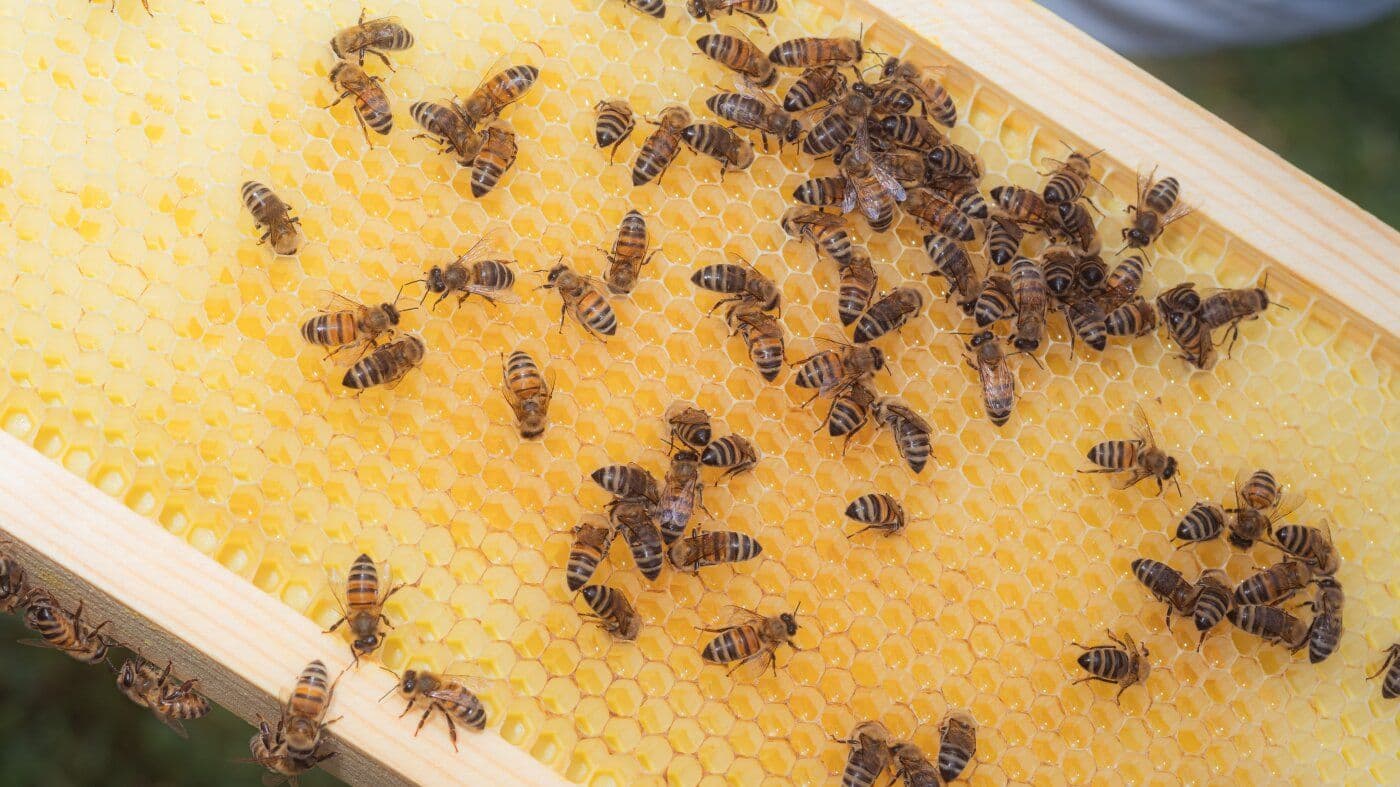
Kendal Sager, a California master beekeeper and founder of Sager Family Farm, gets a front-row seat to bee life every time she lifts the lid of her hive. Tens of thousands of bees move across the honeycomb, their cells packed with vivid yellow, orange, and pink pollen gathered from neighborhood flowers.
But Sager is quick to point out that bees contribute far beyond producing honey. They are essential pollinators for hundreds of species of fruits, vegetables, and nuts.
"Even if you don't like bees themselves, you have bees to thank for the food on your table," she said.
A Crisis Threatening Bee Populations
Despite their resilience over millennia, modern bee colonies are under serious threat. Last year, commercial beekeepers across the United States reported losing nearly 56% of their honeybee colonies — the steepest decline recorded since the annual U.S. beekeeping survey began in 2010.
Mateo Kaiser, a fifth-generation beekeeper in California and managing director of Swarmed, a support resource for beekeepers, described the situation with urgency.
"The worry is that at some point they won't be able to keep up anymore," he said.
What's Behind the Collapse?
Several interconnected factors are driving the alarming decline in bee populations:
- Habitat loss is reducing the natural environments bees depend on for food and shelter.
- Pesticide exposure continues to pose a significant chemical threat to colonies.
- The Varroa mite, a destructive parasite that arrived in the United States from Asia during the 1980s, remains one of the most damaging threats to honeybee health.
- Climate unpredictability is increasingly disrupting the seasonal rhythms that bees rely on to survive and thrive.
When spring arrives too dry, flowers and trees reduce nectar production, leaving bees without adequate food. An unexpected cold snap can set an entire colony back for the whole season. As weather patterns grow more erratic, beekeepers find it harder to anticipate conditions and provide proper care.
"As the climate changes and becomes less predictable, it becomes harder for beekeepers to know what to expect and to make sure that they're taking the best possible care of their bees," Kaiser said.
Bees as Environmental Indicators
Beyond their role in agriculture, bees serve as sensitive barometers of broader environmental conditions. Each year, bees make millions of journeys across the country — and everything they encounter along the way leaves a trace.
"Anything the bees are coming into contact with, it's affecting them and it's telling us something about the health of our communities, and how local biodiversity and ecosystems are being impacted," Kaiser noted.
For Sager, keeping bees has made her far more conscious of seasonal changes, weather shifts, and the blooming cycles of local plants. It's a perspective she believes more people should adopt.
"So even if you don't care about the bees," she said, "it's pointing at a lot of other issues that may cause problems for everyone and other species."
Why Bee Conservation Matters to All of Us
The story of bees is ultimately a story about our own relationship with the natural world. These small, ancient creatures have shared the planet with humans for thousands of years, shaping our language, our food systems, and our understanding of the environment. Protecting them isn't just good for beekeepers — it's essential for everyone who eats, breathes, and depends on a functioning ecosystem.
World Bee Day is a useful reminder that conservation begins with awareness — and sometimes, with simply paying closer attention to the small, buzzing world just outside our doors.

