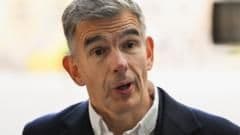
BBC's New Director General Warns of Unavoidable Tough Decisions Ahead
Matt Brittin steps into the BBC's top role pledging bold change while acknowledging painful cuts and mounting financial pressures ahead.

Matt Brittin Takes the Helm at the BBC Amid Financial Storm
Former Google Europe chief Matt Brittin has officially stepped into his role as BBC Director General, delivering a frank message to staff on his very first day: the corporation has never mattered more, but difficult decisions cannot be avoided.
Arriving at BBC New Broadcasting House in central London on Monday morning, Brittin told reporters he felt both "honoured" and "humbled" to be assuming one of the most demanding leadership positions in British broadcasting. His arrival, however, was met not only with fanfare but also with protests from members of the National Union of Journalists (NUJ), who are currently striking over proposed shift changes affecting World Service radio programmes Newshour and Weekend, as well as Radio 4's The World Tonight.
A Leader Facing an Organisation Under Pressure
In a candid email addressed to BBC staff, Brittin acknowledged the scale of the challenge lying ahead. He described the BBC as the country's most trusted news provider and a cornerstone of Britain's creative economy, but was equally clear-eyed about the road ahead.
"Tough choices are unavoidable as we make savings," he wrote, urging staff to think boldly about the corporation's future. "If we were inventing the BBC today, what would we do? Then respond with clarity, pace and purpose."
The broadcaster is currently facing the need to slash £500 million from its budget, a process expected to result in the loss of up to 2,000 jobs in the coming months. Brittin called on the BBC's long history of reinvention — from adapting its operations during World War II to rapidly deploying services during the Covid-19 pandemic — as evidence that the organisation has the capacity to evolve quickly when necessary.
Digital Transformation at the Heart of Brittin's Vision
Brittin's background is firmly rooted in technology rather than broadcasting. Having spent nearly two decades at Google, where he led operations across Europe, the Middle East, and Africa, he brings a distinctly digital perspective to a broadcaster long associated with traditional media.
Award-winning comedy producer Ash Atalla, speaking on Radio 4's Today programme, acknowledged that Brittin faces enormous pressure to shift the BBC from being a broadcast-led organisation to a genuinely digital-first one — and fast.
"The BBC is brilliant at making television shows," Atalla said. "But it has been a little lethargic at going digital first and really meeting young audiences where they are — which is online. There's a real clock on it."
Atalla expressed concern that younger generations may not feel the same emotional connection to the BBC that older audiences do, warning that nostalgia alone will not sustain the corporation's relevance for future generations.
Trust, Relevance, and a Divided Public
Peter Barron, former editor of BBC Newsnight and a former colleague of Brittin's at Google, echoed those concerns while highlighting another pressing issue: public trust.
"There are, unfortunately, swaths of the British population for whom the BBC is no longer for them — both on the left and the right," Barron noted. He added that while many young people claim not to consume BBC content, they often do so without realising it, suggesting the challenge is as much about perception as it is about actual reach.
A Complicated Inheritance
Brittin steps into a role vacated by Tim Davie, who resigned following backlash over a Panorama documentary accused of misleading viewers through selective editing of a speech by former US President Donald Trump. Trump has since filed a multi-billion dollar lawsuit against the BBC in Florida, a case the corporation is actively seeking to have dismissed, arguing that the episode in question never aired in the United States.
Further complicating his tenure, Brittin must also navigate the renewal of the BBC's royal charter — the foundational document governing its structure and funding — which is set to expire in 2027. Earlier this year, the BBC floated the idea of reducing the cost of the TV licence in exchange for broadening the number of households that pay it.
Dame Caroline Dinenage, chairwoman of the House of Commons Culture, Media and Sport select committee, summed up the moment plainly. Brittin — who will receive an annual salary of £565,000 — "will have a significant job on his hands" during what she described as a "period of turbulence" for the BBC.
With no prior editorial or programme-making experience, but a formidable track record in tech and digital strategy, Brittin's challenge is clear: transform one of the world's most iconic broadcasters before the clock runs out.